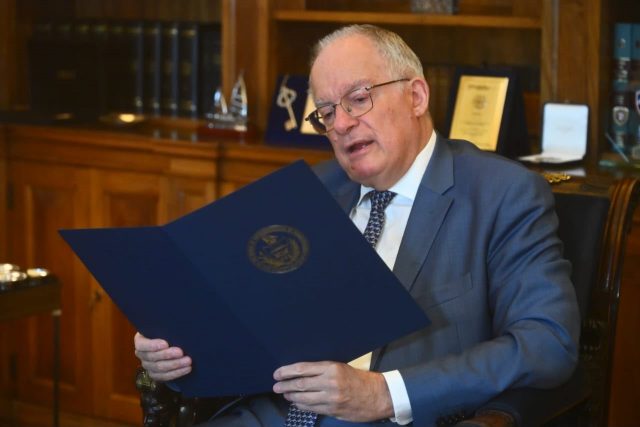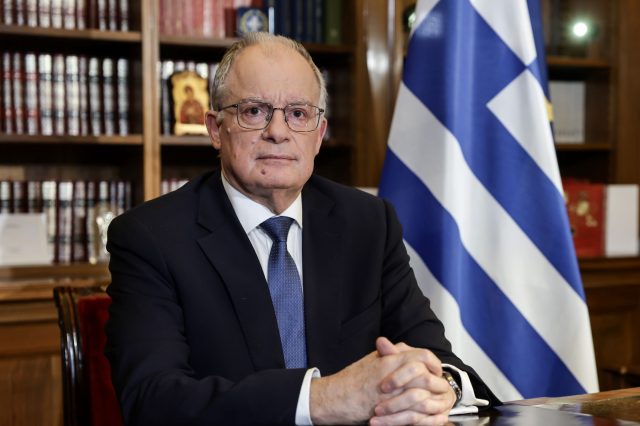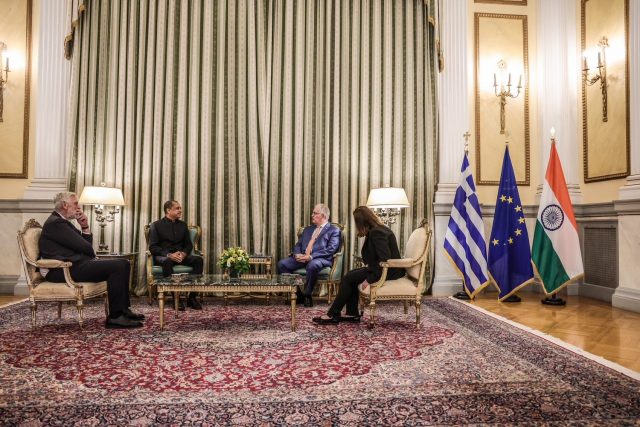
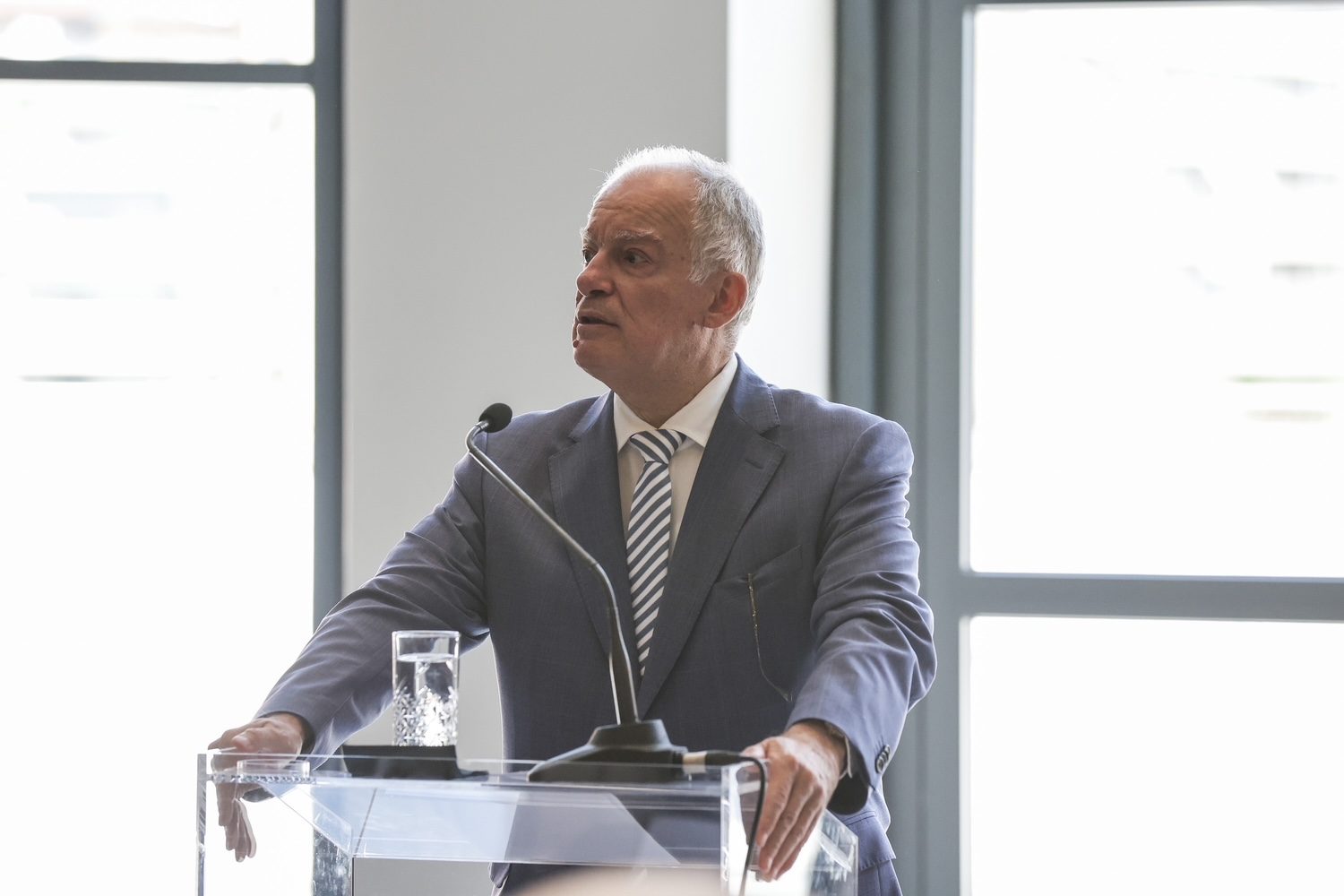
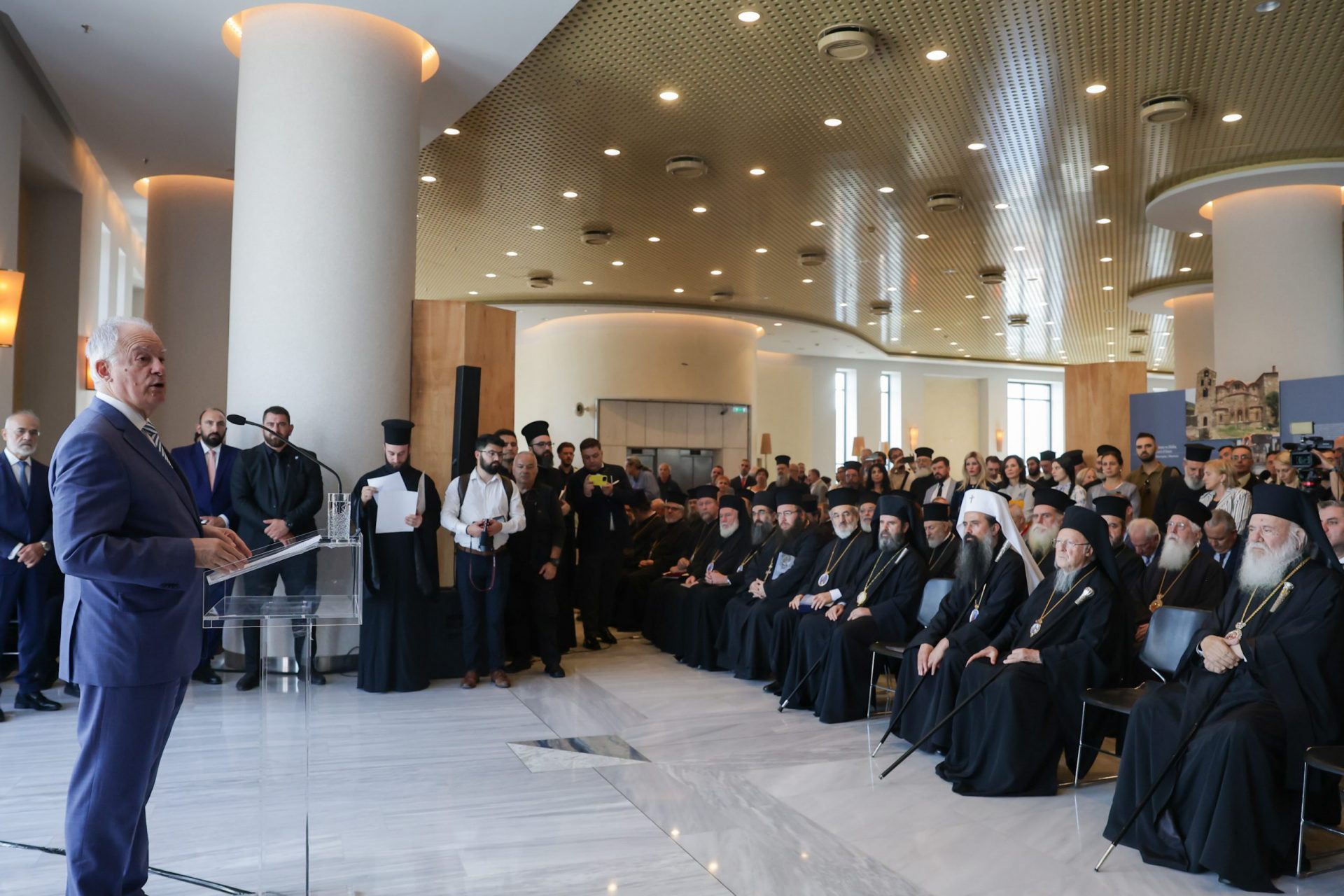
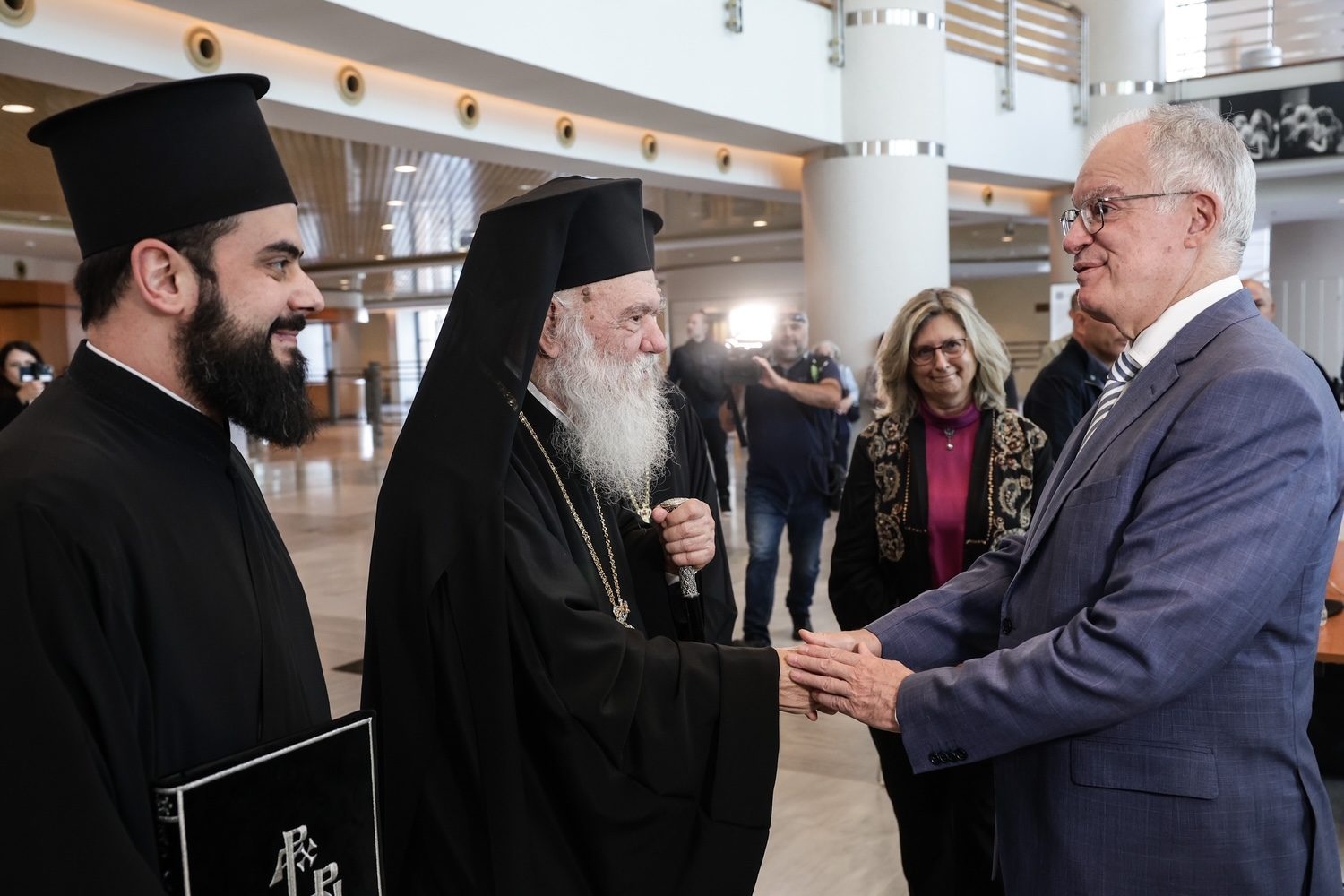
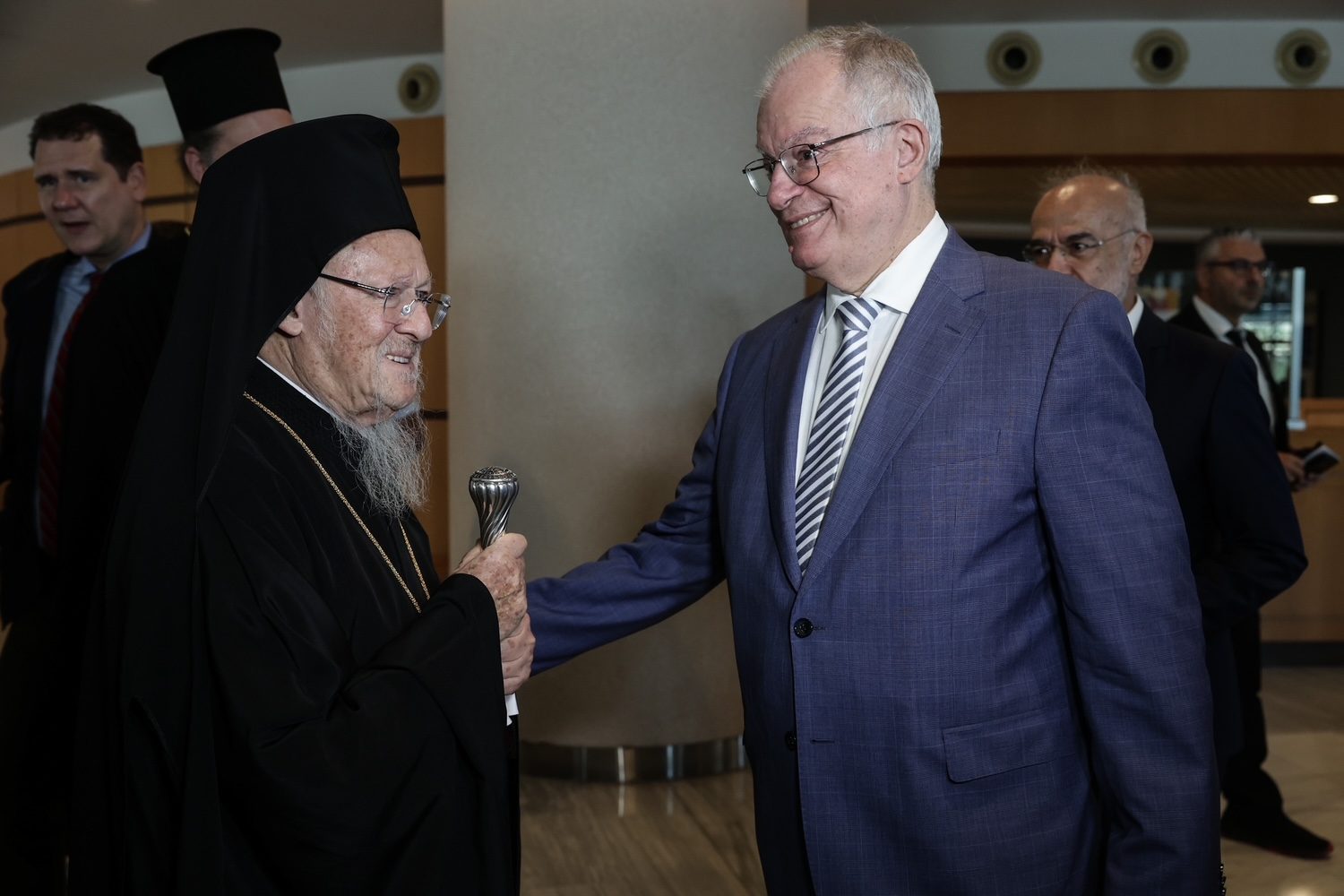
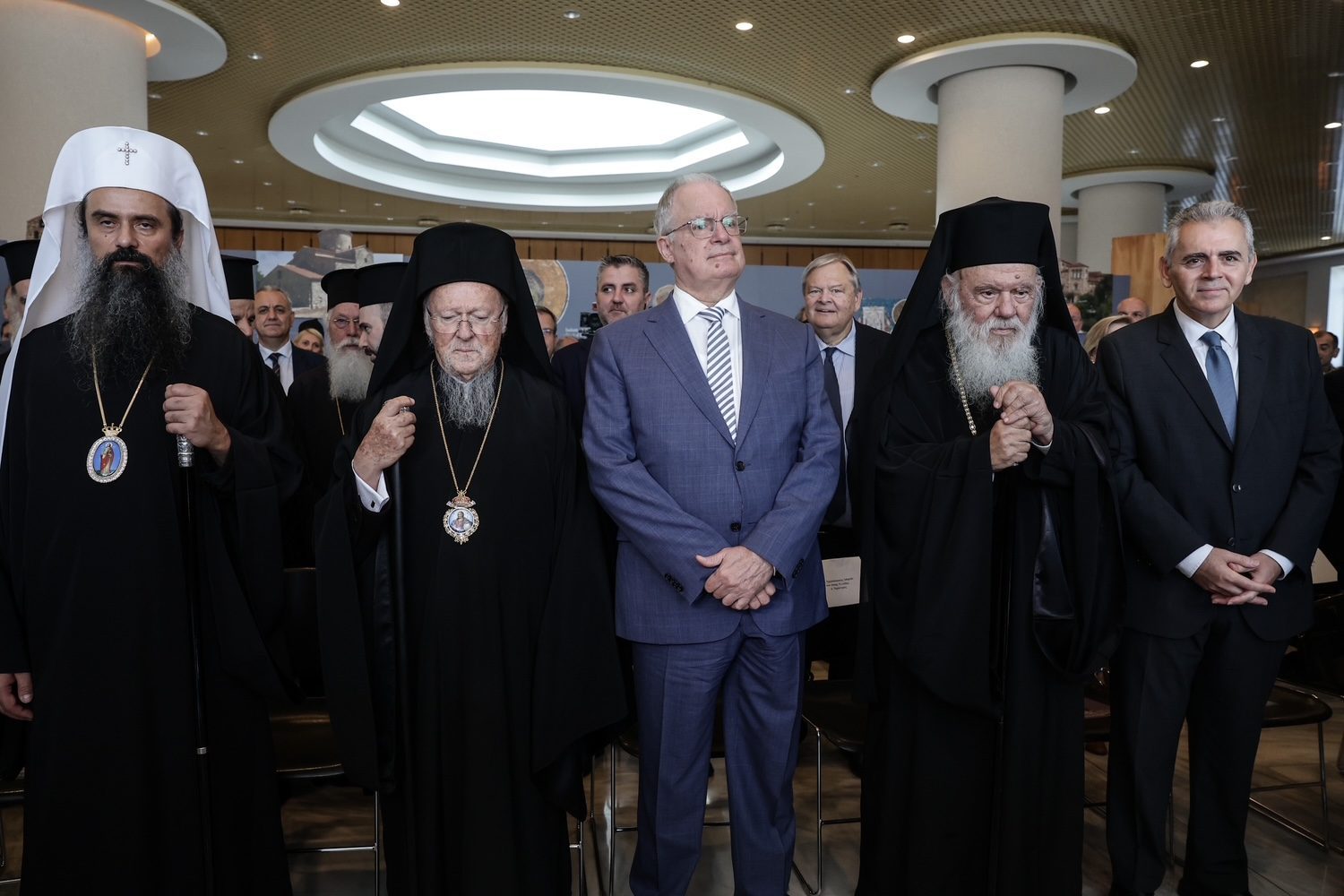
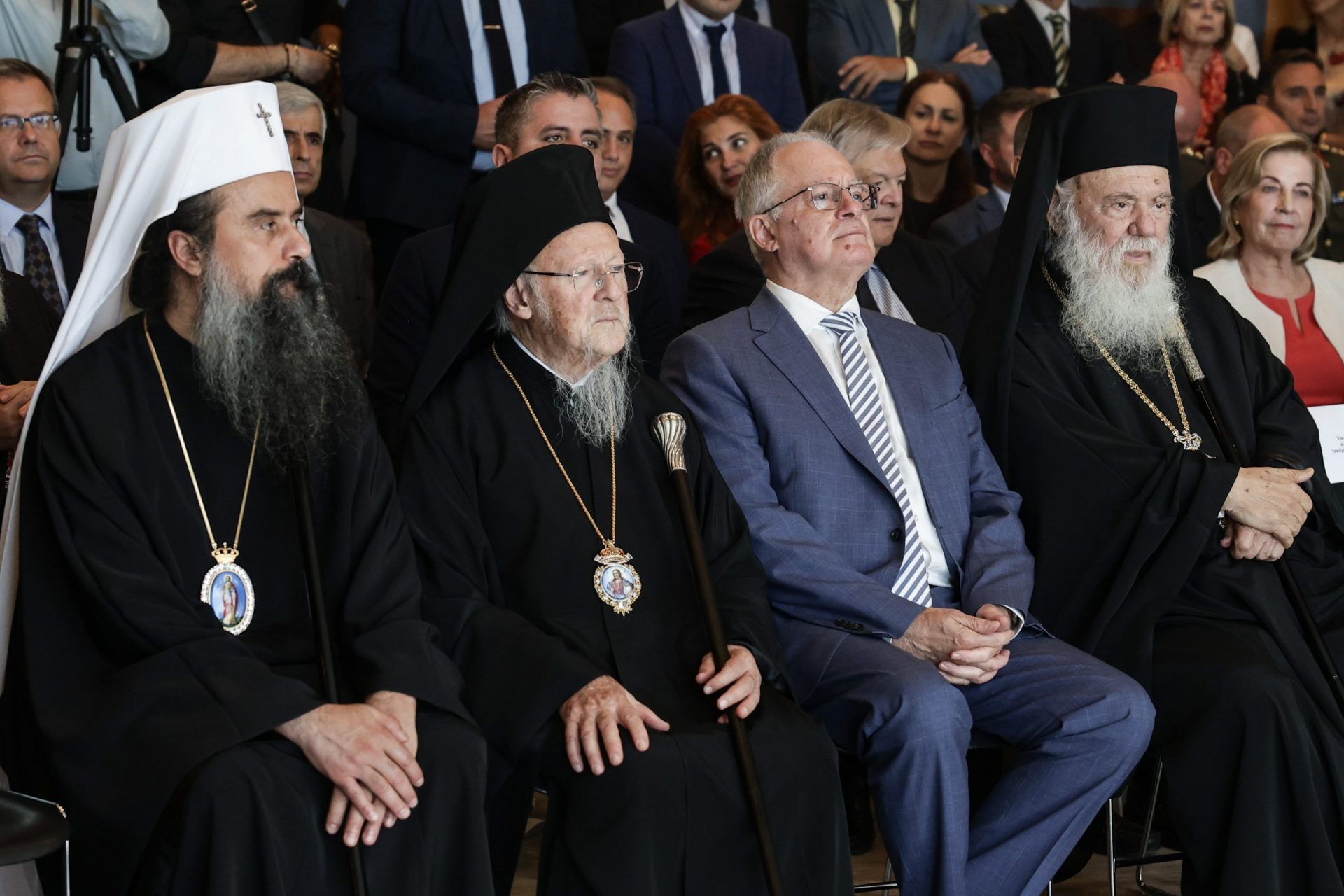
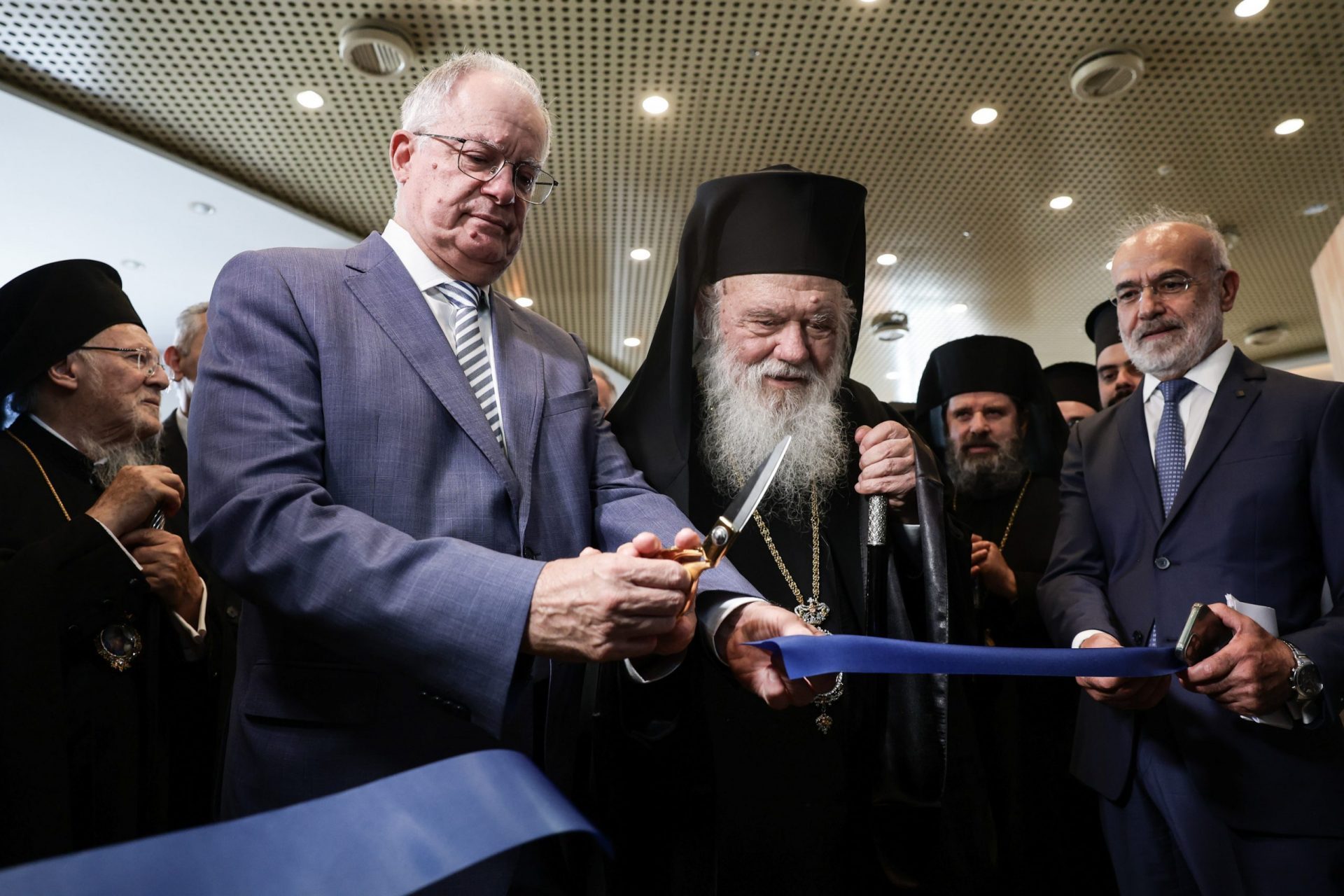
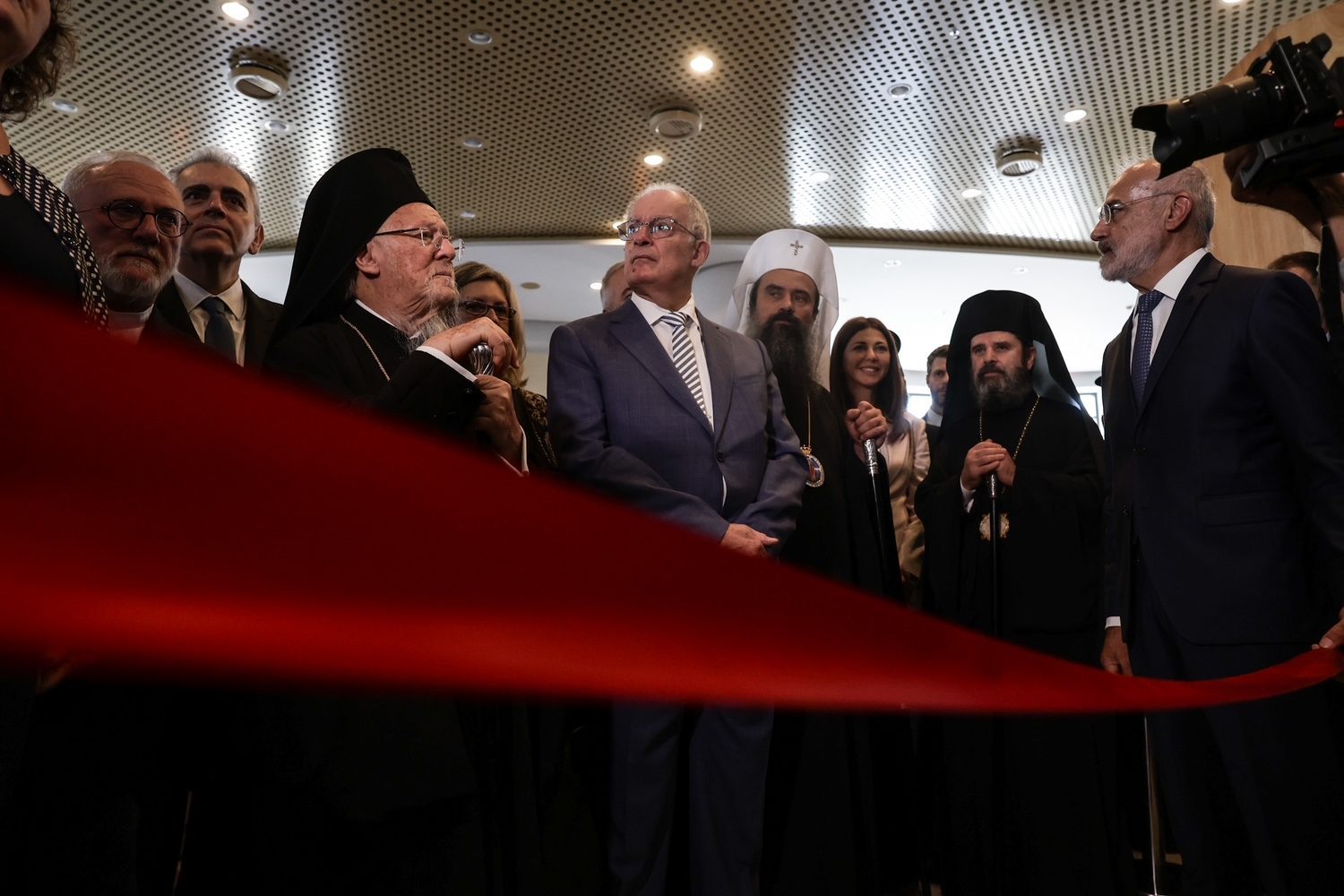
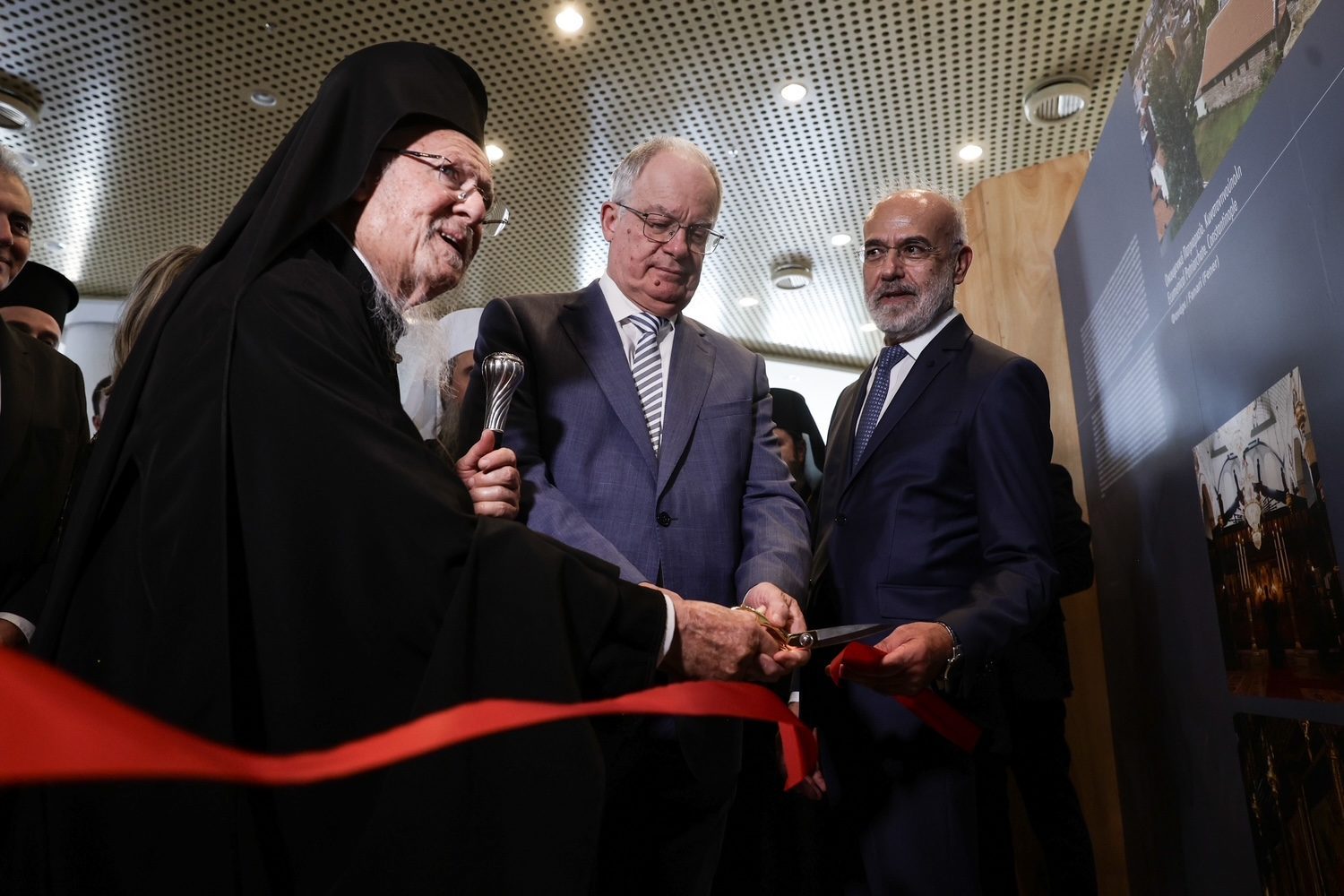
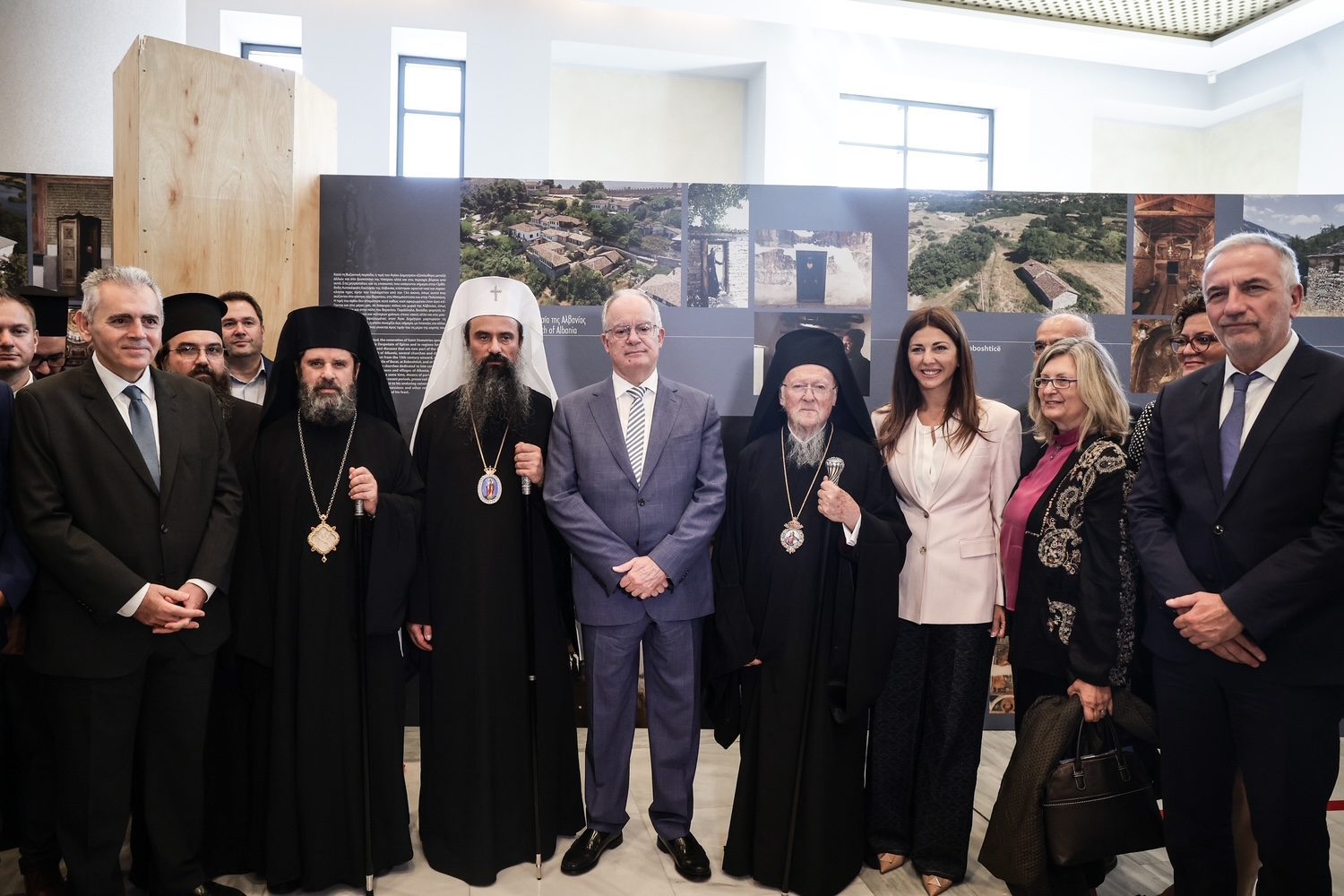
The President of the Hellenic Republic Constantine An. Tassoulas, along with the Ecumenical Patriarch Bartholomew, inaugurated the photographic exhibition “The World Defends Him: Saint Demetrius the Myrrh-Bearer in the Balkans: Emblematic places of worship, portable icons, and frescoes” at the Thessaloniki Concert Hall. Mr. Tassoulas was welcomed by the Archbishop of Athens and All Greece, Ieronymos II, and the President of the Administrative Board of the European Centre for Byzantine and Post-Byzantine Monuments, Natalia Poulou.
Follows the greeting of the President of the Hellenic Republic:
“It is with great pleasure that I attend the opening of the photographic exhibition “The Oikoumene Proclaims You Its Champion: Saint Demetrios the Myrrh-Streamer in the Balkans. Emblematic Sites of Worship, Portable Icons, and Frescoes”
An exhibition presenting churches and monasteries dedicated to Saint Demetrios in the Christian world of the Balkans, in Fanar, Serbia, Romania, Bulgaria, Albania, and Greece. In this way, the exhibition highlights the dissemination of the veneration of the Patron Saint of Thessaloniki in the Balkan region from the Byzantine period to the present day.
Saint Demetrios, the patron saint and protector of Thessaloniki, is a perfect example of the coexistence of healthy patriotism and the ecumenical dimension of Orthodoxy. He is the “philopolis”, “Sosipolis”, “Sosipatris”, ” the great guardian of Thessaloniki” and, at the same time, “the defender of the ecumene.”
Kostis Palamas, worshipping at the tomb of the patron saint in 1927, repeated the words of Konstantinos Sathas, that Saint Demetrios is the preeminent Saint of the Greeks and represents the true phoenix of Hellenism. At the same time, today’s photographic exhibition reveals the ecumenical character of the saint, particularly in the Balkans.
This city, which gave the enlighteners and civilizers of the Slavs, the principal exponents of the ecumenical spirit of Orthodoxy, Cyril and Methodius, also gave an ecumenical saint, Demetrios the Myrrh-Streamer, whom the Slavic peoples also made their own saint.
In Bulgaria, the veneration of Saint Demetrios is very great. It was spread by the disciples of Cyril and Methodius and embraces the entire cultural life of the Bulgarian people. After the 11th century, the name of the Great Martyr becomes closely associated with the Russian people and his veneration during the difficult years of the Tatar invasions takes on national significance. The veneration of the saint also becomes widely spread in Serbia and Romania.
It is impressive the information provided by an unknown author, whose dialogue entitled “Timarion” has been preserved, concerning the market festival he calls ” Dimitria”. Merchants flocked from many parts not only of the empire but also from other countries, and the celebration took on an ecumenical character. The ecumenical dimension of the celebration of Saint Demetrios is also mentioned by Gregoras, who speaks of the fame of Saint Demetrios not only in Europe, but also in Egypt, Libya, Arabia, the Caucasus and the estuary of Tanais River.
Saint Demetrios, who combined healthy patriotism with ecumenism, shows us that in Orthodoxy, the supranational does not negate the national. Orthodoxy does not abolish the national element, but neither does it allow it to function in a divisive or isolating manner.
The Ecumenical Patriarchate, which condemned ethnophyletism as heresy in 1872, did not condemn the harmonization of Orthodoxy and national traditions, but rather the deviation into extremes, such as the Church’s claim to sovereign nationalist power, which is contrary to the spirit of Holy Scripture and Orthodox tradition. Extreme nationalism, as a divisive fact that has tormented and continues to torment Southeast Europe, divides the ecumenicity of Orthodoxy, undermines the unity of people and is in complete opposition to the preaching of the universality and transracial nature of salvation in Christ.
Pray, Your All Holiness, that Saint Demetrios may become a symbol of shared spiritual tradition, of the promotion of the ecumenism of Christianity and of respect for the diversity of individuals and peoples.”