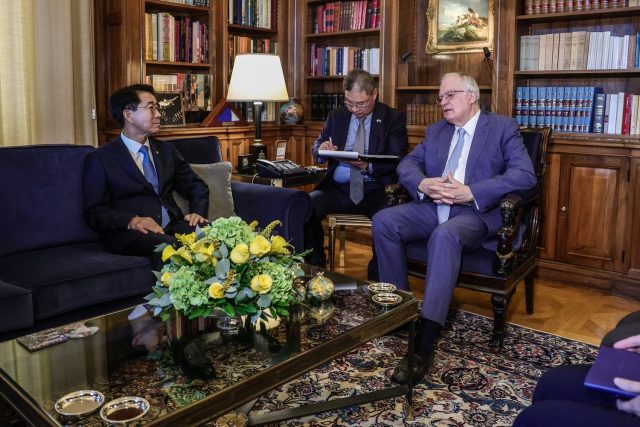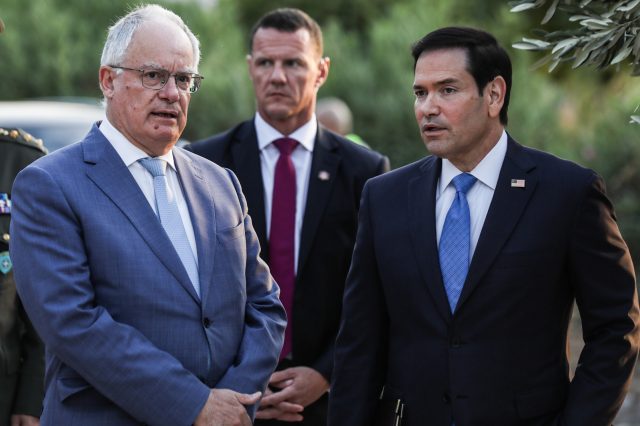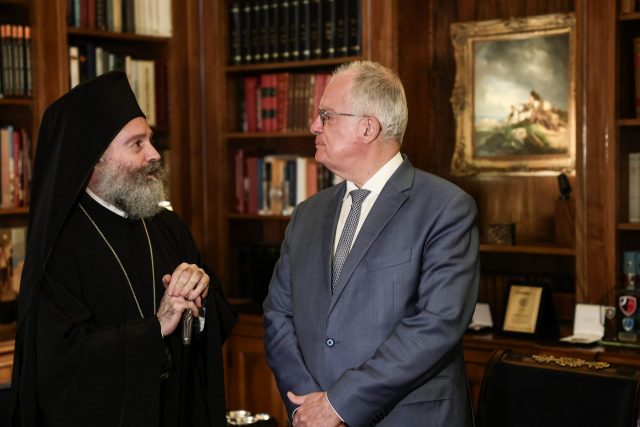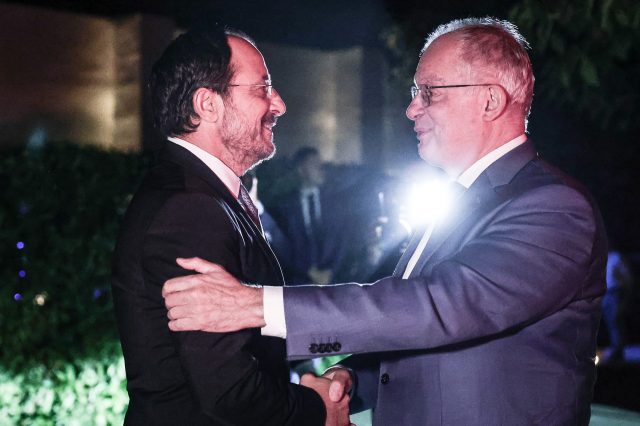
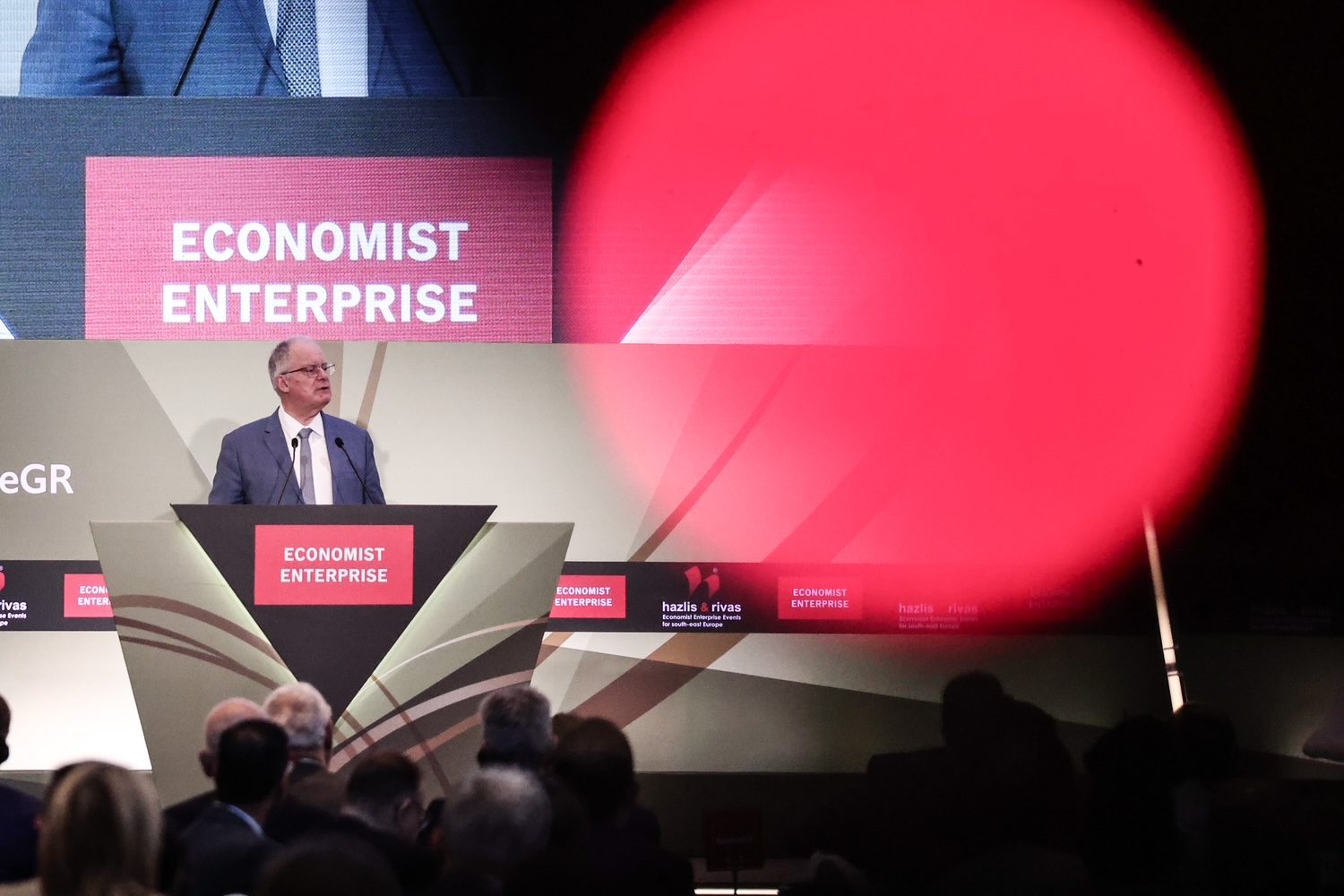
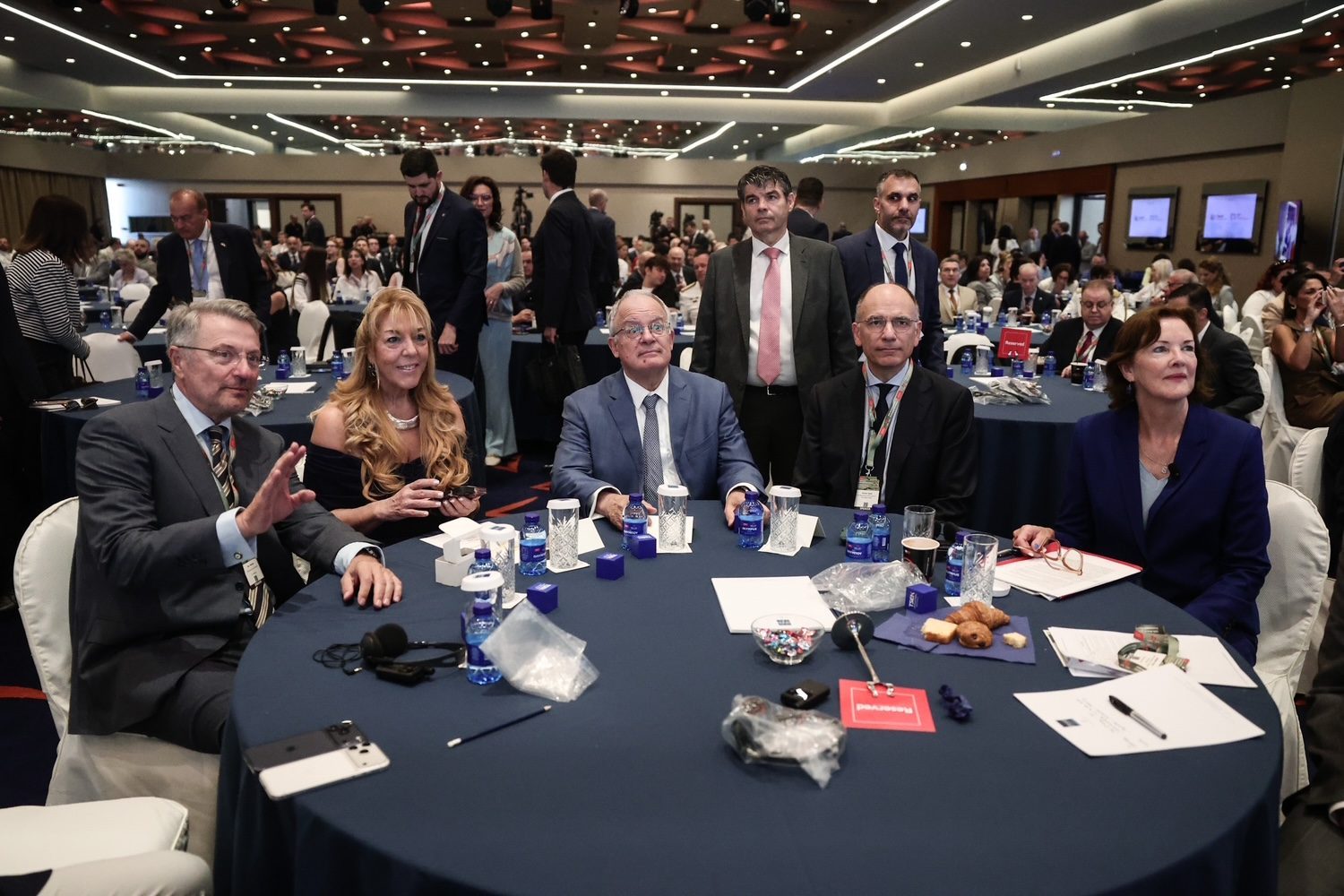
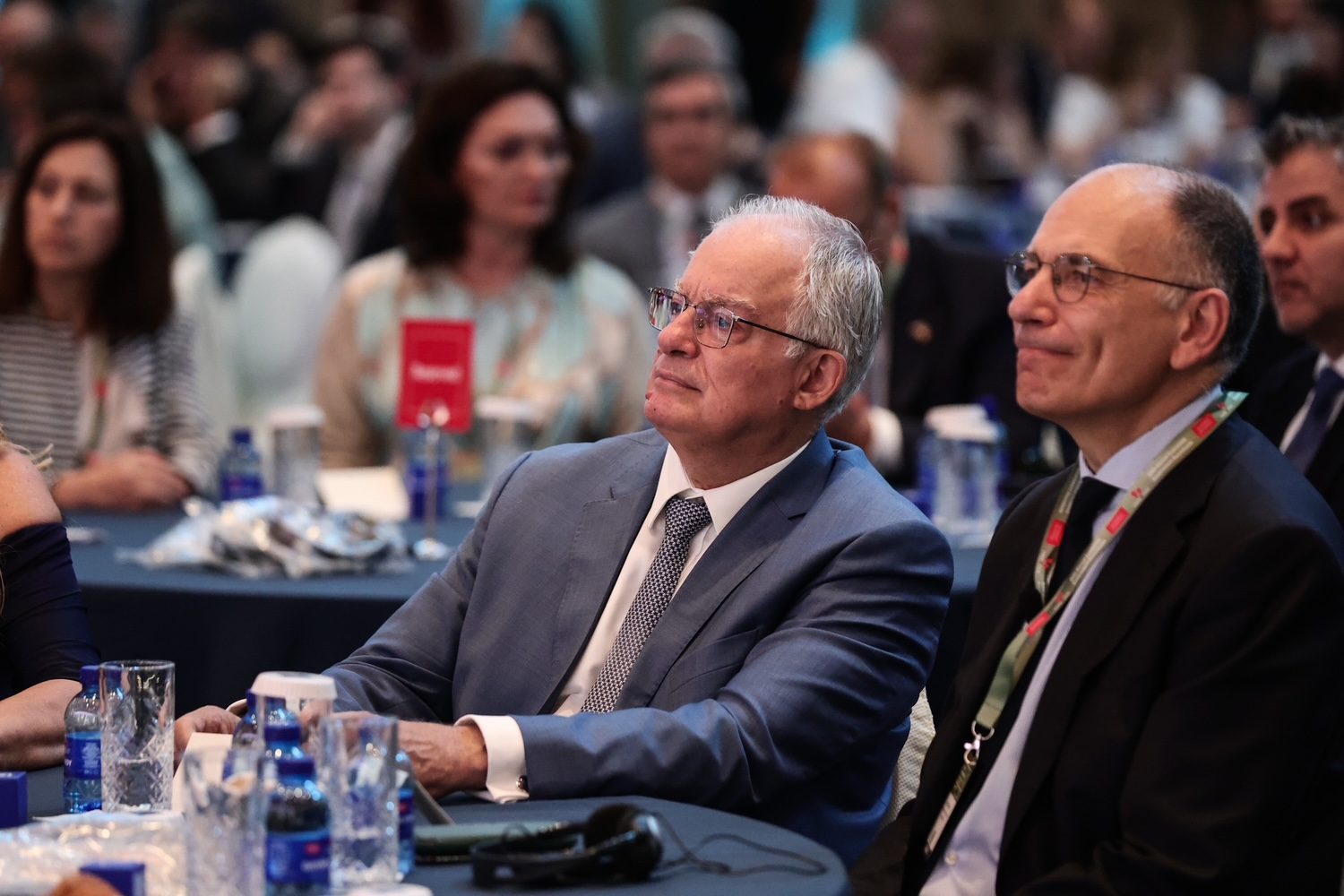
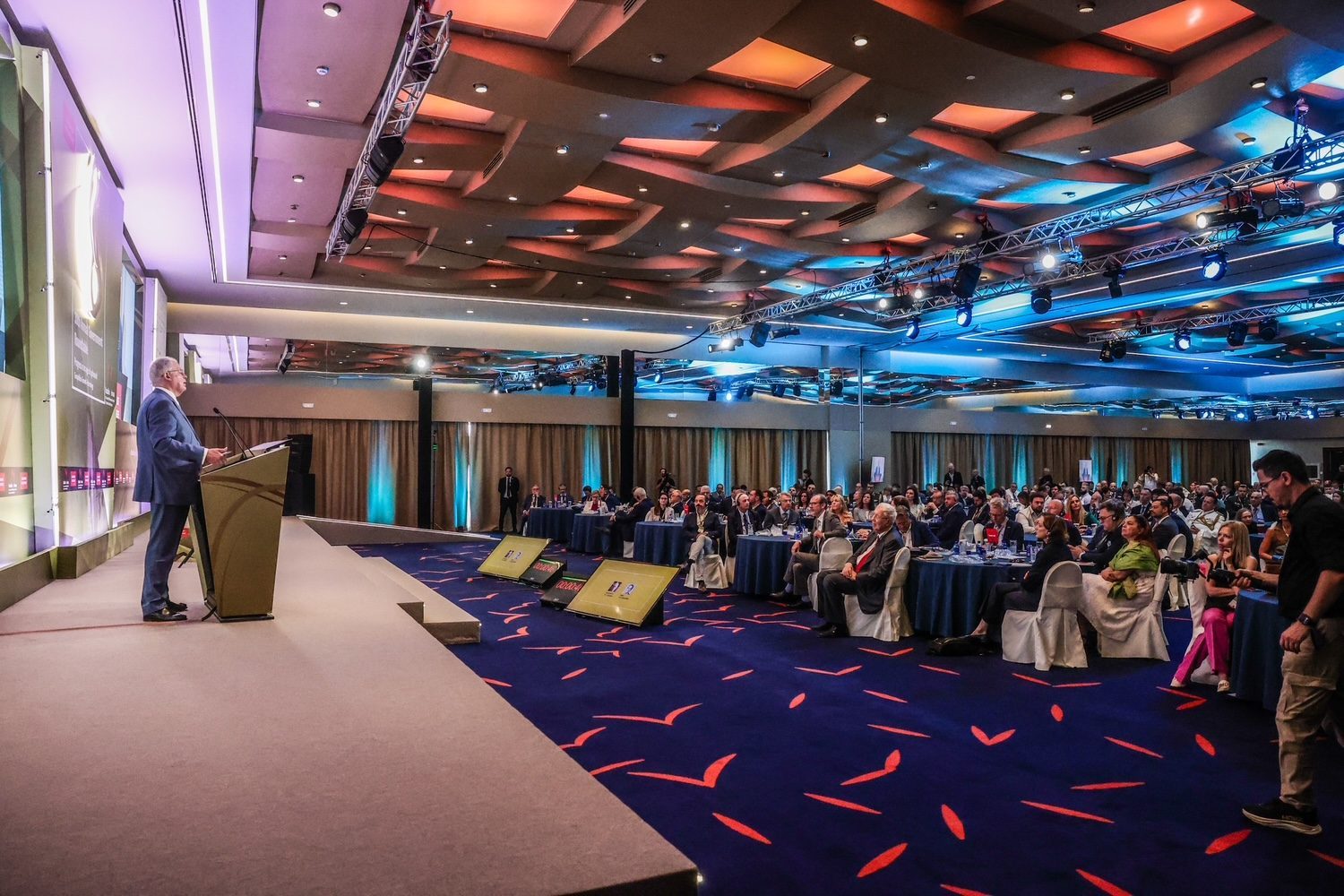
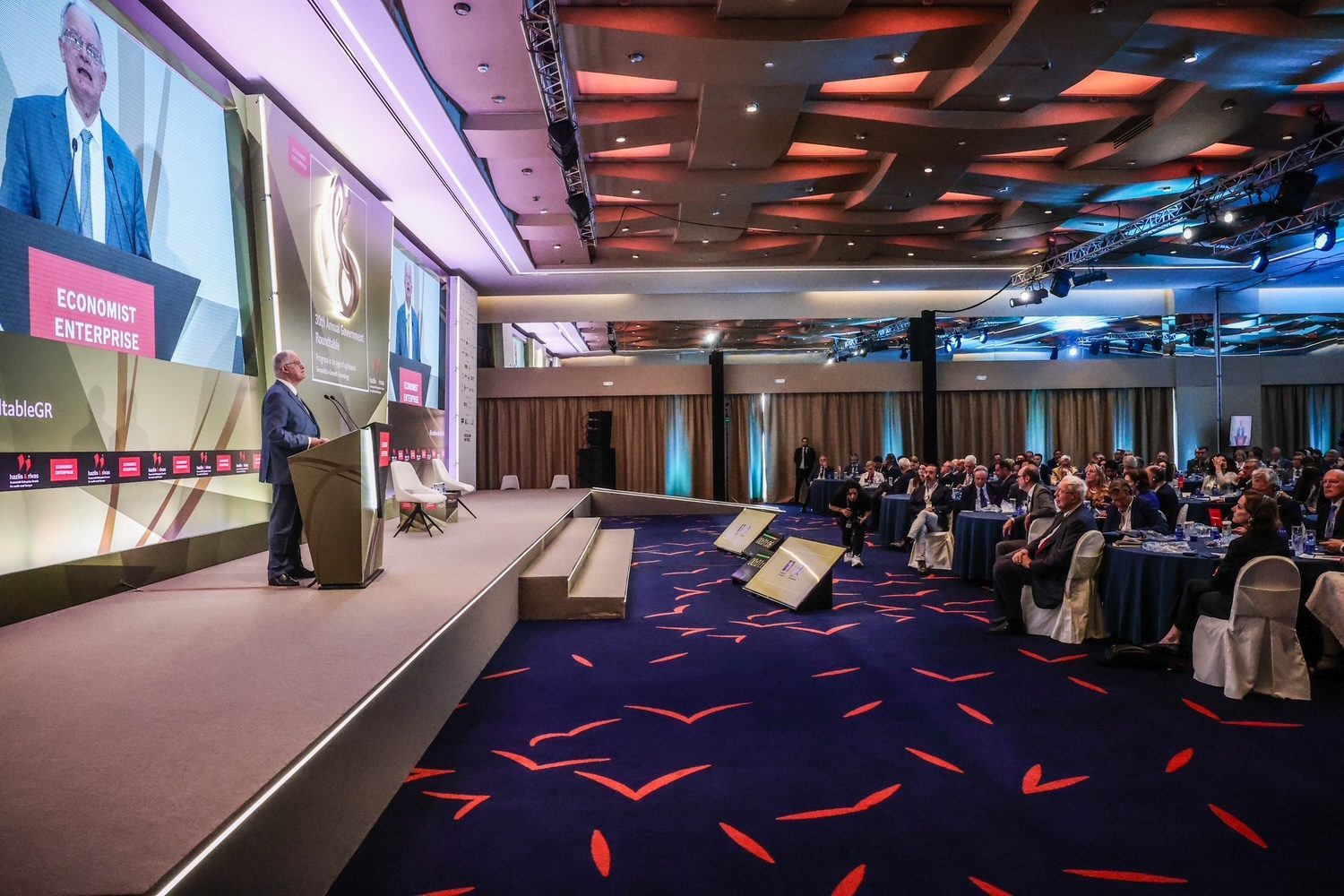
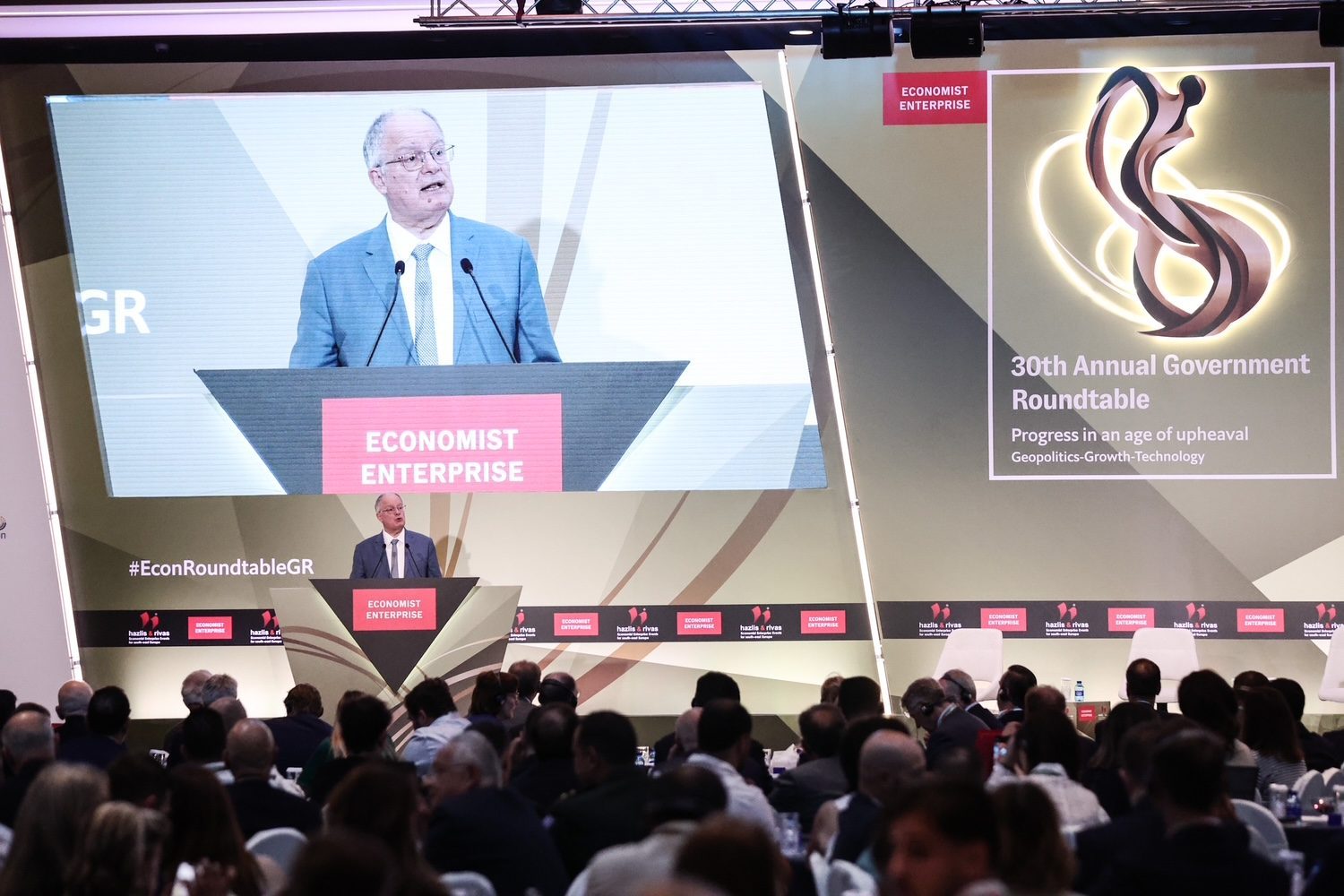
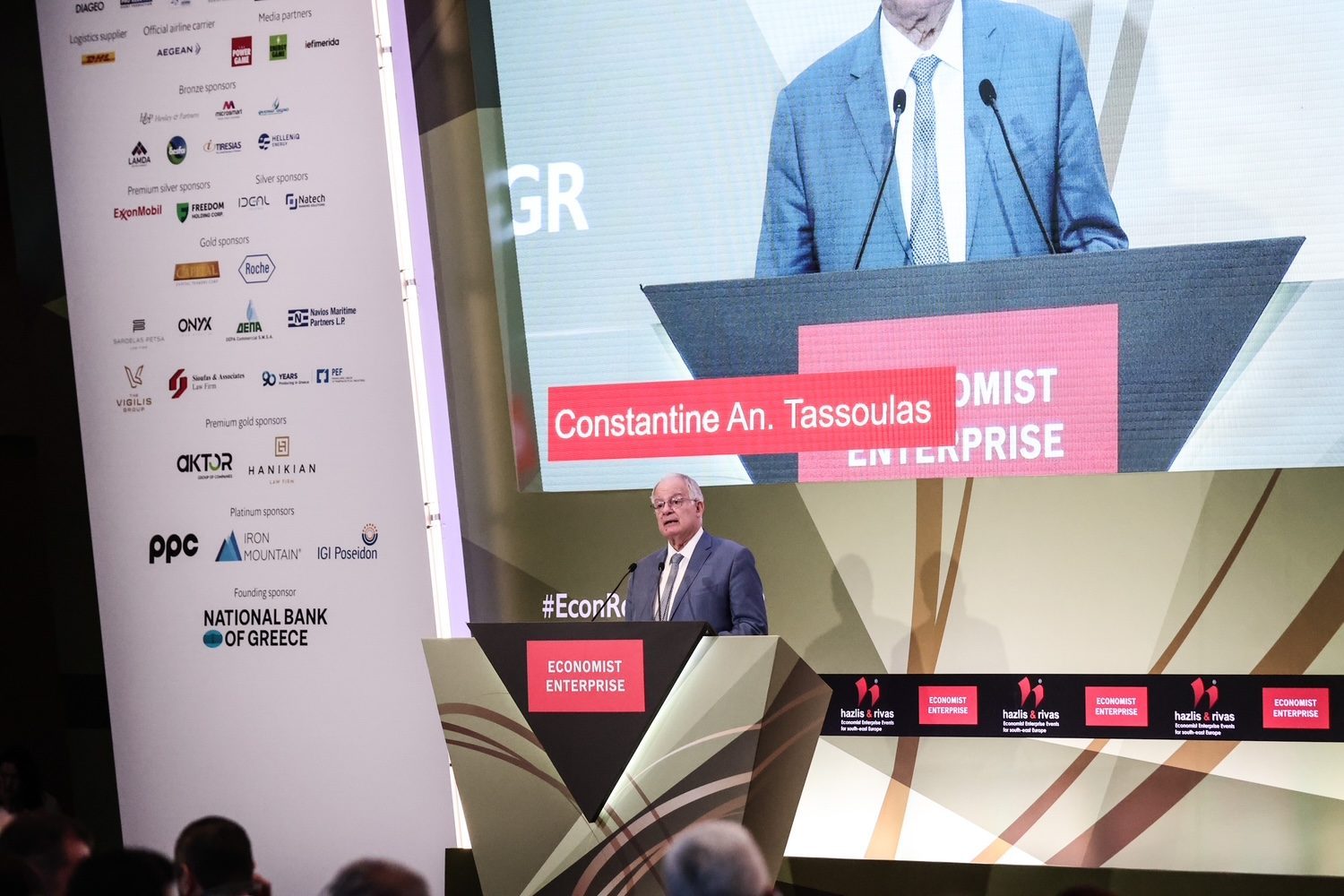
The President of the Hellenic Republic Constantine An. Tassoulas declared the opening of the 30th Annual Roundtable Discussion of the Economist with the Greek Government on the topic “Progress in an age of upheaval: Geopolitics-Growth-Technology,” at the Grand Resort Lagonissi hotel.
Follows the speech of Mr. Tassoulas on the topic “Democracy in decline or in a crisis?”:
“Ladies and gentlemen,
It is difficult to recall a moment in human history when democracy was in a state of calm.
It is a form of government inextricably intertwined with the word crisis. This marvelous form of government, which comes to us from Cleisthenes, has spanned centuries without ever enjoying a period of calm. Yet it is in its constant trial that its value and strength lie. In the fact that every time it overcomes obstacles and does not collapse in the face of difficulties.
Democracy, then, has a history spanning centuries, but it needs modern safeguards, because the challenges are contemporary and seem unprecedented to us; they are challenges, however, that change in form but never in substance.
Modern democracy resembles ancient Athenian democracy far more than we realize. Not only in its virtues, but also in its weaknesses. It often treats unfairly those who have contributed their utmost. It offered Socrates the hemlock. It exiled Themistocles and Aristides. It deposed Pericles. Much later, it imprisoned Kolokotronis. It assassinated Kapodistrias. It voted down Eleftherios Venizelos and so much more.
This injustice is the price of freedom. The freedom for the many to decide. An authoritarian regime would not have condemned Socrates because it would never have allowed him to speak freely. Democracy risks injustice precisely because it grants everyone the right to judgment and criticism. It is the very breath of freedom that, at times, does injustice and, at other times, does justice. And that is its greatness.
However, disagreement does not mean division. Democracy thrives on disagreement. It does not require us all to think the same way. Unanimity, after all, is a temptation of authoritarian regimes, not a virtue of democracy. What is truly difficult, truly democratic, is having the courage to disagree while maintaining the will to remain united.
Today, we are particularly concerned by the fact that citizens are turning their backs on public life. We speak of electoral abstention and apathy of citizens who are turning away from collective processes. Like truth, crisis and apathy are Greek words. The truth, however, is that people distanced themselves from politics even in antiquity. In the time of Pericles, the Pnyx could accommodate more than six thousand citizens in a total population of forty to forty-five thousand. At that time, there was not a representative democracy. Democracy was direct. Only a percentage of the population, in other words, could actually participate in direct democracy. Aristophanes describes the Scythian slaves chasing the idlers in the Agora with the “memiltōmenon schoinion”, a rope dyed red to stain anyone who touched it, in order to force them to climb up to the Pnyx. And later, they had to offer a three-obol daily wage as an incentive to those who participated. The crisis regarding participation, you see, is not a phenomenon of our time.
There is, however, one aspect of today’s crisis that is, in fact, new. For while voter abstention and distrust have always been part of democracy, in our time something that we had considered to be achieved for decades is now called into question.
Ladies and gentlemen,
There are quite a few people today who believe that authoritarian regimes are, in practice, more effective. And this is, to a certain extent, also our fault. Because in the 1990s, after the collapse of existing socialism, we believed we had reached the end of history; we believed that democracy would prevail definitively and that the era unfolding before us would be completely different.
In the globalized world we live in, democracy has become a matter of international geopolitical balance. Many analysts believe that the future of democracy will be decided, to a large extent, in India. That is, whether the country, whose population will soon exceed one and a half billion people, will continue to follow the Western model of democracy.
Today, the number of people around the world living under authoritarian regimes is steadily increasing.
And this retreat rarely comes with the abolition of elections. It comes more insidiously: by silently eroding the very conditions without which democracy cannot breathe. And the first of these is the public sphere, the space where citizens are informed, engage in discussion and form opinions.
Because no democracy can stand on its own without a vibrant, free and principled public sphere.
Jürgen Habermas described democracy as a two-pole system. At the center are the institutions that legislate and govern. They are, however, at risk of being captured by powerful interests. As a counterbalance, on the periphery of the center, lies the public sphere. It is constituted by public opinion, citizen initiatives, free and investigative journalism and even civil disobedience. This periphery brings to light what the center ignores: social inequalities, the infringement of rights and the protection of the environment. It is democracy’s early-warning system.
Over the past fifteen to twenty years, however, this balance has been overturned. The periphery no longer controls the center; poisoned, it is losing awareness, and democracy is no longer able to perceive what threatens it.
The public sphere is contaminated by mechanisms that, at first glance, appear to serve freedom of expression and dialogue, but in reality, act as amplifiers of polarization, conflict and toxicity. Often, they are deliberately exploited as tools of confusion by those who seek to render entire societies and countries ungovernable, plunged into instability and turmoil.
As a result, the common ground on which we once agreed about what is true has been damaged. Facts are maliciously relativized. And everyone constructs their own arbitrary truth, tailored to their own interests. Thus, society is fragmented into subgroups that no longer speak to one another. Each person hears only the echo of their like-minded people and mistakes it for the voice of the entire world.
Added to all this is the dominance of an international financial network that imposes, on every country, automated mechanisms that operate independently from political dialogue. Thus, it cultivates the most dangerous perception for a democracy: that any political debate and disagreement is, in the end, futile; that the policy to be implemented is, in any case, already determined and predestined. And politics, then, becomes a mere appendage of the economy.
Ladies and gentlemen,
At the heart of democracy lies a profound philosophical truth: that reality is so complex that no single person can fully grasp it or know it fully and objectively. This is precisely why freedom of thought is the only way for a society to combine the partial truths of many into a more complete picture of the world and to make wiser decisions.
Herein lies the answer to those who are today dazzled by the promised effectiveness of authoritarian regimes.
Whoever restricts freedom of opinion blinds society itself against its opportunities and dangers, and leads it, sooner or later, to decline. Oligarchies and autocracies may seem stable; yet, deprived of that spirit of freedom, the very same spirit that sometimes does injustice and sometimes does justice, they inevitably lead to impasses and national crises.
Democracy, by contrast, precisely because it listens to the many, remains the only form of government that guarantees progress. It remains, even today, the strongest guarantee of our security and prosperity. This is the profound, timeless meaning of this immortal ancient Greek invention: democracy.
I congratulate The Economist on the organization of this event and wish you fruitful discussions at your conference.
Thank you.”