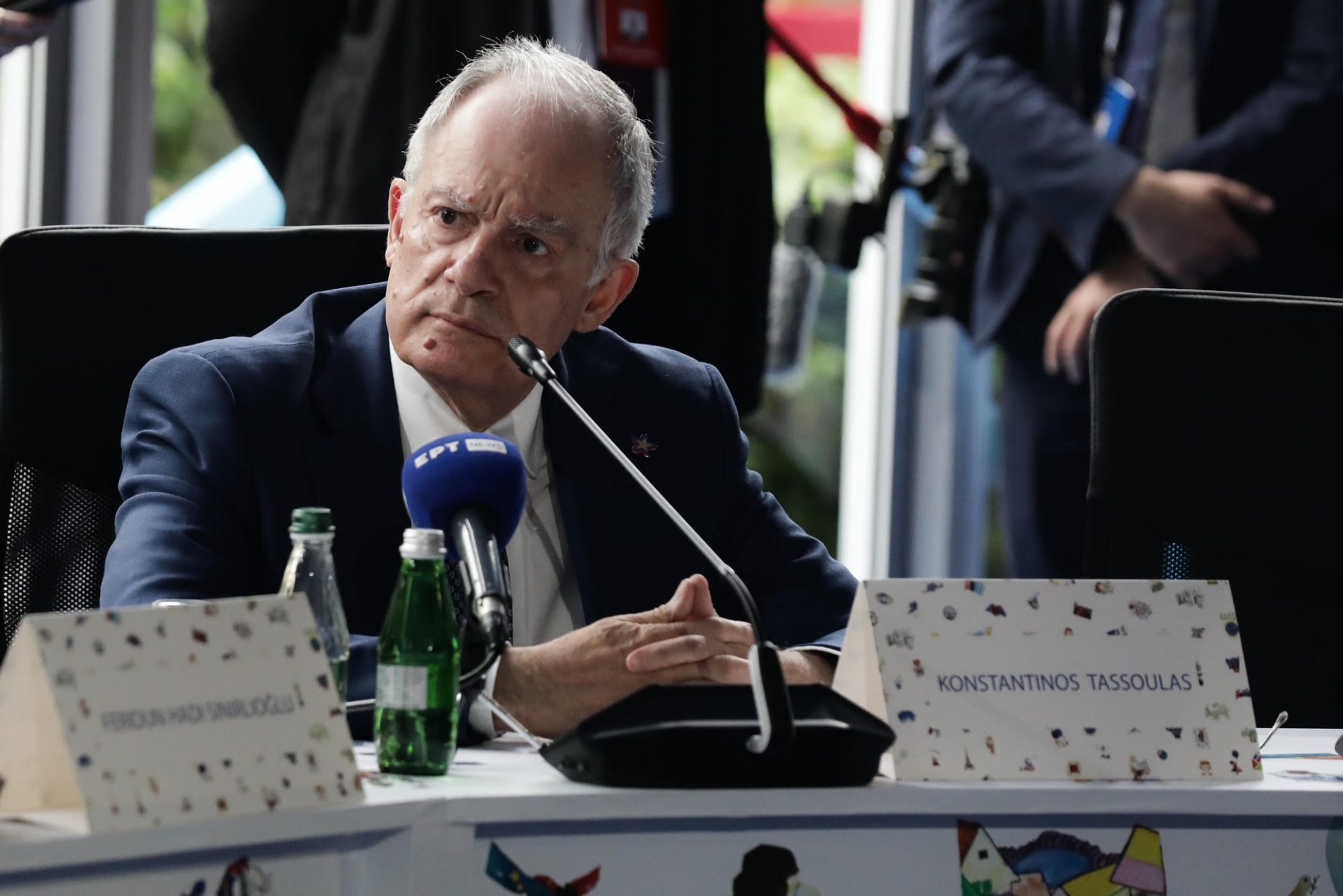
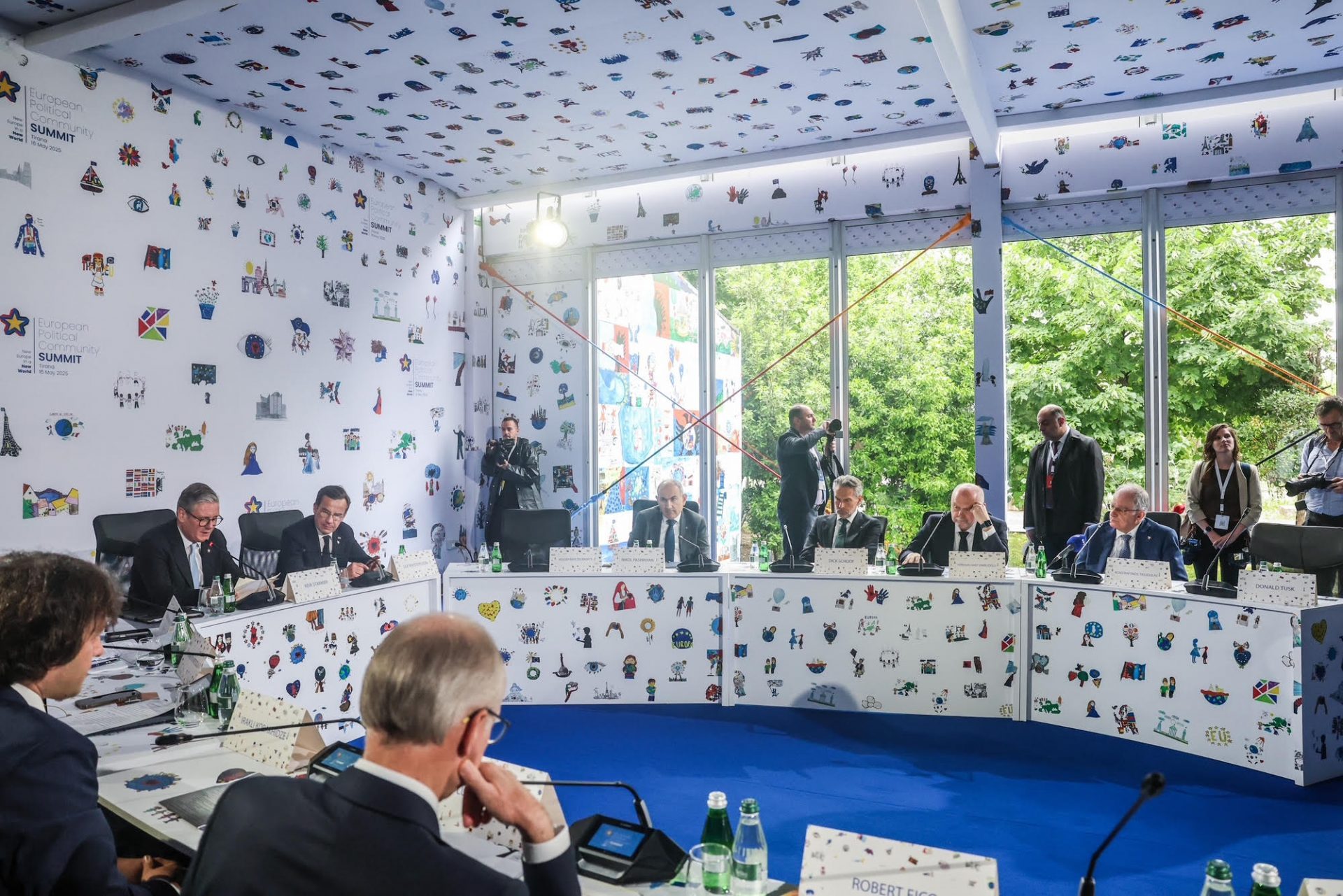
It is a privilege to participate in the European Political Community Summit for the first time as President of the Hellenic Republic.
Our meeting today takes place at a particularly critical juncture. Tectonic geopolitical shifts take place and multiple crises across the globe are calling into question the post war rules-based international order, thus shaking the sense of security and even the faith of European citizens in democracy and human rights.
In this continually evolving landscape, characterized by uncertainty, we are called to safeguard our principles and values, while delivering on our responsibility to promote peace, stability, and democratic resilience across our continent.
In this context, I would like to stress three points:
First, one of our foremost priorities must be continued support for Ukraine, as a manifestation of respect for international law and the UN Charter.
We fully support the efforts for peace in Ukraine and we commend the political will shown by the Ukrainian leadership. The proposal for an immediate and unconditional 30-day ceasefire could pave the way for a fair and viable peace agreement. The violence and the loss of thousands of lives must stop immediately. At the same time, we must be clear. No peace plan can be feasible and viable if the United Nations Charter, the fundamental rules of international law and, above all, the sovereign will of the Ukrainian people are violated. Τhe EU should be involved in any peace arrangement reached on the basis of international law and make sure that the necessary guarantees are in place to deter a recurrence of such a tragedy in Europe in the future. Changing borders by the threat or use of armed force cannot be accepted either in Ukraine or anywhere else on the European continent. Greece as a non-permanent member of the Security Council, is committed to working together with all stakeholders to keep the issue of Ukraine at the top of the UN agenda.
Furthermore, Greece fully supports the efforts of Ukraine (and of Moldova) in their accession process to the EU, as an essential means for promoting peace, stability and security in the broader Eastern Neighbourhood region. The same applies of course for our Western Balkans partners whose accession path has been consistently supported by Greece ever since the Thessaloniki summit in 2003.
Second, the Russian invasion of Ukraine and the wider geopolitical developments have highlighted the need for Europe to assume greater responsibility for its defence, within the framework of close euro-atlantic ties. In this context, the EU has taken concrete initiatives to enhance its defence readiness and capabilities in order to strengthen its strategic autonomy and collective resilience, while fully respecting of course the security and defence interests of all Member States.
In this endeavour, cooperation with other like-minded European countries can be beneficial as long as the latter are committed to the principles and objectives of the Common Foreign and Security Policy of the EU.
Coming to my third point, I would like to stress that military capabilities alone cannot guaranty our security. Hybrid threats, including the instrumentalisation of migration by third countries, pose a growing threat to our security, democratic institutions and social cohesion and have to be met with resolve and determination. The safeguarding of democratic institutions and rule of law constitute the bedrock of stability in our countries and we must thus increase our resilience against such attacks targeting our democracies.
We must also remain vigilant in protecting electoral processes, ensuring transparency, and fostering a political environment that resists disinformation campaigns. Promoting media literacy and equipping our citizens, notably the young generations, with the necessary tools to learn how to evaluate information, ask critical questions and avoid manipulation, is crucial.
Within the EU, we have developed a wide array of instruments to counter hybrid threats and disinformation that could be helpful to other European partners sharing the EU values.
Guided by adherence to international law, shared values and mutual respect, we can work together to develop comprehensive strategies that address both immediate security threats and the longer-term resilience of our societies. Thank you.