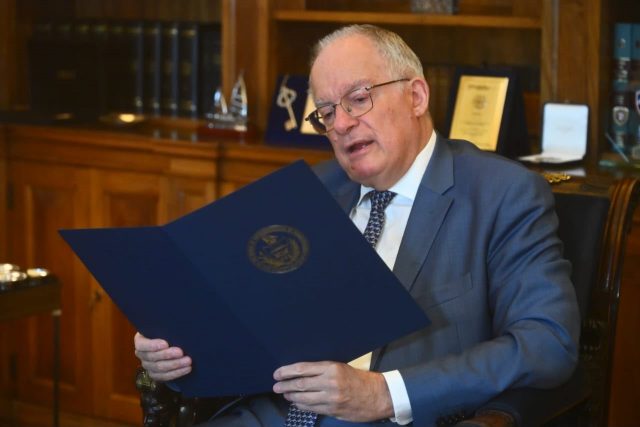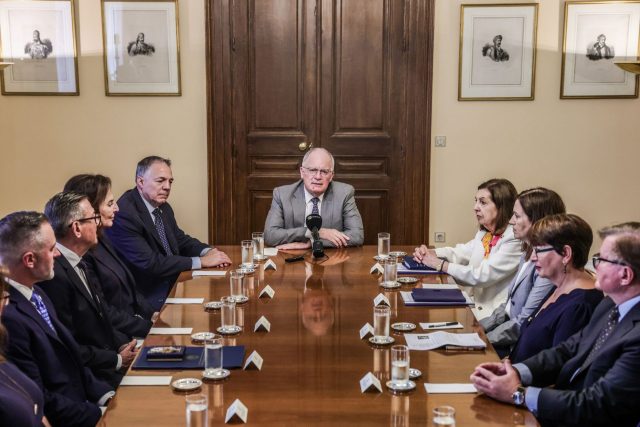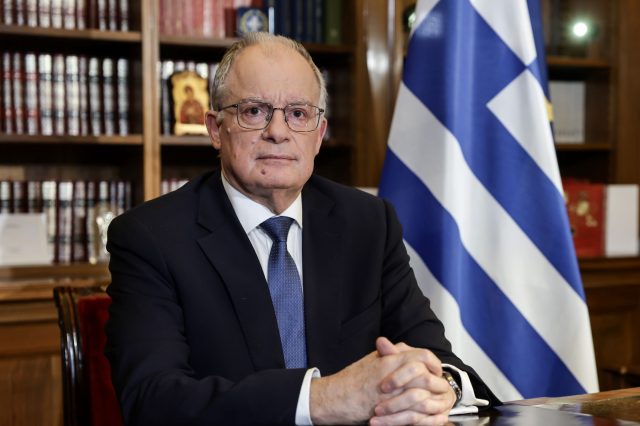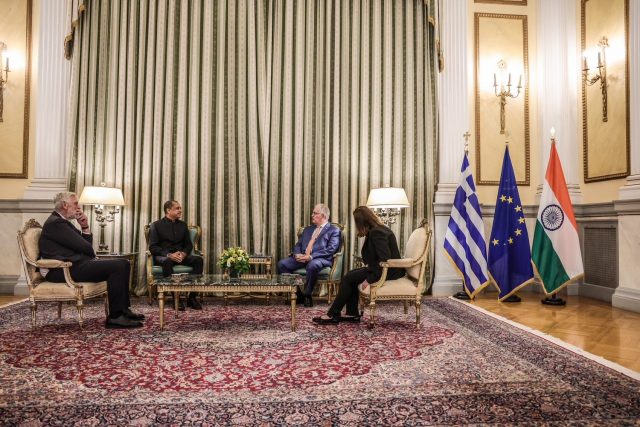
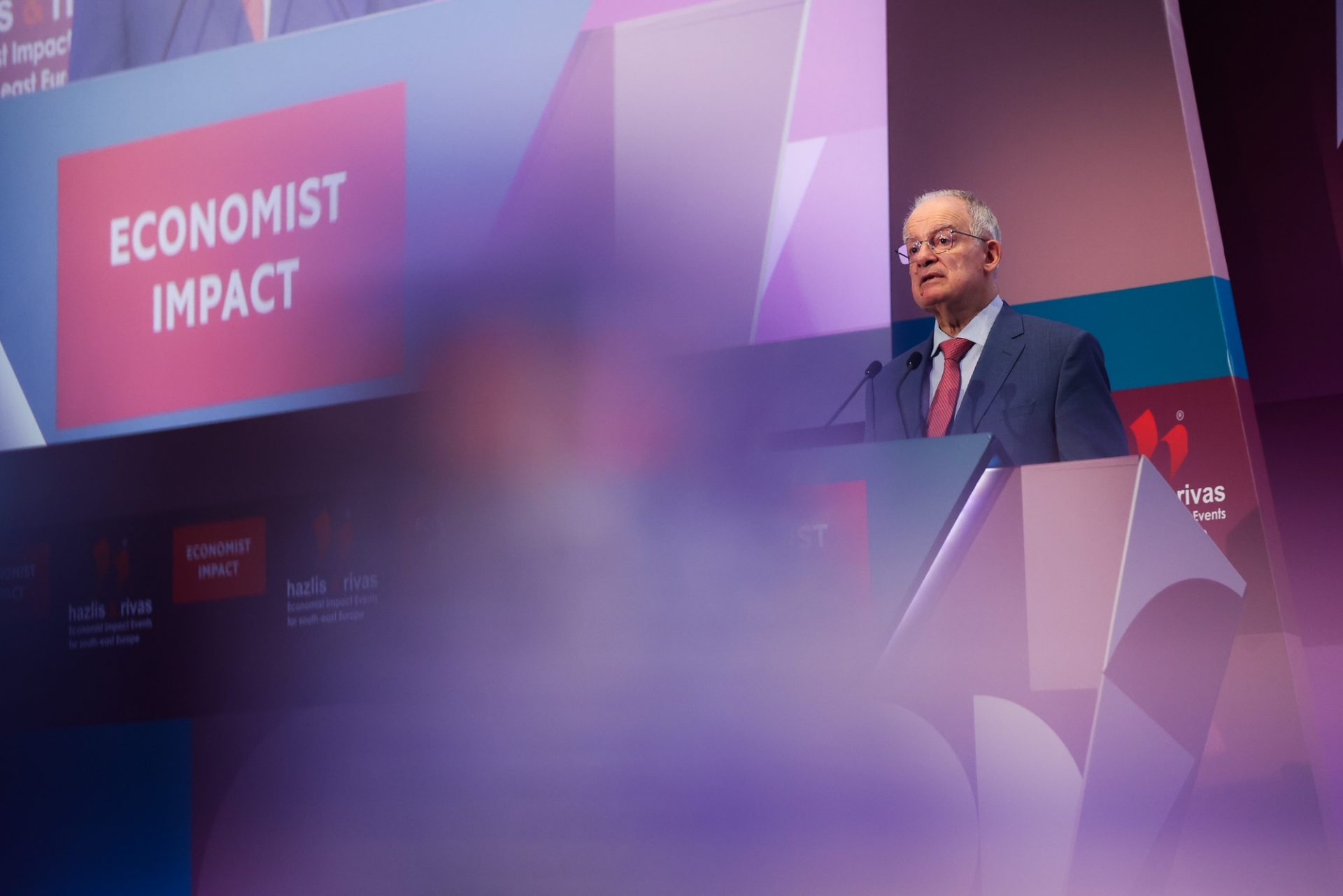
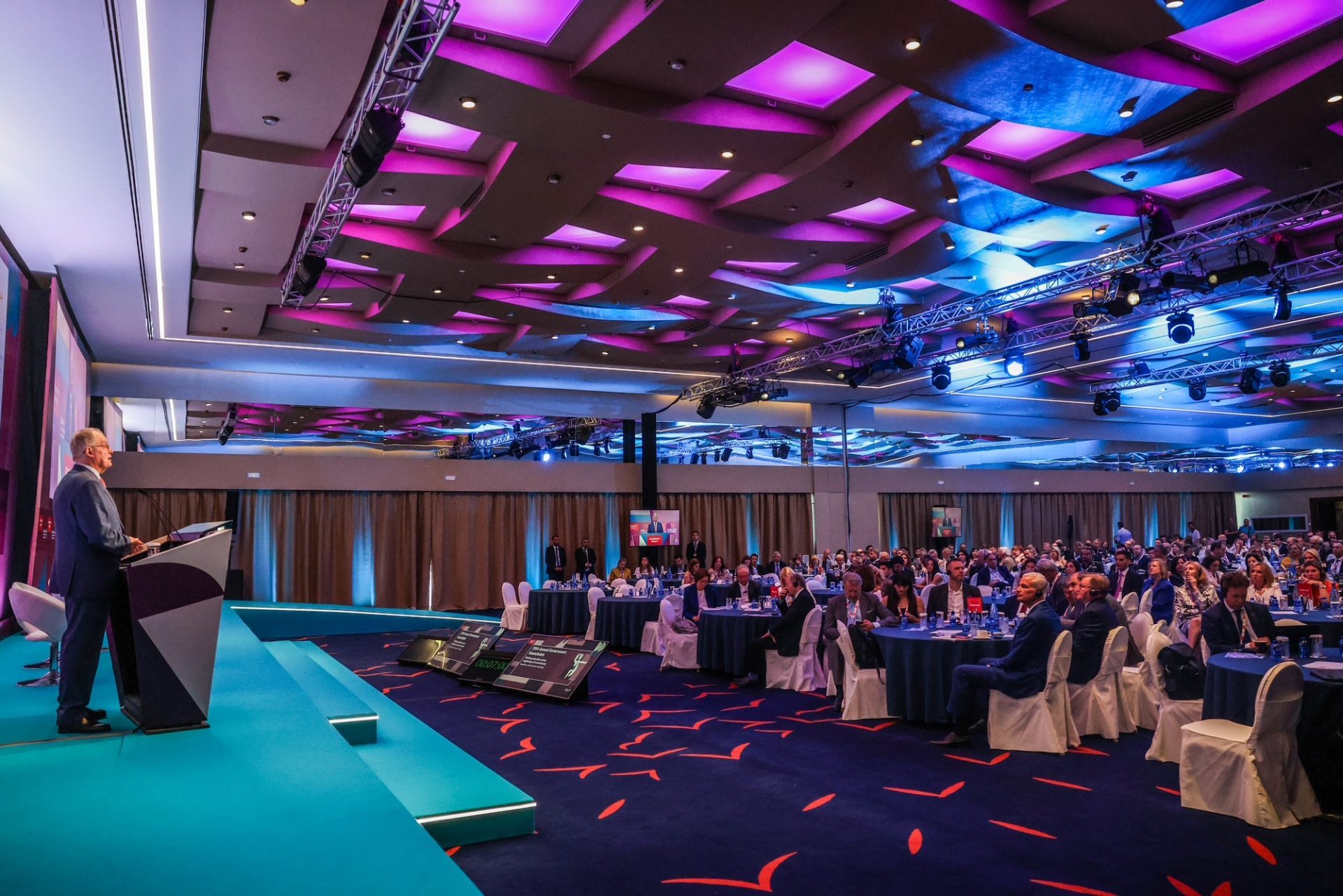
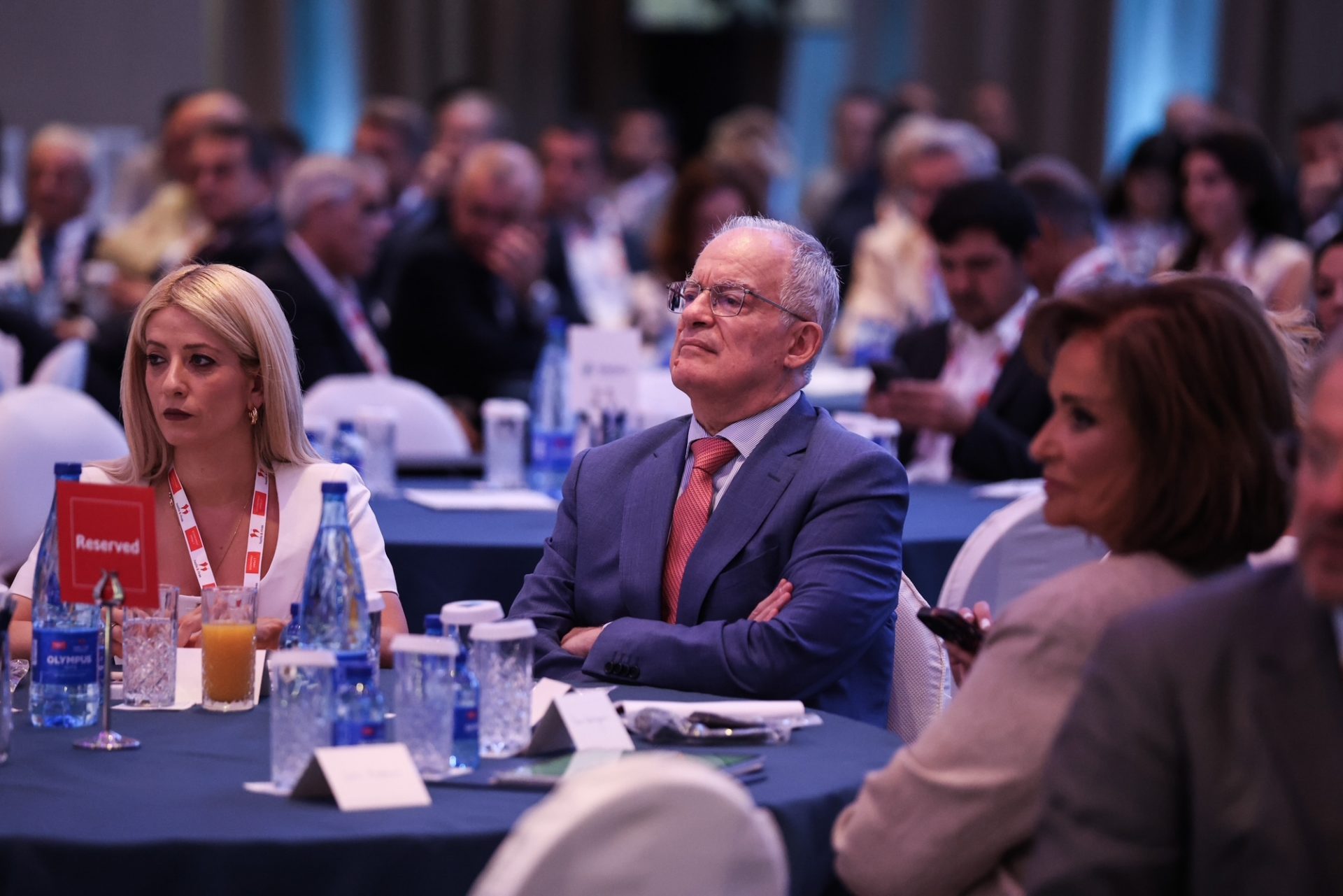
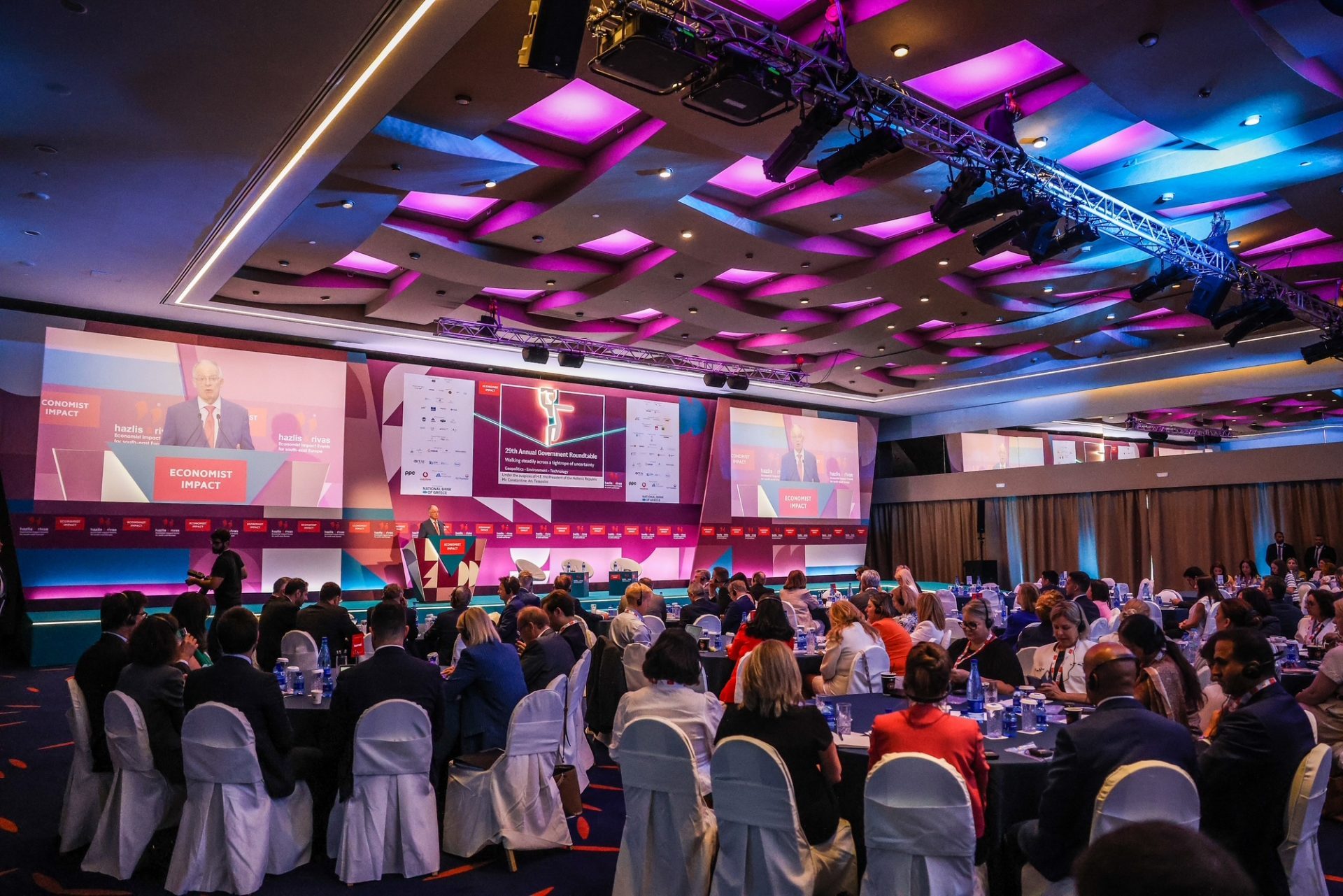
The President of the Hellenic Republic Constantine An. Tassoulas declared the opening of the 29th Annual Government Round Table Discussion of the Economist in Greece on the topic “Walking steadily across a tightrope of uncertainty”, at the Hotel Grand Resort Lagonissi. In the framework of the international conference, the issues that will be analysed include the course of the Greek economy, Donald Trump’s second presidential term and the relationship between Europe and the US, the future of Europe and its Defense and Security strategy, as well as the global outlook for investments. The conference will also expand on issues concerning migration, the climate crisis, the changes that artificial intelligence brings and the challenges that young people face today.
Mr. Tassoulas’ speech follows:
It is with great pleasure that I participate in the 29th Annual Government Round Table Discussion organised by The Economist.
The agenda of this year’s meeting could not be more timely, as there is no doubt that the global context is characterized by a high degree of volatility and uncertainty.
Decades of stable international relations are being shaken and military conflicts are succeeding one another. Revisionism and extreme nationalism are spreading dangerously in our neighbourhood and in the wider region, while isolationism and unilateral action and the law of force are being reinforced to the detriment of multilateralism and cooperation.
Even more alarming are the increasing cases of questioning international law and international institutions, built on the ruins of the Second World War.
Fundamental principles of the international legal order, such as the ban of the use and threat of use of force, the inviolability of borders and respect for national sovereignty are violated on a daily basis, while human rights and international humanitarian law are blatantly violated in many parts of the world, as we have just heard.
At the same time, addressing global challenges such as climate change, health crises, the development and use of artificial intelligence, mass migration, reducing inequalities and fighting fundamentalism and terrorism require immediate and coordinated action by states, international organizations and other organised bodies of the international society.
Unfortunately, however, in many cases this much needed cooperation still being sought, as competitions, ideological differences and conflicting interests hinder the formation of the necessary consensus to find commonly accepted solutions.
At the same time, within many countries, authoritarian leaders or populist political forces take advantage of the legitimate insecurity of citizens over these complex problems, questioning the value of democratic governance and the rule of law.
Thus, in the midst of the rapid changes that are taking place at the international level, in the midst therefore of uncertainty, we cannot but wonder:
Is the rule-based post-war world order still alive?
Is it finally possible to secure international peace, security and prosperity through the strengthening of the law or, on the contrary, we are returning to times of international anarchy, where the only rule is the law of the powerful, as Thucydides so eloquently described?
And even more, what is the role of the European Union, and the position of Greece, in this ever changing and unstable world? In this uncertainty?
Ladies and gentlemen,
The international community as a whole decided in 1945 to build a world order that would ensure, if not eternal peace as envisioned by Kant in the 18th century, at least the non-repetition of the atrocities of the Second World War, and would promote the creation of institutions and rules that would guarantee freedom, democracy and economic cooperation between states.
In this framework, the UN was founded, whose Charter for the first time in the history of mankind outlawed war as a means of resolving international disputes.
At the same time, the protection of fundamental human rights was established and war crimes, crimes against humanity and, of course, genocide were criminalized. The recognition of the principle of self-determination paved the way for de-colonization and the enjoyment of the good of freedom and independence by tens of peoples and nations.
During the same time period, the foundations were laid for a liberal system of international trade, which, despite its problems, gradually led to the spectacular growth of the world economy and the prosperity of more and more people around the world.
At the same time, on our continent, the creation firstly of the European Union (then the EEC) and secondly of the Council of Europe marked the beginning of a long period of peace, democracy, economic development and social progress.
Nevertheless, the gradual change in the global balance of power, combined with crises inside Western democratic countries, but also the continued economic inequalities worldwide, have damaged the credibility of the liberal world order as it was built and described in brief, after the Second World War.
But what is the alternative?
Can we imagine a world without the UN, where war and the threat of the use of force would be an entirely acceptable way of settling disputes and changing borders?
Can we imagine a world without legal protection of human rights or without rules for the conduct of world trade, for the safety of navigation, or the safety of navigation, for the limitation of nuclear weapons, for the protection of the environment?
Is it possible to think of a Europe without unity and solidarity, where each state struggles to secure its own interests in a multipolar world of instability and constant competition?
I think we all know the answer!
Respect for international law and the Charter of the United Nations is not a figure of speech or an outdated notion of another era or romanticism, but an absolute necessity and a one-way path for humanity.
In this spirit, our wholehearted support for Ukraine, from the very first moment of the Russian invasion, was not just a gesture of solidarity with a friendly country, but a concrete proof of our commitment to the principles of national sovereignty, territorial integrity and inviolability of borders. We will therefore continue to support the Ukrainian people’s struggle for freedom, as well as the diplomatic efforts for peace in accordance with international law and the sovereign will of the Ukrainian people themselves.
Similarly, we support Israel’s right to protect its citizens against any threat, with respect for international humanitarian law. At the same time, however, we firmly believe that a permanent and viable solution to the problems of the Middle East can only come through diplomacy and peaceful negotiations for the creation of two states, in accordance with international law and the relevant United Nations resolutions. Any other approach will result in the perpetuation of the conflict and the further radicalization of future generations.
On the other hand, in Cyprus, where the illegal Turkish occupation continues for 51 years, it must be made clear that violence can never create justice. We therefore support the efforts of the Republic of Cyprus to find a just, viable and functional solution to the Cyprus issue, based on the decisions of the United Nations and the European acquis. Only that way can there be lasting peace, growth and prosperity in the Eastern Mediterranean.
It is becoming clear that the ongoing conflicts in our neighbourhood, as well as the recurring international crises in the economy, climate and health, make unity and coordinated action by European countries more necessary than ever. We must never forget that we Europeans do not have the ‘luxury’ of unilateralism or isolation.
Only in unity and with faith in the values and principles of Democracy, the Rule of Law and Human Rights, can we respond to the challenges of today, to the uncertainty that is the topic of the Economist conference.
In this framework, the promotion of the strategic autonomy of the European Union is vital and is a single path in order to ensure the Union’s global role. A Union that is ready to welcome into its ranks all candidate countries that meet the necessary terms and conditions.
This venture should not be seen as an attempt of isolationism, but as an opportunity for European countries to take decisions and act autonomously to protect their principles and interests in vital areas such as the economy, foreign policy and defense.
At this point I would like to note that Greece, our country, has been one of the pioneers in taking initiatives in this direction and particularly in building a common European defense, which should fully respect the security and defense interests of all member states without any exception.
This does not mean, of course, that the vital nature of transatlantic ties, both bilaterally in our relations with the US and in the framework of NATO, is being questioned.
Ladies and gentlemen,
In a time of global shifts and tectonic upheavals, Greece remains a beacon of stability and security in our troubled neighbourhood. A reliable partner and firm ally, talking to everyone with honesty and realism.
As a founding member of the United Nations and a non-permanent member of the Security Council, it speaks out and actively participates in managing the great challenges of our time. In this framework, it supports the work of the UN, believing in the need to increase the number of members of the Security Council and mitigate the veto rights of its permanent members.
Above all, it remains committed to the value of dialogue and the peaceful resolution of disputes on the basis of international law, including the law of the sea, rejecting violence, unilateralism and revisionism as instruments of exercising policy in our modern times, in the 21st century.
With the hope, therefore, that these values, which characterize Greece’s foreign policy over time, will emerge in the coming days as the global compass that will help the world society to navigate the troubled waters of today’s uncertain world, I declare the opening of the 29th Annual Government Round Table Discussion of the Economist and I wish with all my heart every success.