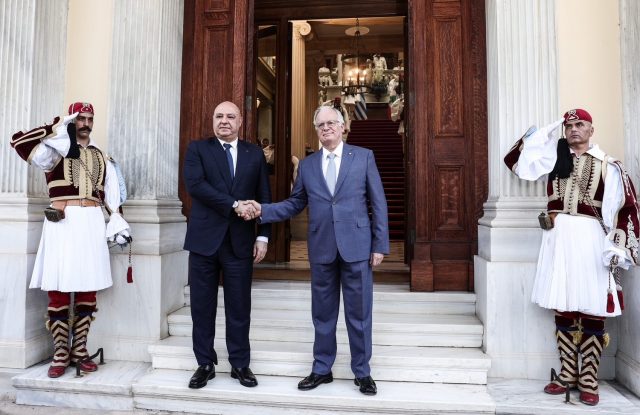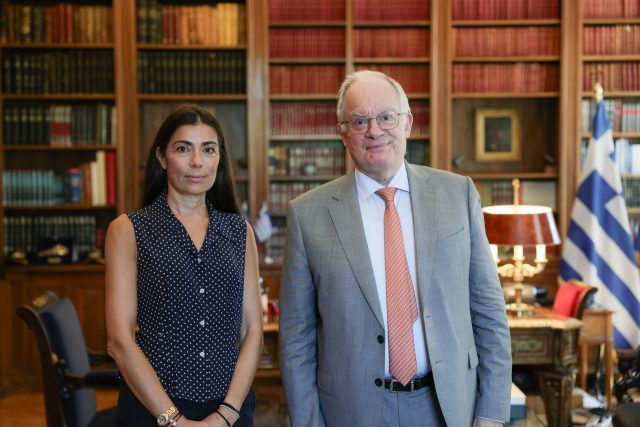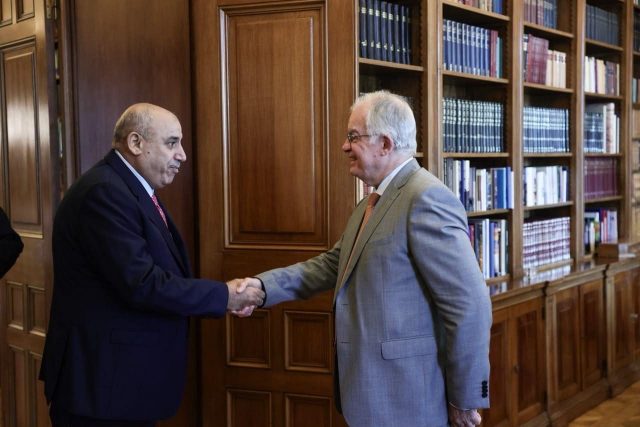
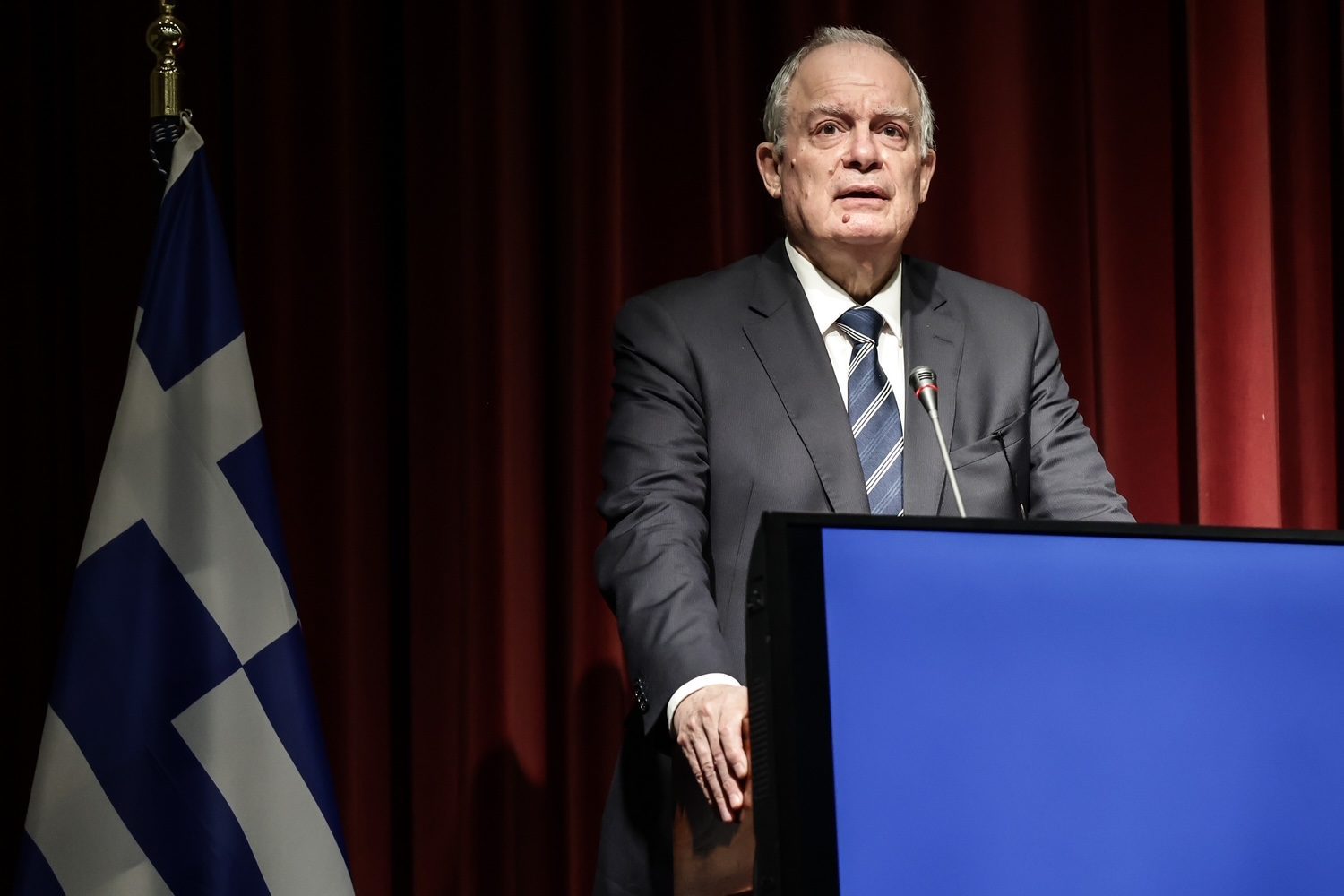
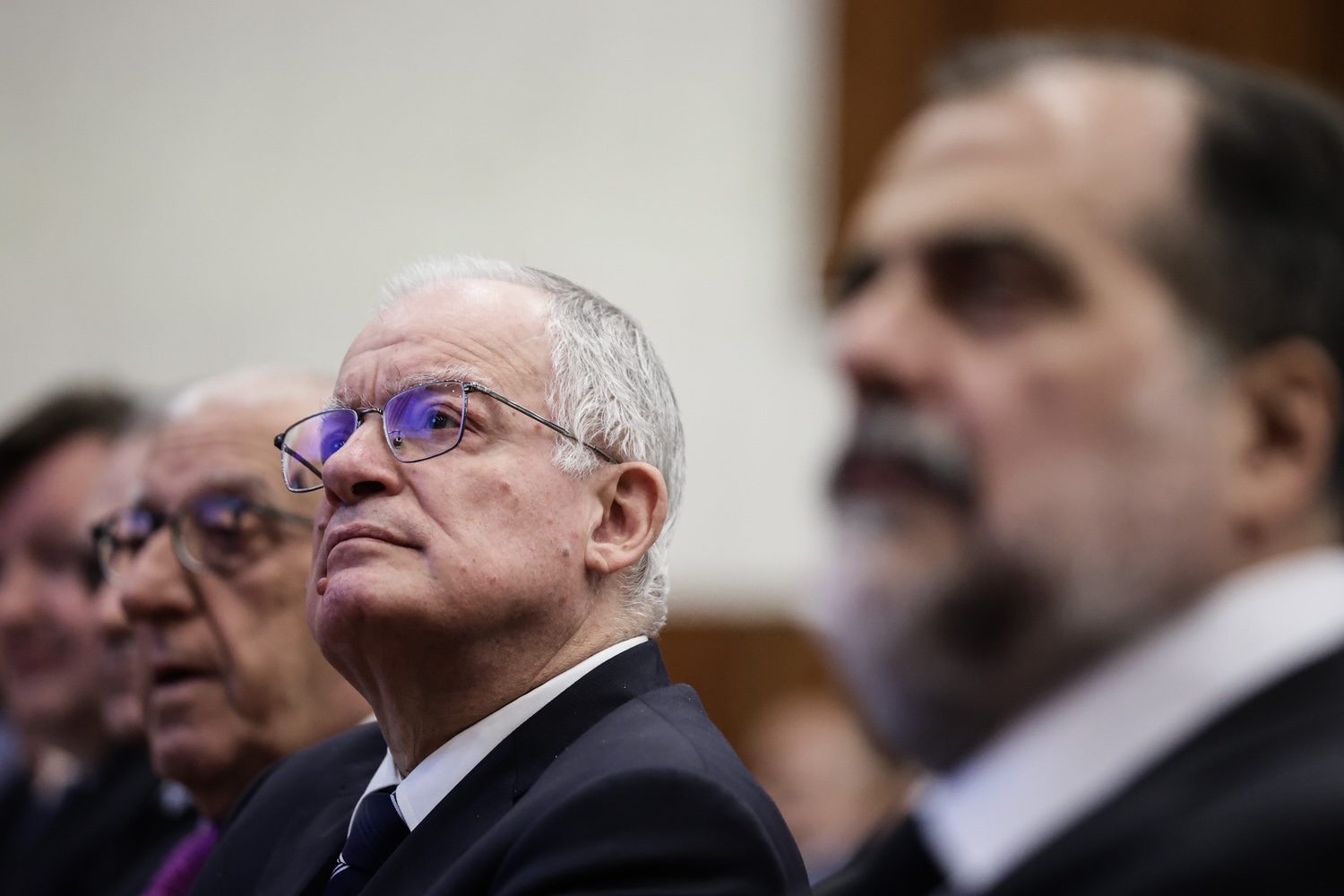
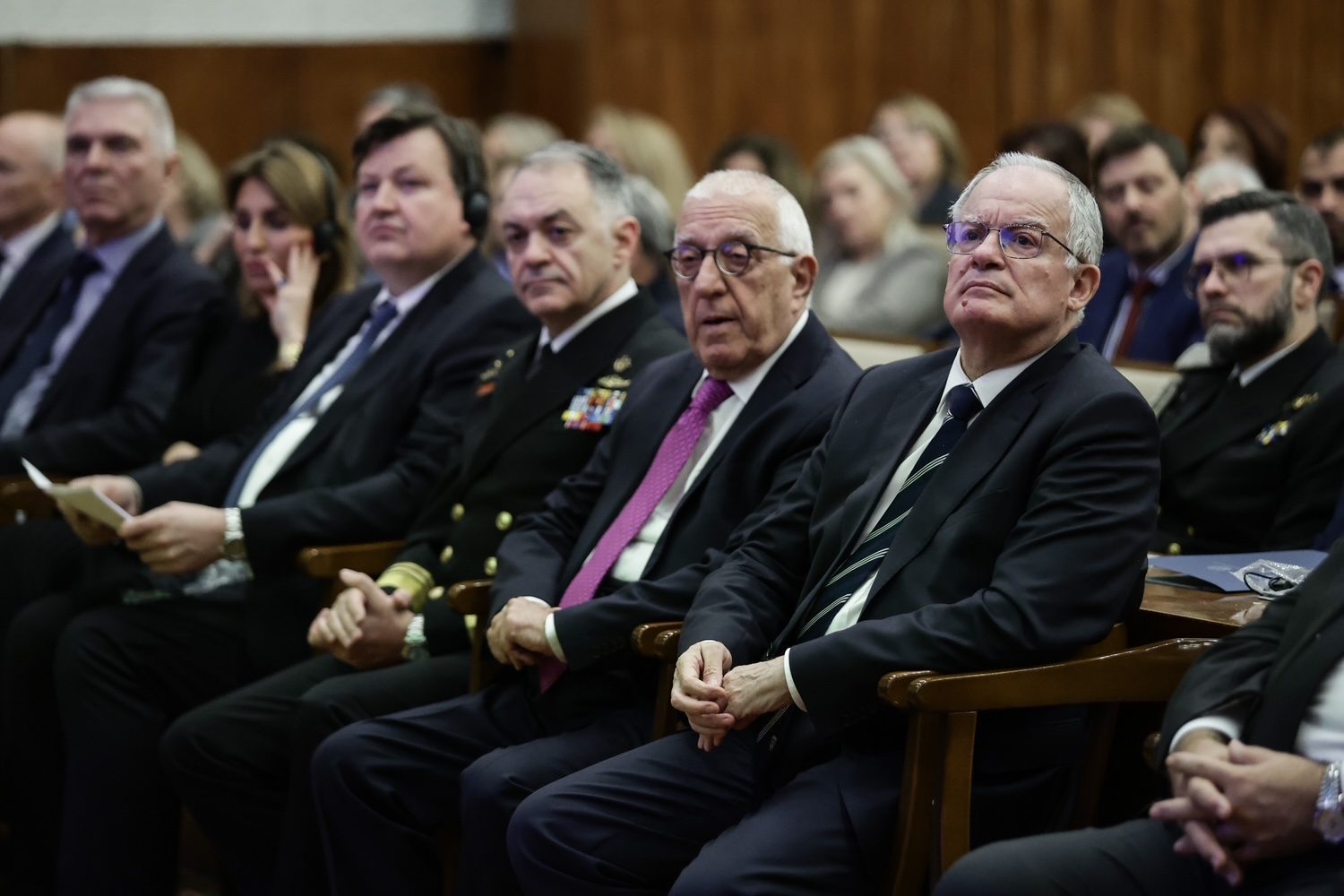
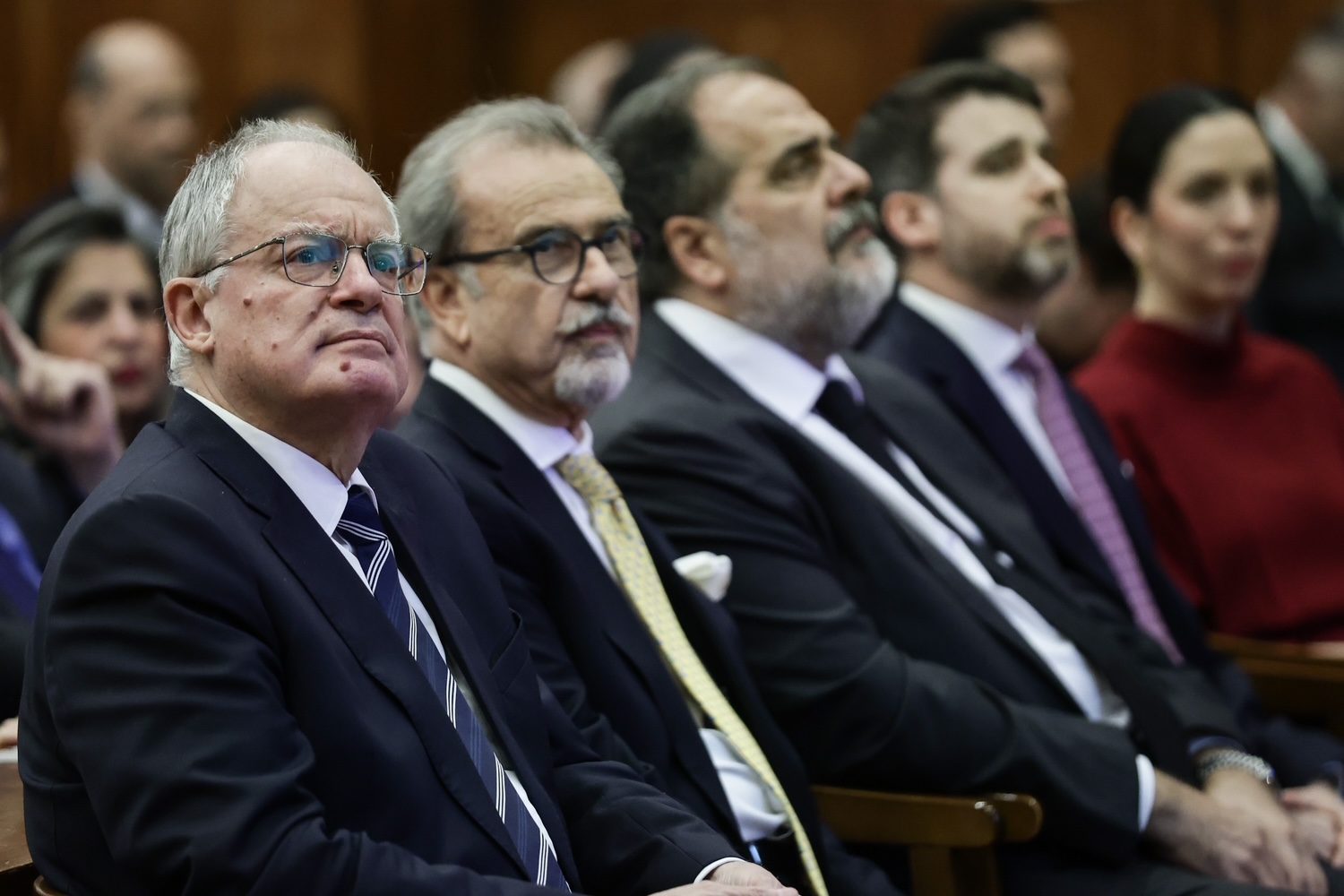
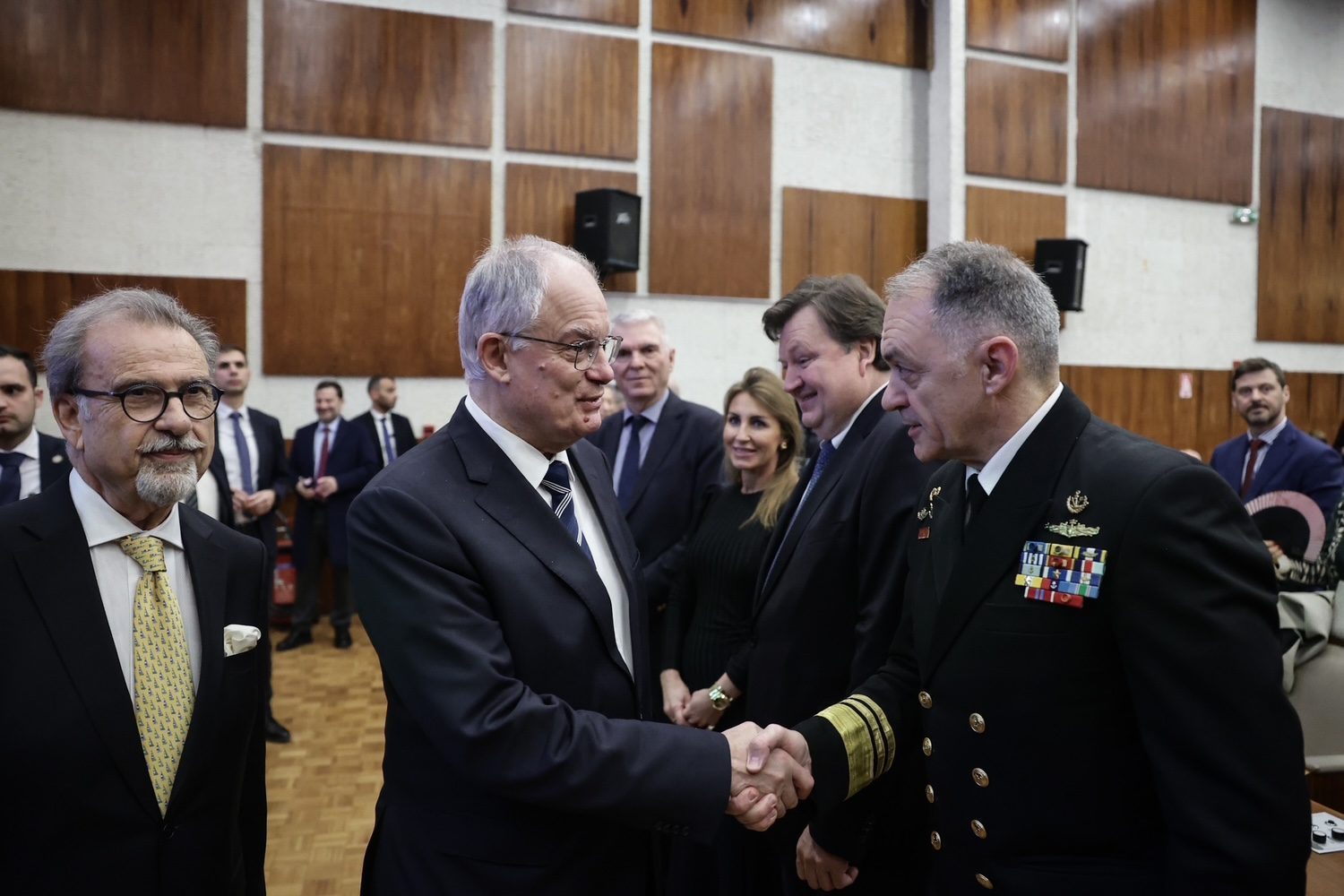
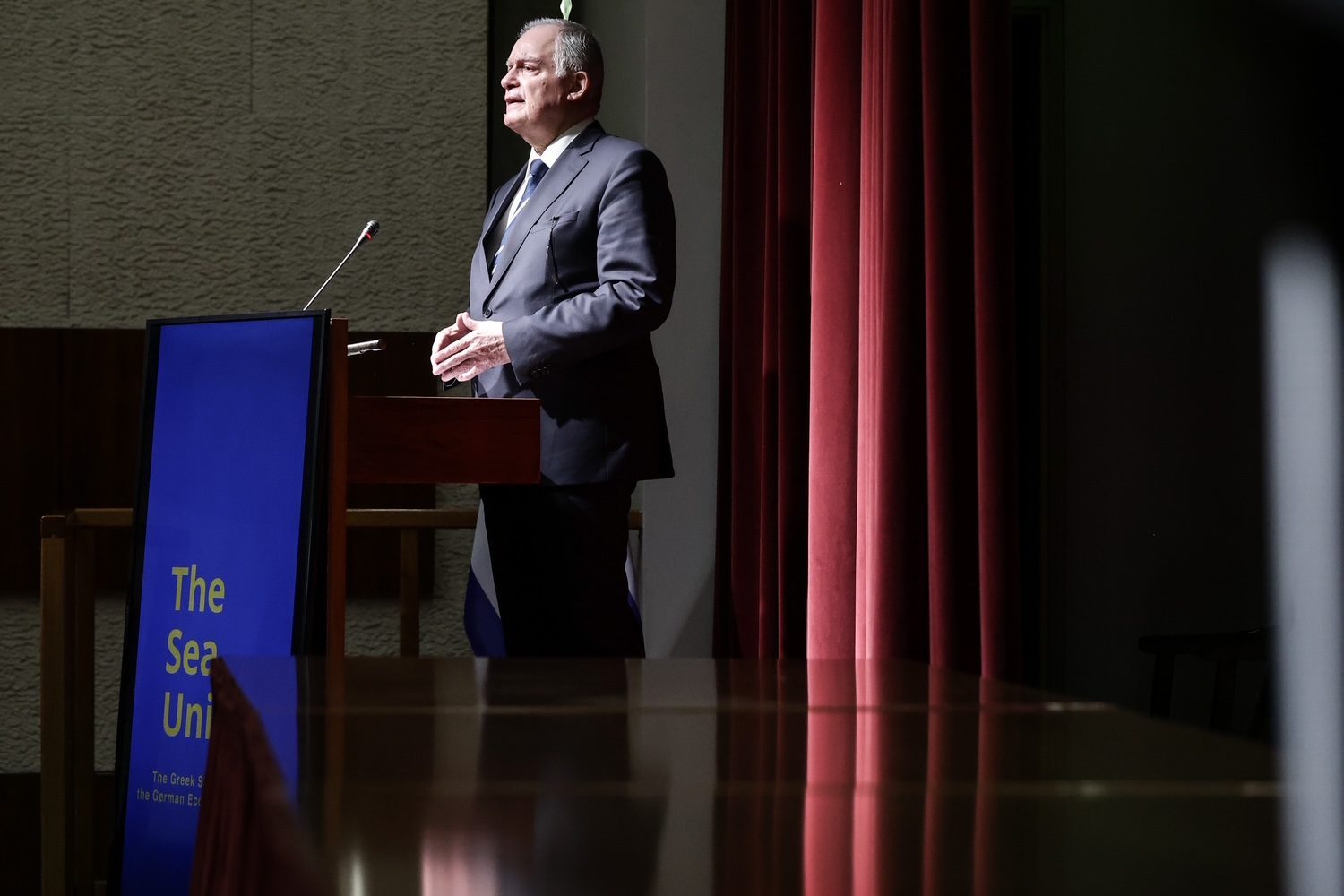
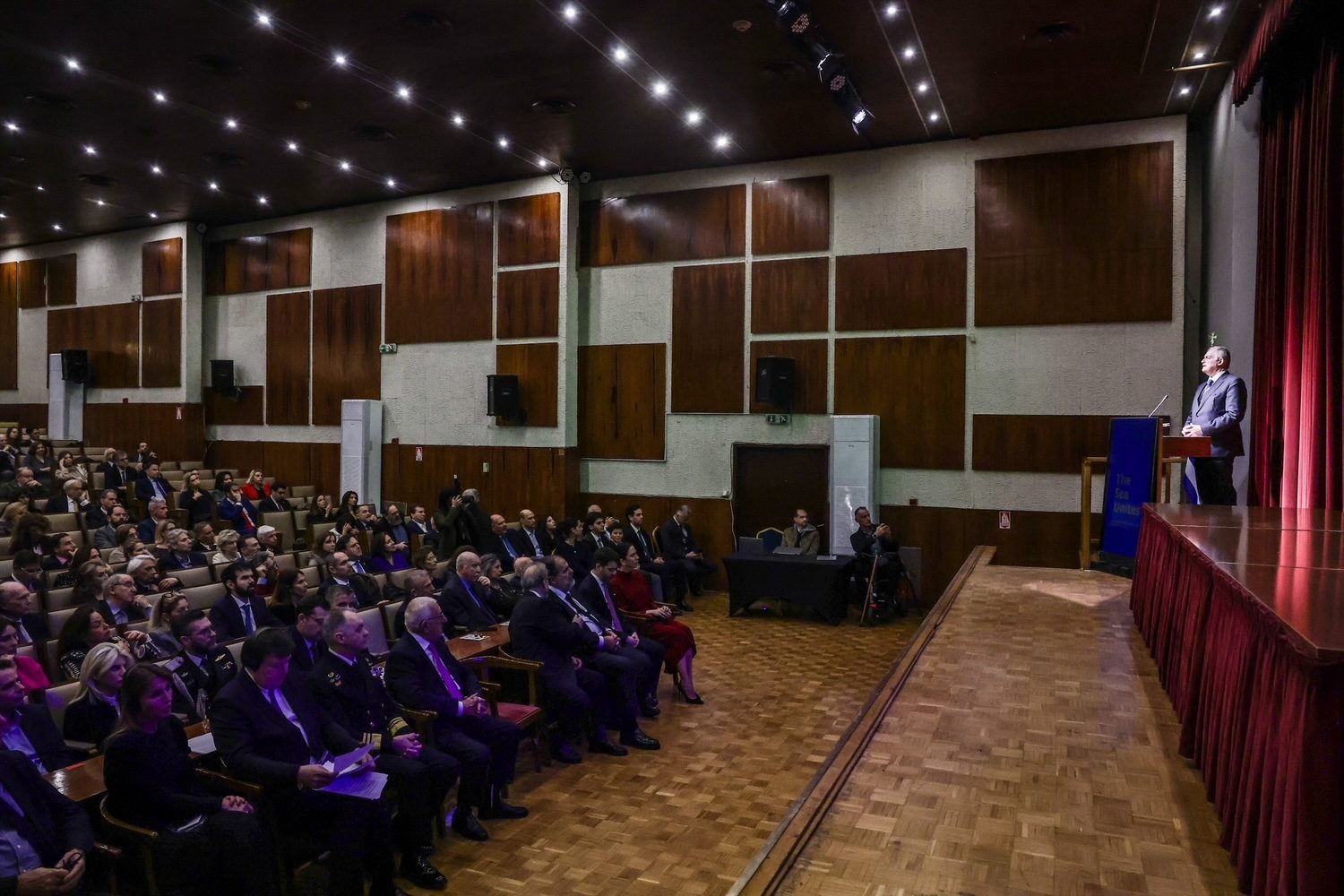
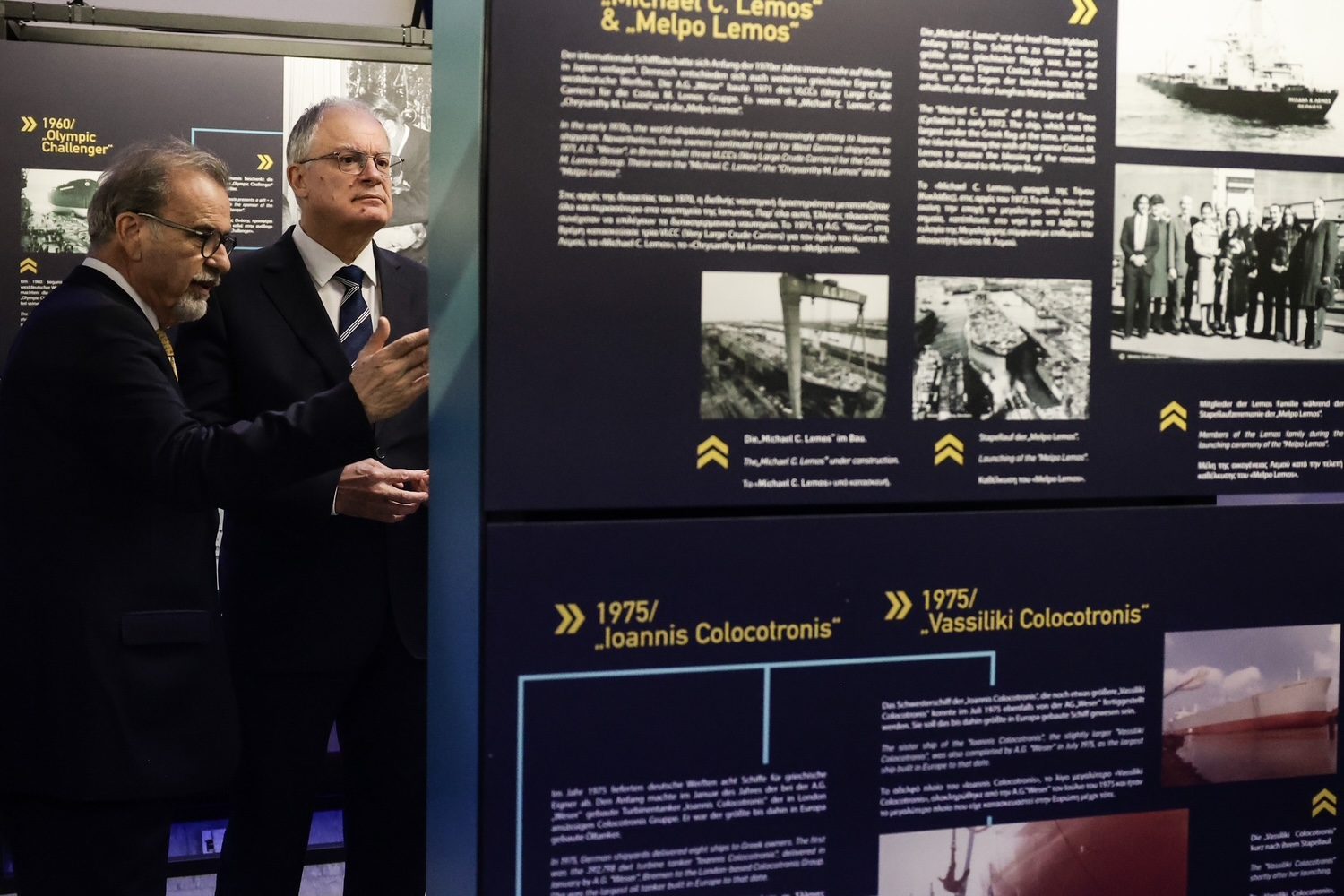
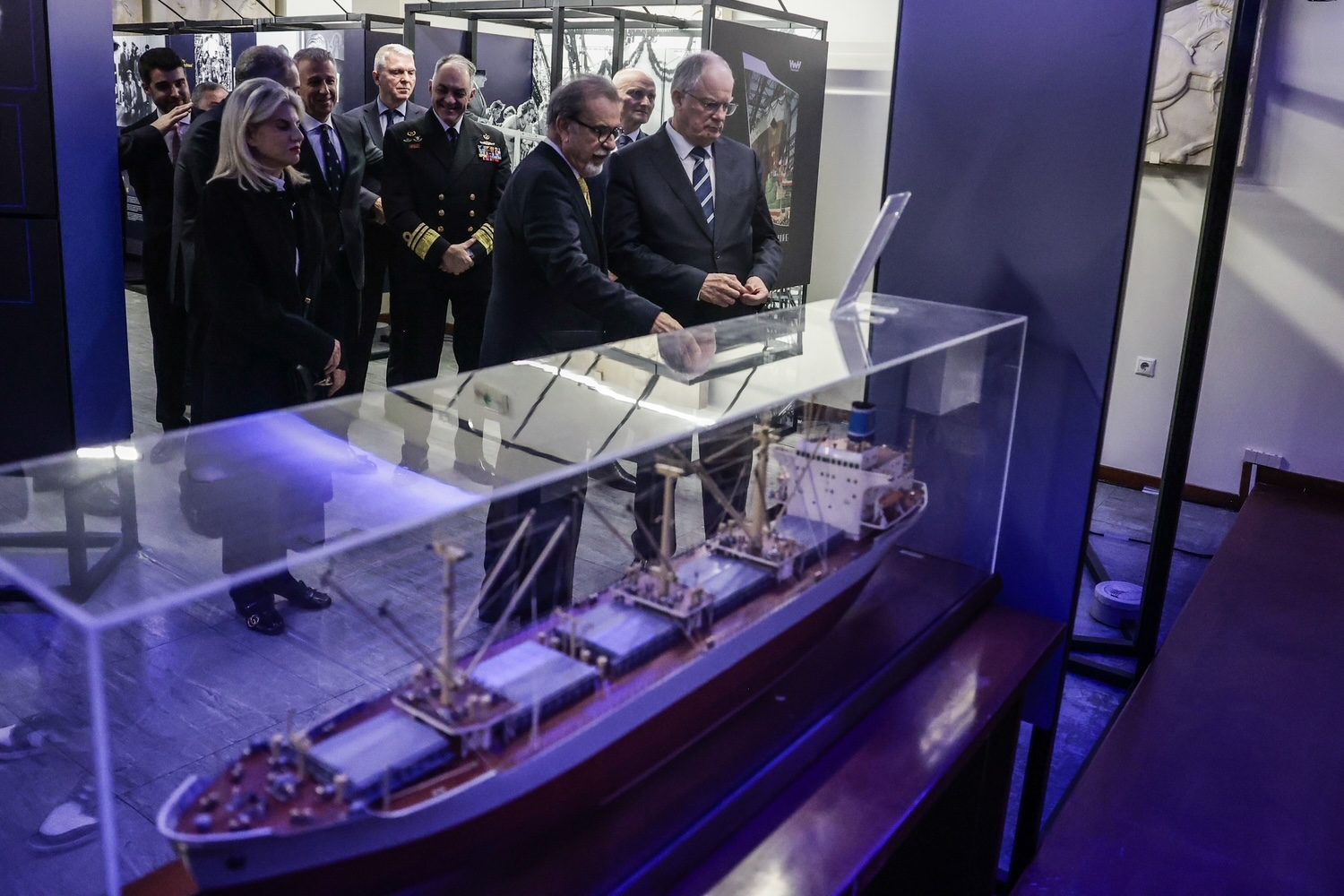
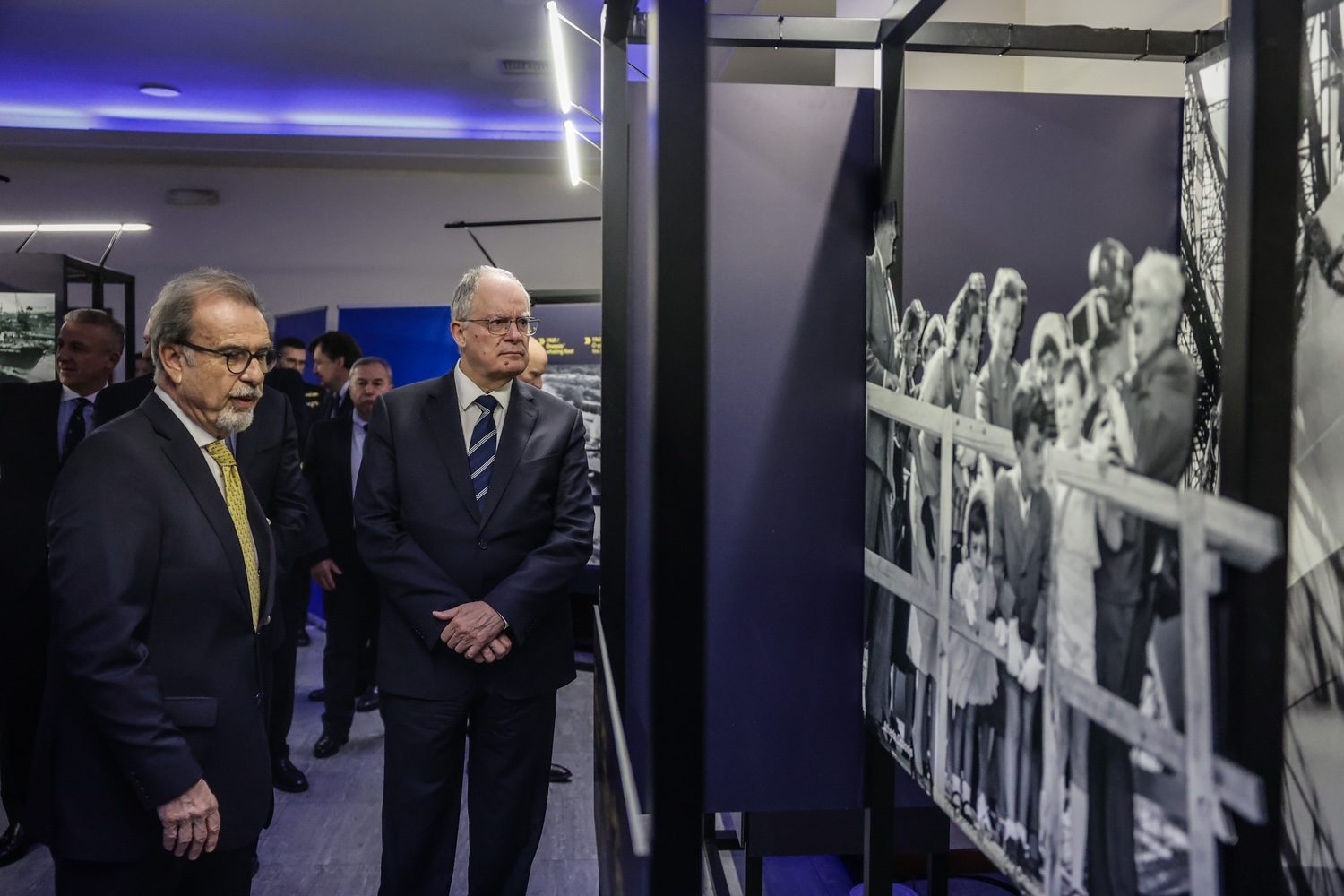
The President of the Hellenic Republic Constantine An. Tassoulas attended the opening of the international exhibition The Sea Unites – The Greek Shipping and the German Economic Miracles at the amphitheater of the War Museum.
Excerpts from Mr. Tasoulas’s greeting follow:
“There are moments in the history of peoples when economic choices take on political and cultural depth: when a business decision at first glance becomes an act of responsibility and a cooperation transforms into a bridge between peoples who were once adversaries.
Today’s exhibition tells the story of shipbuilding achievements but, in reality, it sheds light on a deeper European experience. How, through the sea and seafaring, a grim memory was transformed into creative cooperation. How the sea ultimately has the gift of bringing people together.
(…)
The well-documented and highly enlightening work of historian Giorgos Foustanos, the result of many years of research, highlights how orders placed by Greek shipowners contributed decisively to the economic reconstruction of West Germany and its gradual reintegration into the world map.
This historical narrative takes on particular significance when we consider its point of departure. During World War II, we Greeks lost three-quarters of our merchant fleet to enemy fire, mainly from German submarines and for four years our country was subjugated to the Axis powers. Nevertheless, after the war, we developed business relations with the initially devastated shipyards of West Germany.
(…)
This choice was not the result of forgetfulness, but an act of transcendence. It was a silent acknowledgement that the future of Europe could only be built on joint effort and cooperation.
(…)
The reconstruction we are speaking of did not concern only shipyards and ports. It concerned people, families, workers. It concerned the restoration of the dignity of labor and creation in a society that was seeking to find its footing once again. Later, thousands of Greek immigrants worked in the German shipyards, contributing with their labor not only to the reconstruction of Germany, but also to the shaping of a European social fabric. Political will accompanied this dynamic. In the 1950s, Konstantinos Karamanlis worked systematically to strengthen Greek-German cooperation.
This story clearly shows that an economic miracle is never the result of a single factor. It is the product of synergies, trust and international relations based on stability and mutual respect.
Greek shipping, unlike in other countries, developed to a large extent without state support. In a Greece devastated and absorbed by the civil war, Greek shipowners took the initiative. And today, Greek shipping accounts for over 61% of the European Union’s fleet and about 20% of global capacity! This is an achievement that is disproportionate to the geometric size and the population of our country.
The Greeks have been traveling the seas for thousands of years. The sea—the ancient Greek “innumerable laughter of the waves”—has been a field of trade, the spread of culture and also struggles for freedom. In post-war Europe, it also became a field of reconciliation.
The story emerging from this exhibition does not belong solely to the past. It invites us to reflect on the present and the future. It is a living reminder that progress is not born from isolation, but from understanding, which is a source of strength. In a world that is being tested once again, the experience of Europe’s post-war journey – and the decisive contribution of shipping to it – shows that peoples can turn their traumatic experiences into a common, solid foundation. Today, the two formerly rival peoples coexist as equal partners in the European Union. Despite their differences, the sea truly unites peoples.”