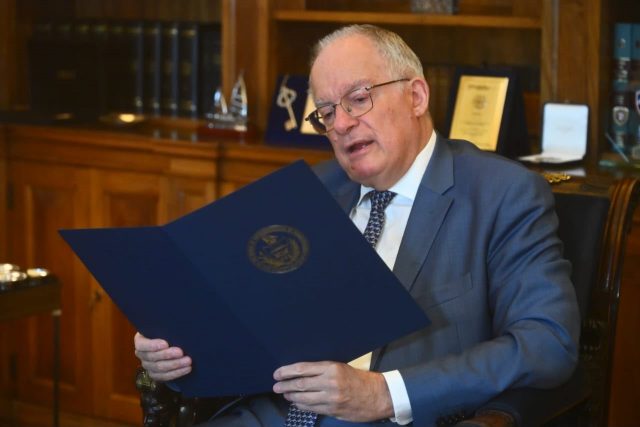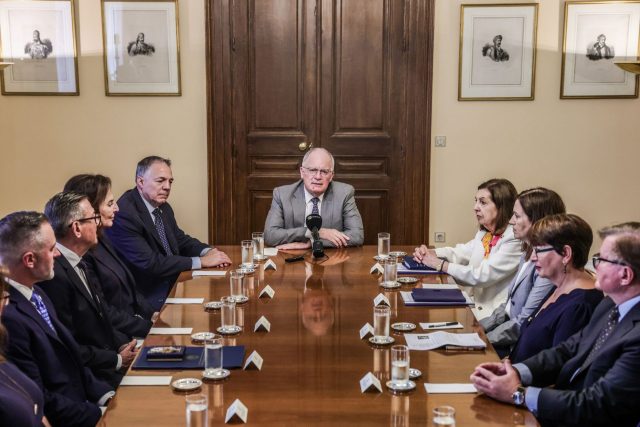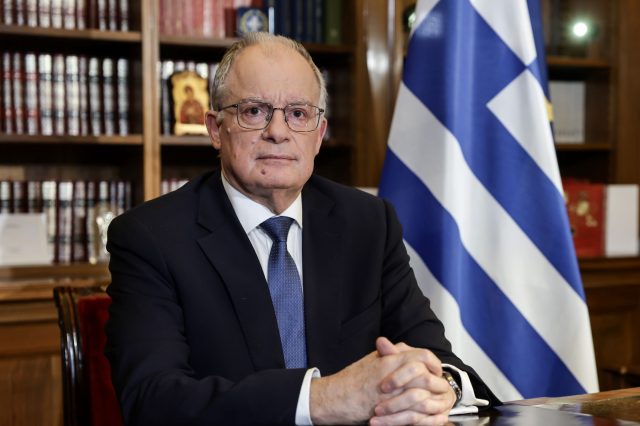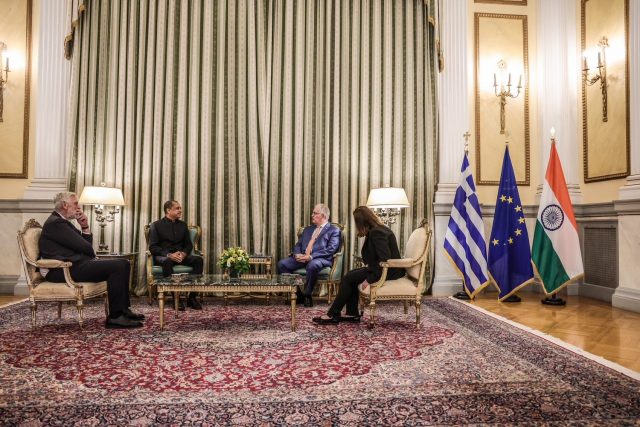
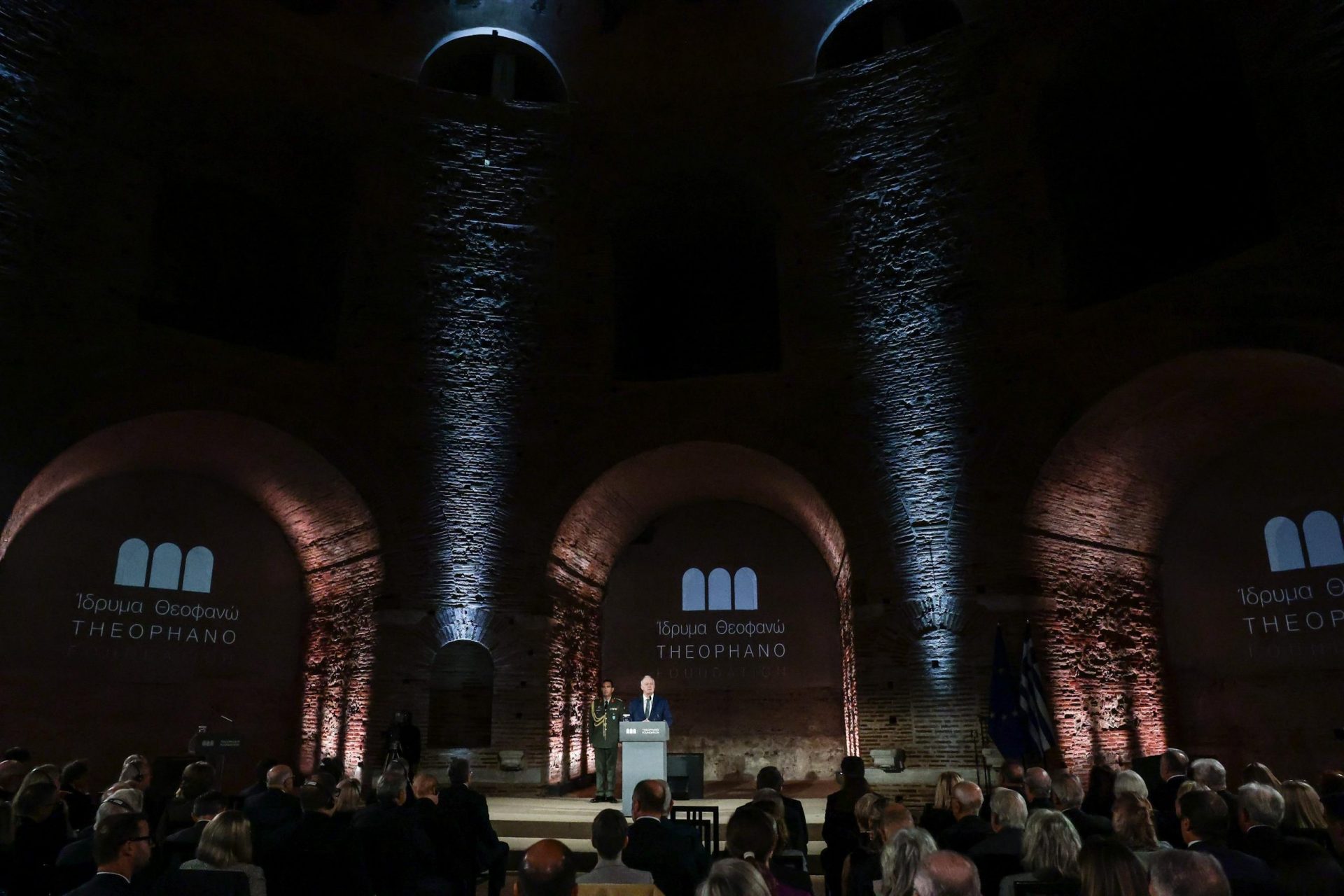
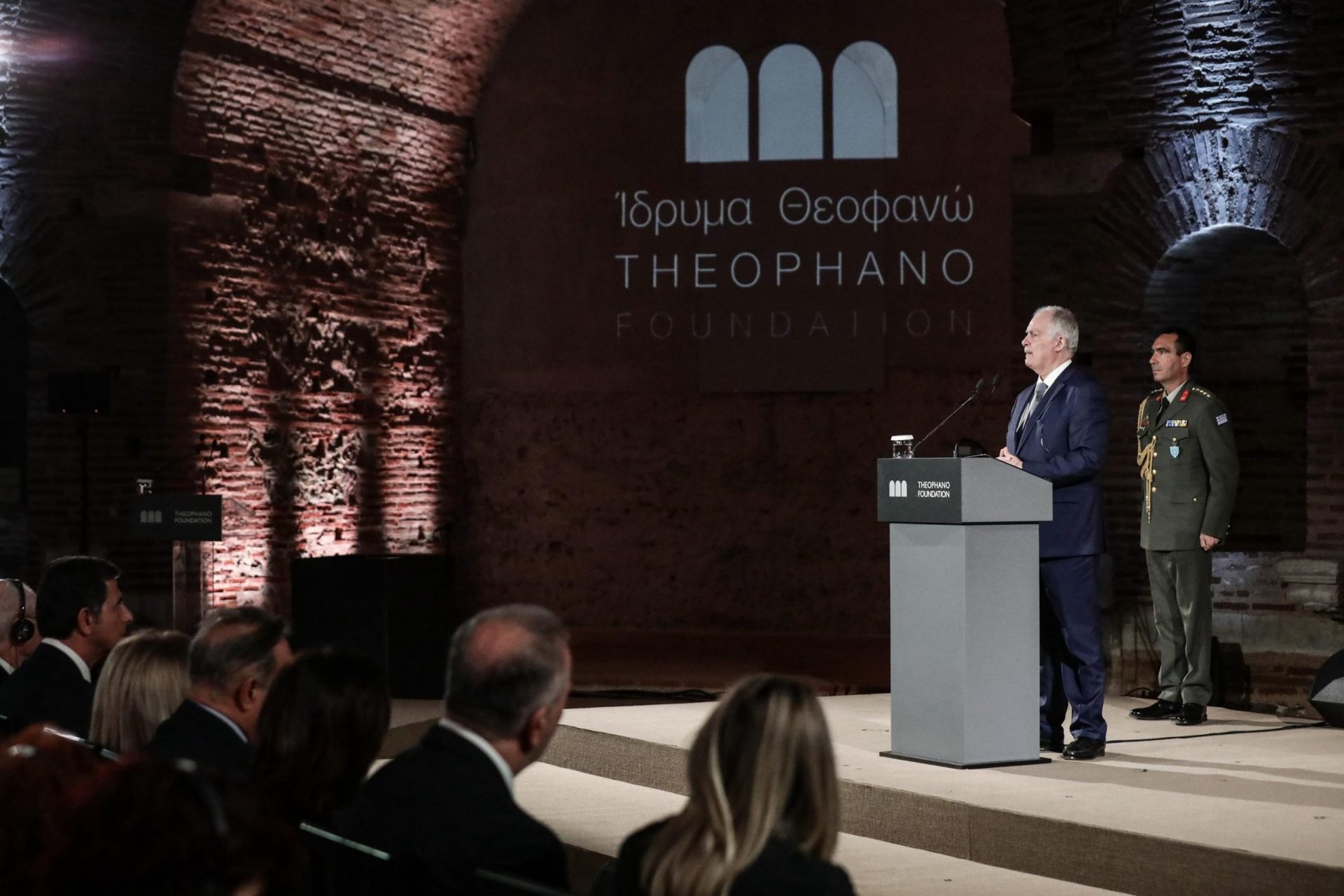
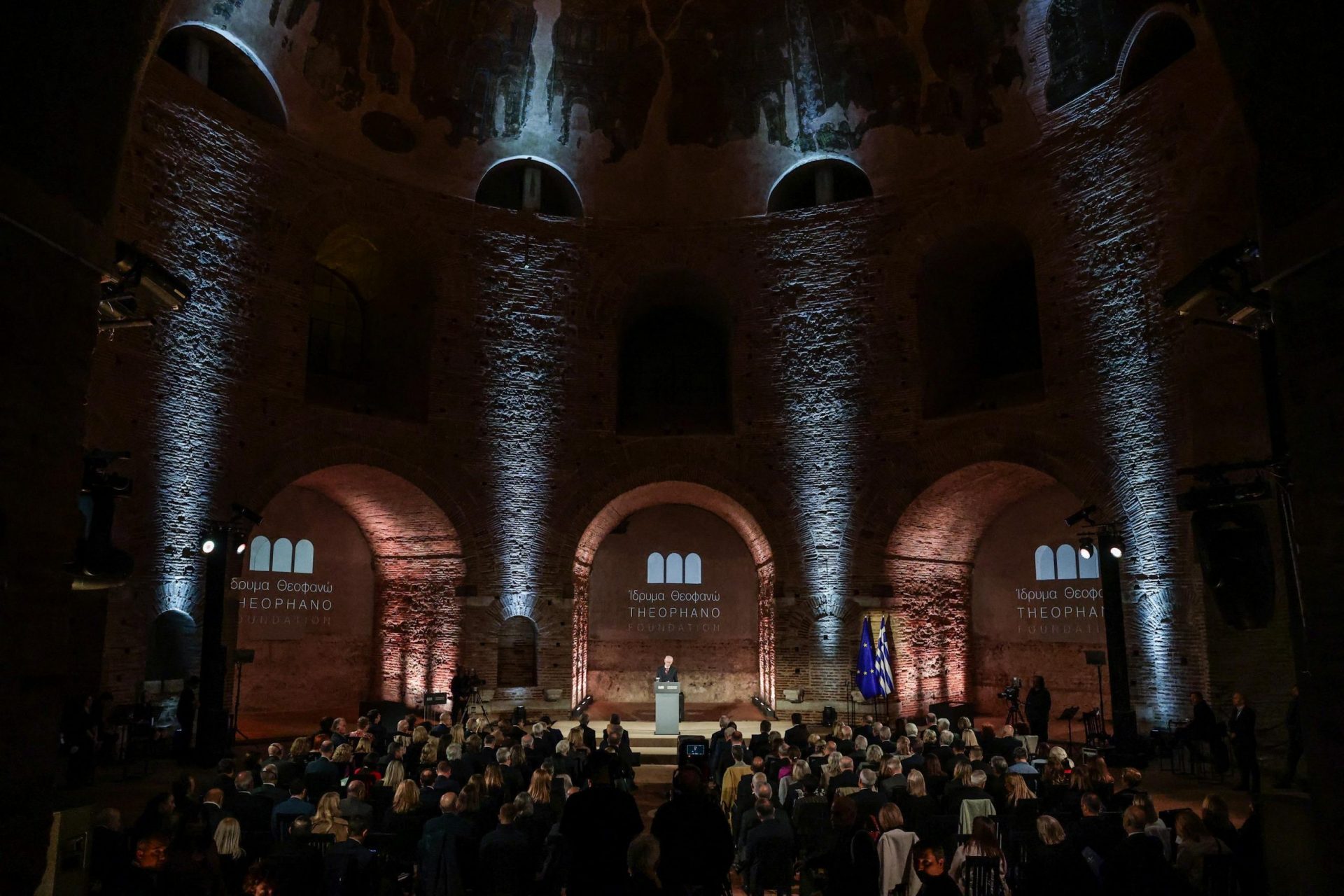
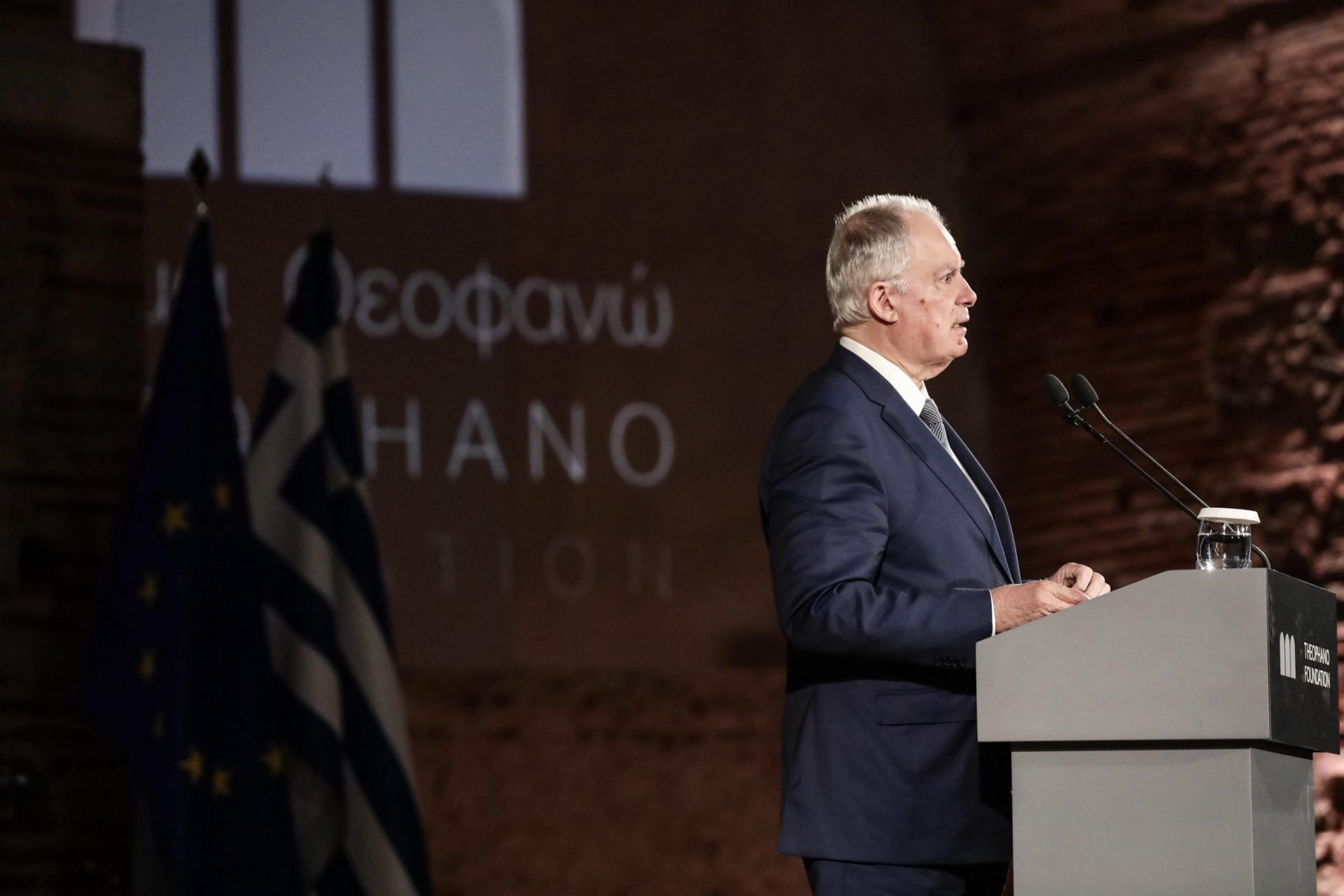
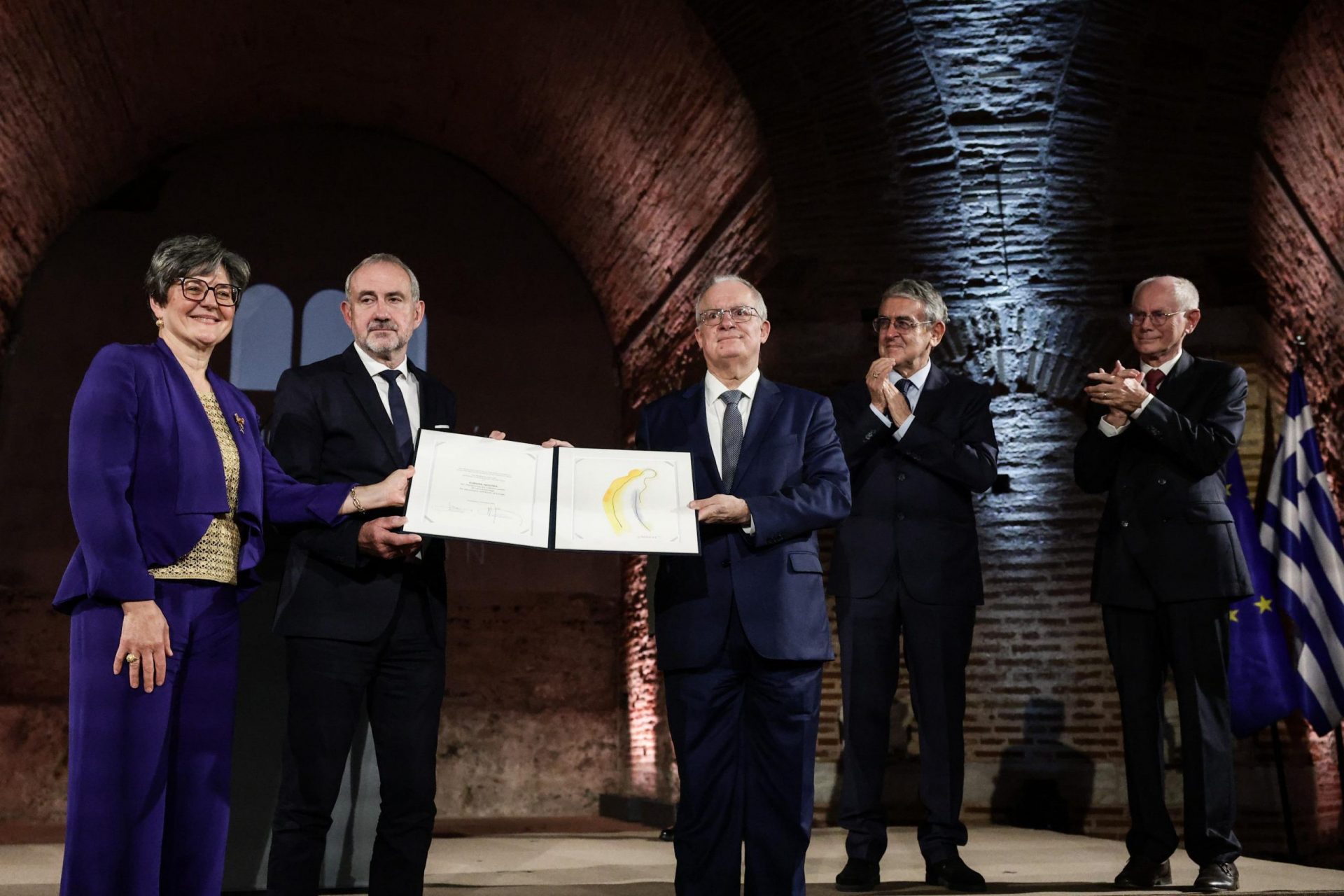
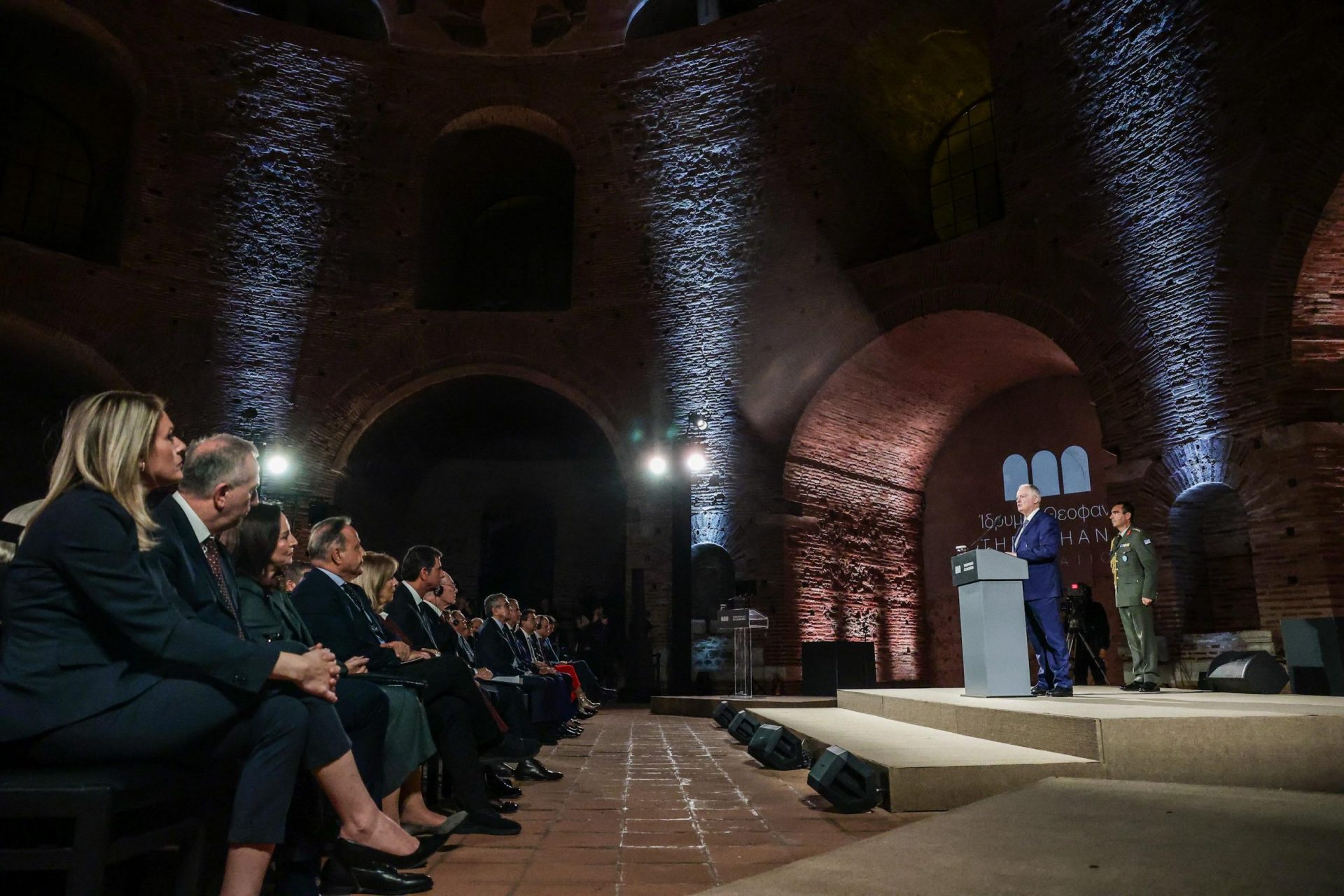
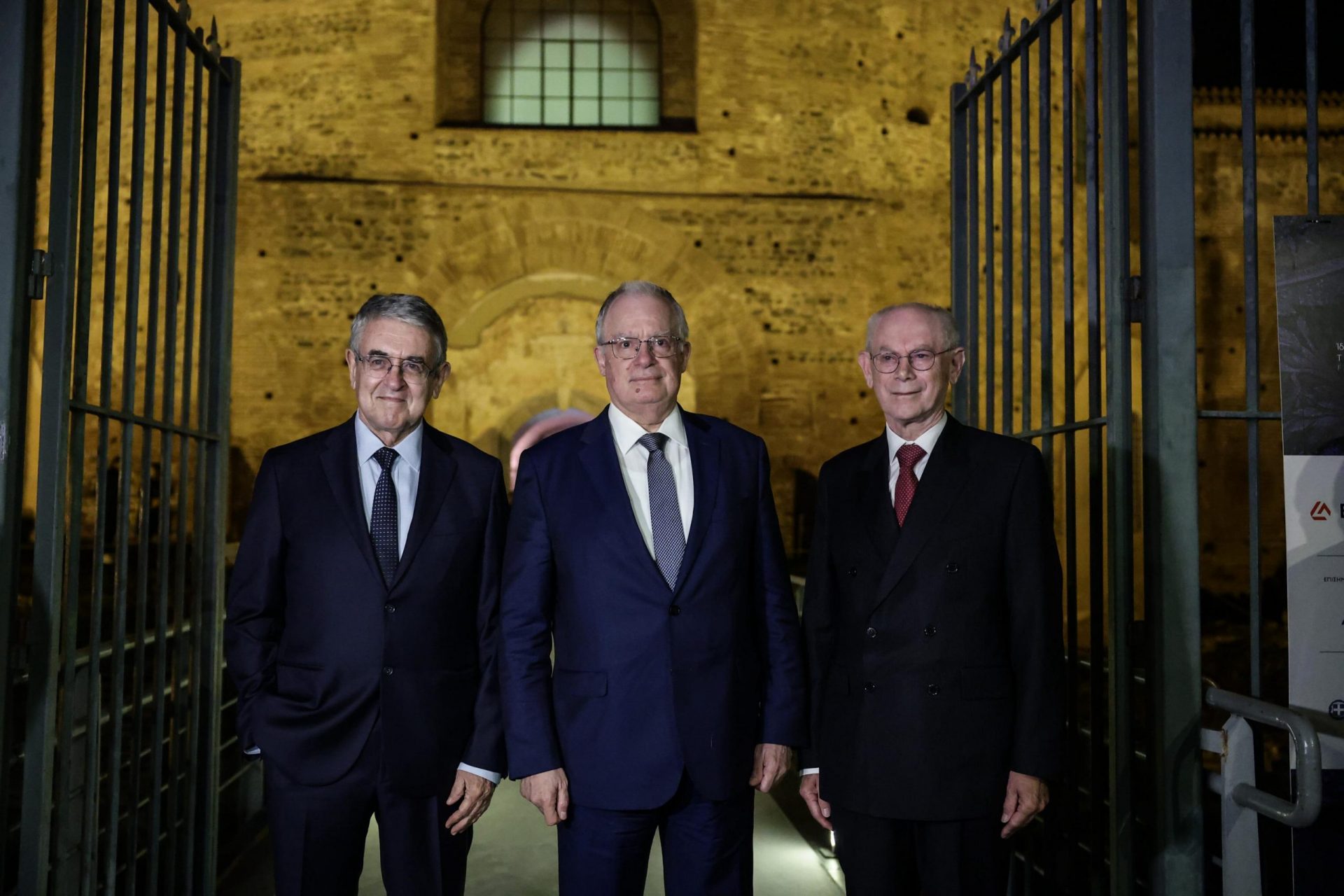
The President of the Hellenic Republic Constantine An. Tassoulas, awarded in the presence of the President of the Governing Council of the Theophano Foundation Stavros Andreadis, and the President of the Advisory Committee Herman Van Rompuy, the “Empress Theophano” Prize to the Executive President of Europa Nostra Organization, Professor Hermann Parzinger and to the Secretary General Sneška Quaedvlieg-Mihailovic.
Follows the greeting of the President of the Hellenic Republic Constantine An. Tassoulas:
“It is with great pleasure that I am here today, at the historic site of the Rotunda, a UNESCO World Heritage Monument, on the occasion of the award ceremony for the “Empress Theophano” prize.
A prize that aims to highlight and reward outstanding personalities and initiatives in the fields of art, science, education, entrepreneurship, sports, and humanitarian action.
A prize that not only highlights excellence in a specific field, but also rewards the promotion of timeless European and global values such as humanism, solidarity and mutual understanding.
Values that are particularly valuable in the current context, which is marked by geopolitical upheavals, armed conflicts, instability and uncertainty, as well as the questioning of multilateralism, international law and the global security as they were rebuilt after World War II and lasted for decades.
And values that are necessary to address the major challenges facing humanity, such as climate change, inequality, artificial intelligence and migration.
At this time, therefore, bridges of dialogue, cooperation and unity are necessary that will overcome divisions and demonstrate that the bonds that unite human beings, peoples and countries are more than the differences that separate them.
This is, after all, the very aim of Theofano Prizes, which were established six years ago and have already consolidated their presence and demonstrated their value and prestige in the European sphere and beyond.
I would like at this point to express my warm congratulations to the President of the Governing Council of the Theophano Foundation, Stavros Andreadis, who undertook this initiative in 2019 with the vision of strengthening ties among European countries through the promotion of their shared cultural and historical roots.
I would also like to congratulate the President of the Advisory Committee Mr. Herman Van Rompuy and its members for their always valuable recommendations regarding the proposed prize winners.
The award of this prize could not be hosted in a more emblematic venue than the Rotunda: a monument that bears witness to the history of the city of Thessaloniki through the successive transformations and interventions that took place during the Roman, early Christian, Byzantine and Ottoman periods, as well as recently during the 20th century.
And, of course, the name of the prizes could not have a better symbolism than that of Empress Theophano, who was a symbol of the union between East and West, passing on the rich culture of Byzantium to Western Europe of the 10th century.
Of course, this was preceded, in 324 AD, six centuries earlier, by the transfer of the name of Rome to the East, and thus we see how unstoppable the flow of history is and how the East succeeds the West to give in turn new life to the West.
And as Panagiotis Kanellopoulos writes in his emblematic work History of the European Spirit (Vol. A, pp. 2,3):
“ROME had begun to crumble. Constantine, anticipating that the roof would fall and crush him, left Italy, took the name of Rome, and moved it, as if it were a simple piece of luggage, to Byzantium. Thus, the West separated from the East, and its windows opened to receive the currents—strong and violent currents—coming from the North. The West merged with the North. The Greco-Roman heritage in the West fell into barbaric and vigorous hands, into the hands of the Celts and the Germanic peoples. But was the West completely alienated from the East? No! Constantine the Great not only sacrificed the West, but also redeemed it. The sacrifice was made on a new altar. Constantine, seeing that the catacombs had already eaten away the foundations of the old world, took the catacombs and brought them into the light… Constantine not only saved the Roman Empire by transferring it, even as mere baggage, from the West to the East, but he also redeemed the West by taking God, who had risen in the East, and establishing him openly and officially throughout his empire, in both the East and the West. Thus, the West not only remained free to merge with the North—with new and undefiled blood—but also accepted and embraced the most beautiful, sweetest, and most spring-like sprout of the East: Jesus. A rare stroke of luck gave the newer Western world, the European civilization, the chance to sink its roots into the richest and most valuable soil. The genesis and essence of the European world cannot be understood unless we trace it back to the ancient Greek spirit, the Roman political tradition and law, Christianity and the vigorous blood of the peoples of the North.
The ancient Greek spirit gave the modern Western world the objective measures of beauty, goodness and truth. The Roman state tradition and law provided the concept of an organised state and systematised law. The Romans also contributed many other things, of course, but these can be traced back indirectly to the Greek contribution, which they developed further. Christianity gave love and faith as subjective emotions and, more generally, gave European man the intense subjective soul. The northern peoples gave their vigorous blood and their childlike imagination, which, amid the wild forests of the North and its enchanted groves, had been trained in the most extraordinary visions.”
As you know and as we have heard, the Theophano Foundation has decided to award this year’s prize to the organization Europa Nostra, in recognition of its long-standing contribution to the protection, preservation and promotion of the European cultural heritage.
A cultural heritage that has its origins in ancient Greece. According to mythology, Europa was the mother of Minos and, by extension, of the Minoan civilization, one of the oldest civilizations in the Mediterranean, which influenced and shaped all those that followed.
Europa Nostra, as the largest network of NGOs and organizations in the field of art and culture in Europe, has been contributing for six decades (since 1963) to the protection and promotion of Europe’s cultural heritage as a fundamental element of the European identity.
Hundreds of organizations from 47 European countries participate in this pan-European cultural federation of organizations with the common goal of preserving European cultural and natural heritage.
In our country, Europa Nostra has developed a wide range of activities. In close cooperation with cultural institutions, it promotes actions that contribute to the sustainable management of cultural assets through projects for the restoration of historic buildings, the protection of landscapes, the exchange of expertise, education, awareness-raising and the participation of local communities in the protection of our cultural heritage.
Therefore, the significance of the work of the organization we are honoring today extends beyond the cultural dimension, as it has a significant social and economic impact, promoting and strengthening education, social cohesion, tourism, and the development of local communities.
Among the organization’s valuable activities is the “7 Most Endangered” initiative, which aims to highlight monuments, works or landscapes that are in danger of being altered or even lost.
The long-standing and multifaceted work of Europa Nostra not only contributes to the protection of monuments, buildings, artworks, and natural landscapes that make up Europe’s cultural wealth, but also defends the intangible values of cooperation, cultural diversity, solidarity of tolerance and sustainable development.
For their contribution to the preservation of fundamental European principles and values, and for the promotion of a common European consciousness that can serve as a solid foundation for further strengthening and deepening the bonds between the peoples of Europe, I would like to express on my behalf my warmest congratulations to the Executive President of the organization, Prof. Dr. Hermann Parzinger, and the Secretary General, Sneška Quaedvlieg-Mihailović, who are here tonight to rightfully receive the prize.
I would like to express my hope that the Theophano Awards will continue to serve as a beacon illuminating the common cultural heritage of European countries, as well as their shared future, above all, as a unified space for cultural interaction, solidarity and peaceful coexistence.
In closing, I would like to say that the values of democracy and solidarity, but above all the values of understanding and the fruitful interaction of cultures, are what make Europe unique. It is these values that will allow it to overcome challenges and fulfill its historic mission in a turbulent and contradictory world. In this Europe, Greece cannot but play a central role, as it always had and always will have – not simply as a member of the Union, but as the starting point of the European idea itself. The founding act of the European Union lies- springs from Ancient Greece.
And since we are honoring a guardian of our cultural heritage, let us not forget that dialogue, the synthesis of opinions and unity of purpose are the means that will guide us towards a safer future. The “objective measures of the beautiful, the good and the true,” which, according to Panagiotis Kanellopoulos, the ancient Greek spirit gave to the modern Western world, are our stable and infallible compass toward the future.”