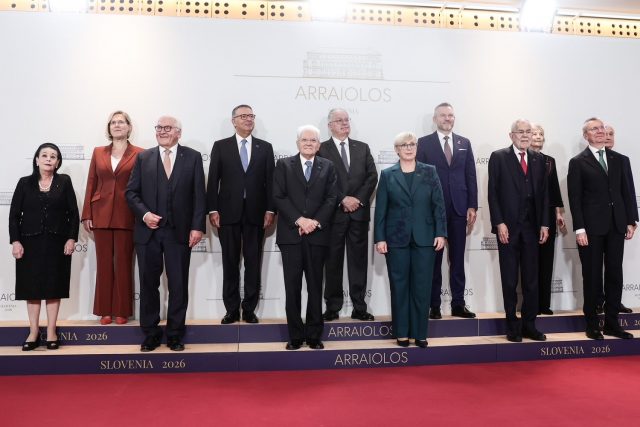
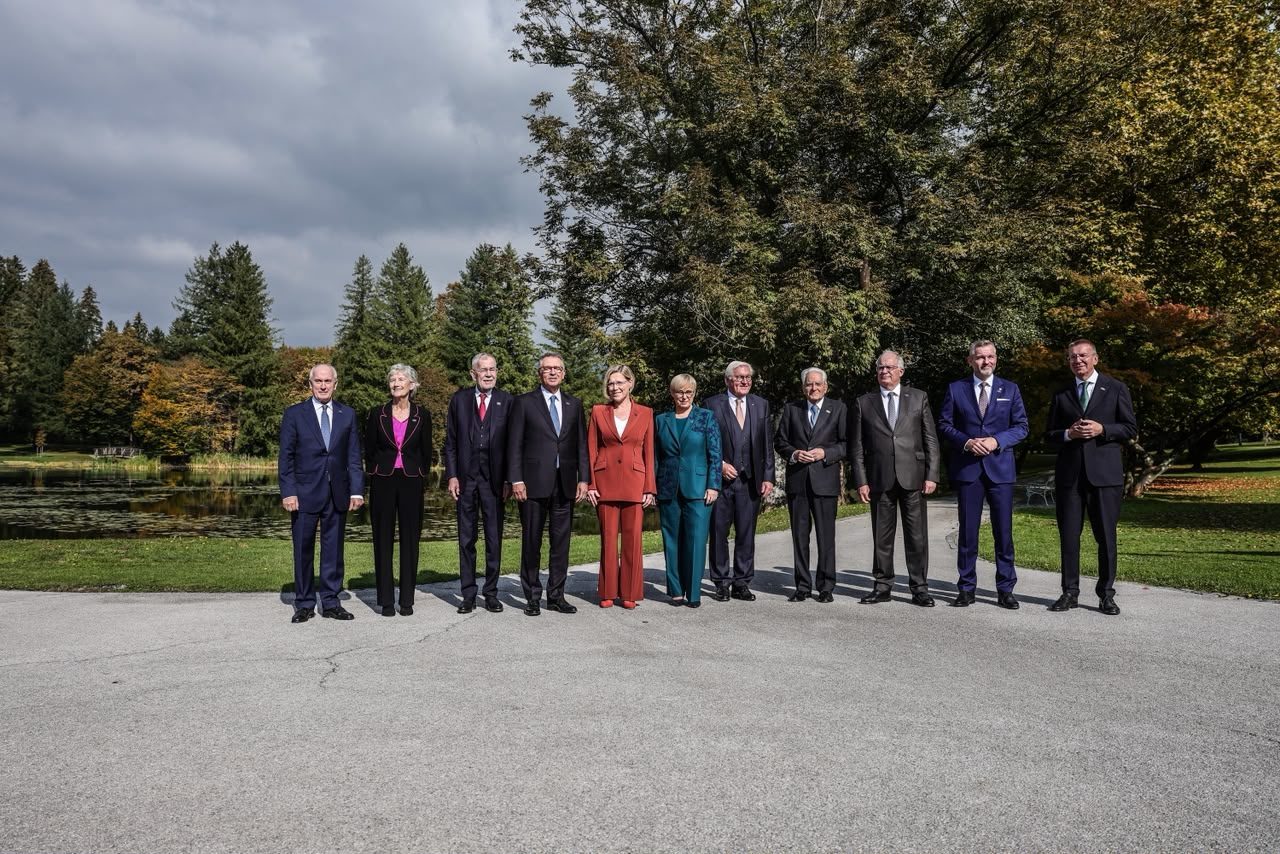
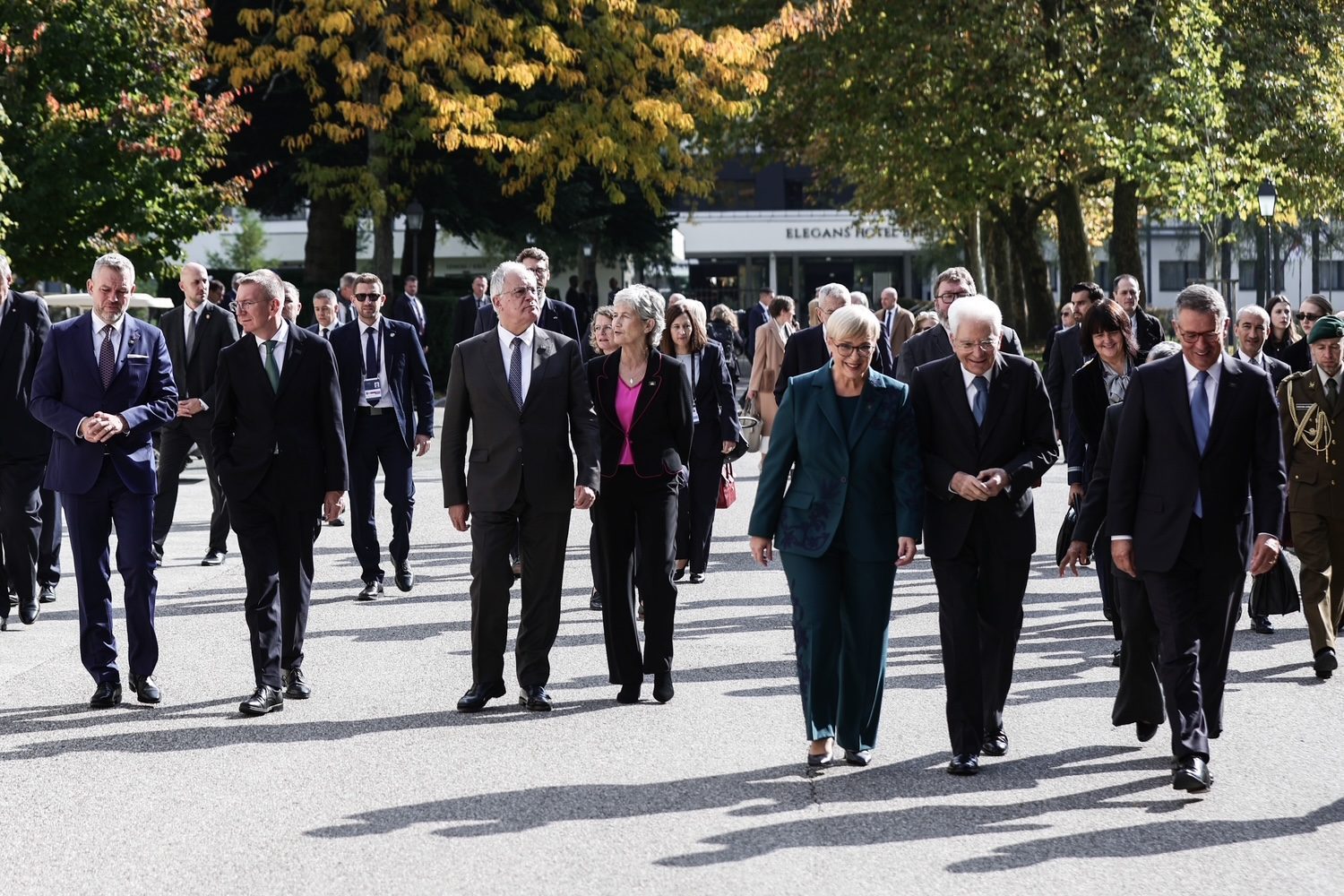
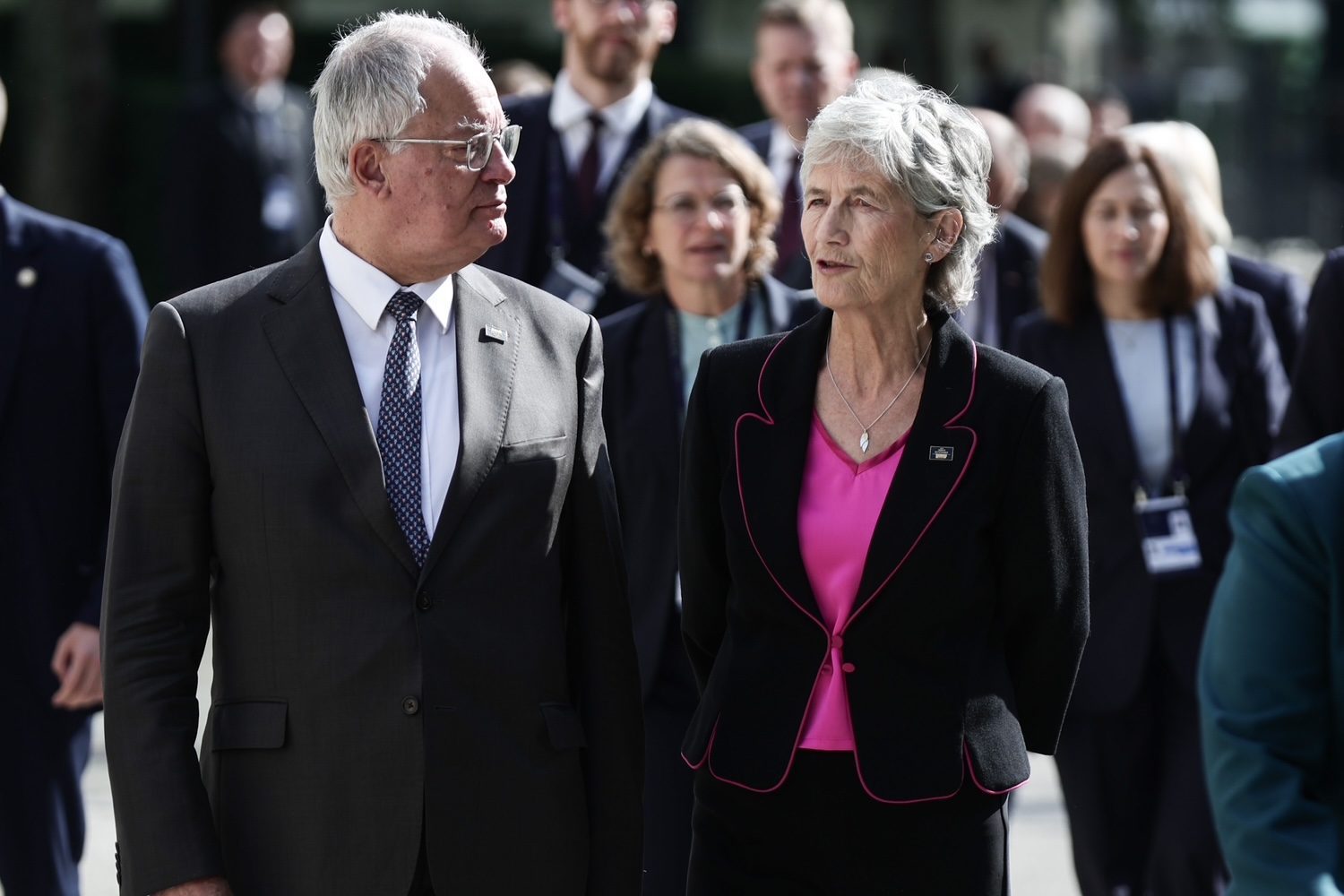
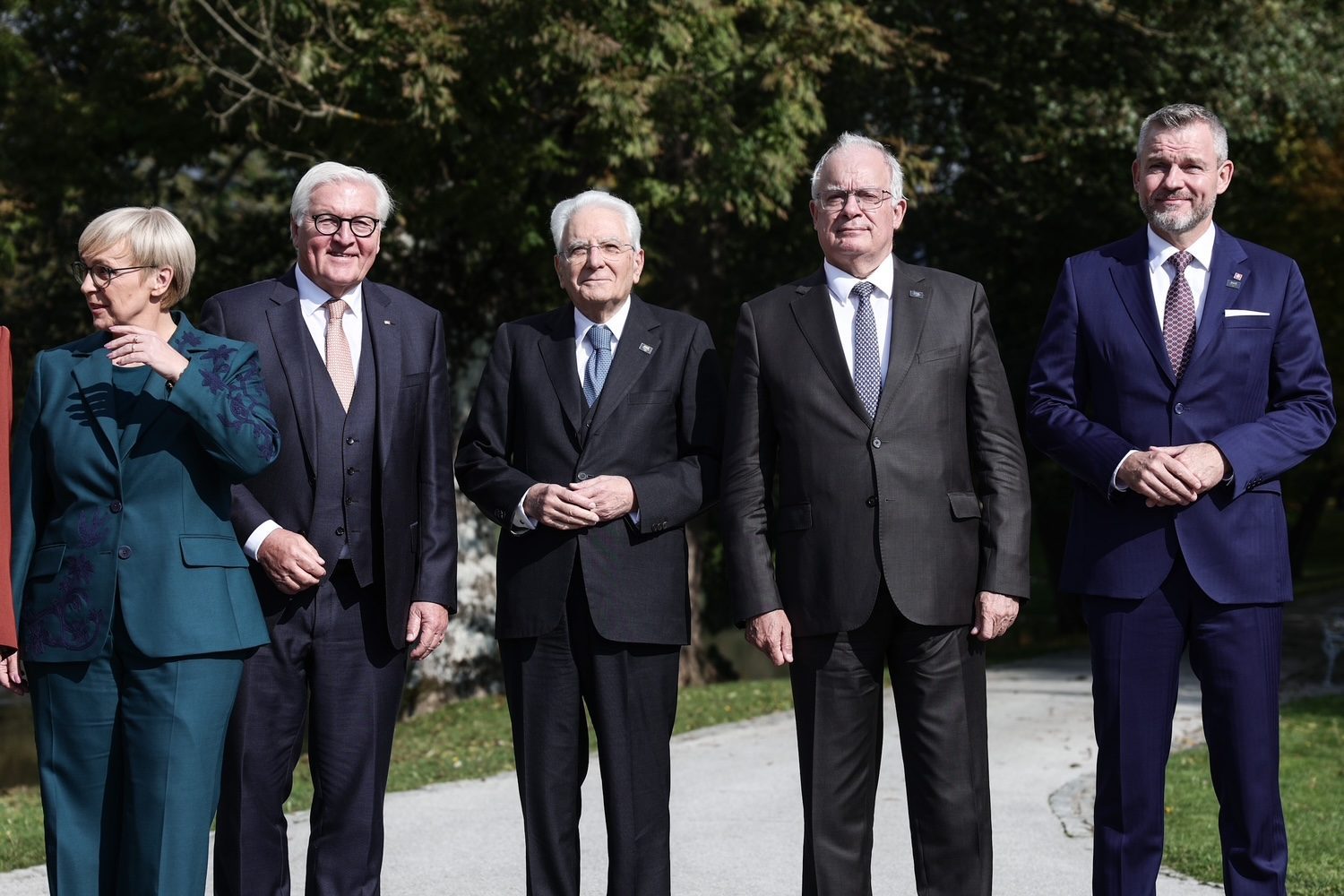
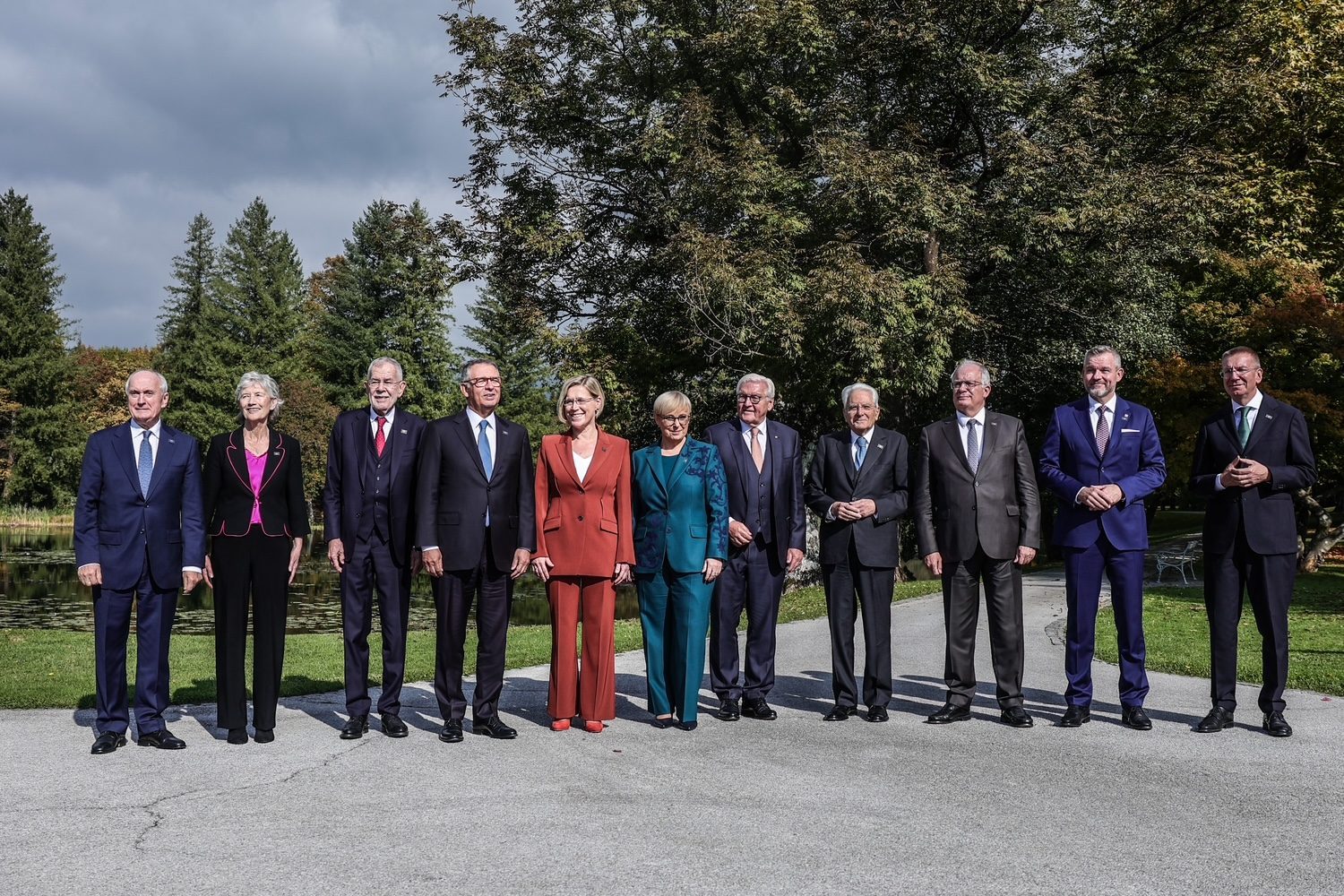
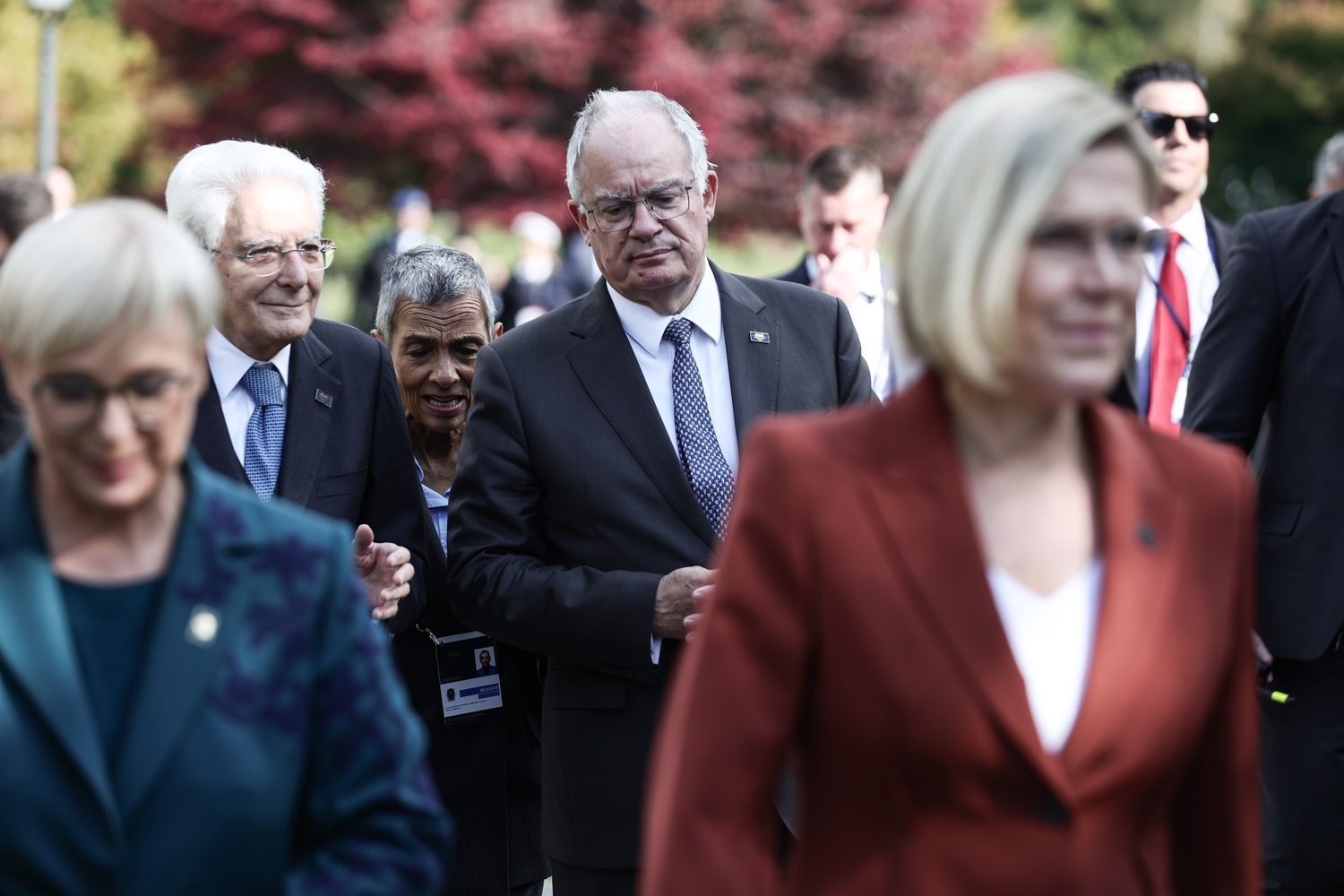
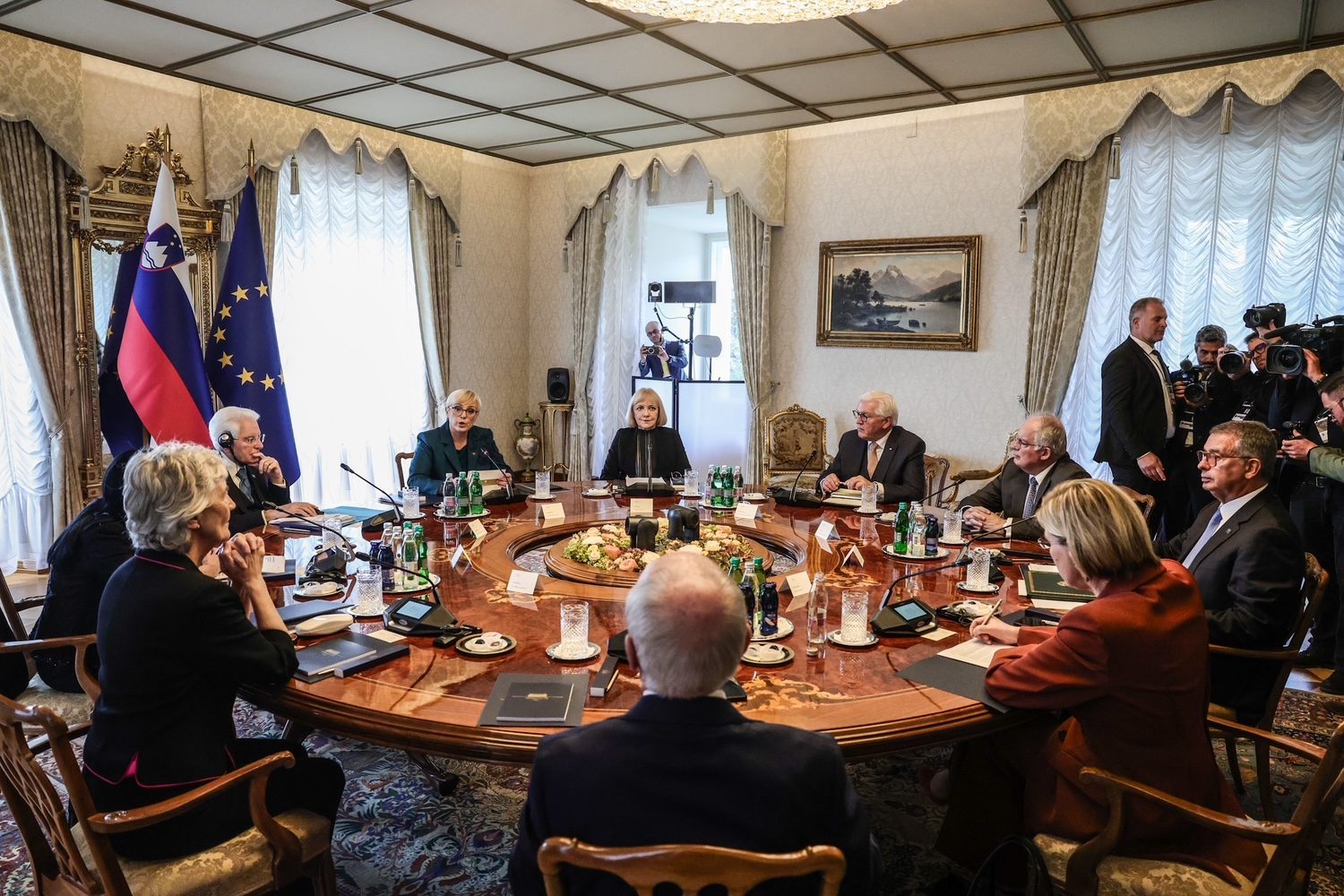
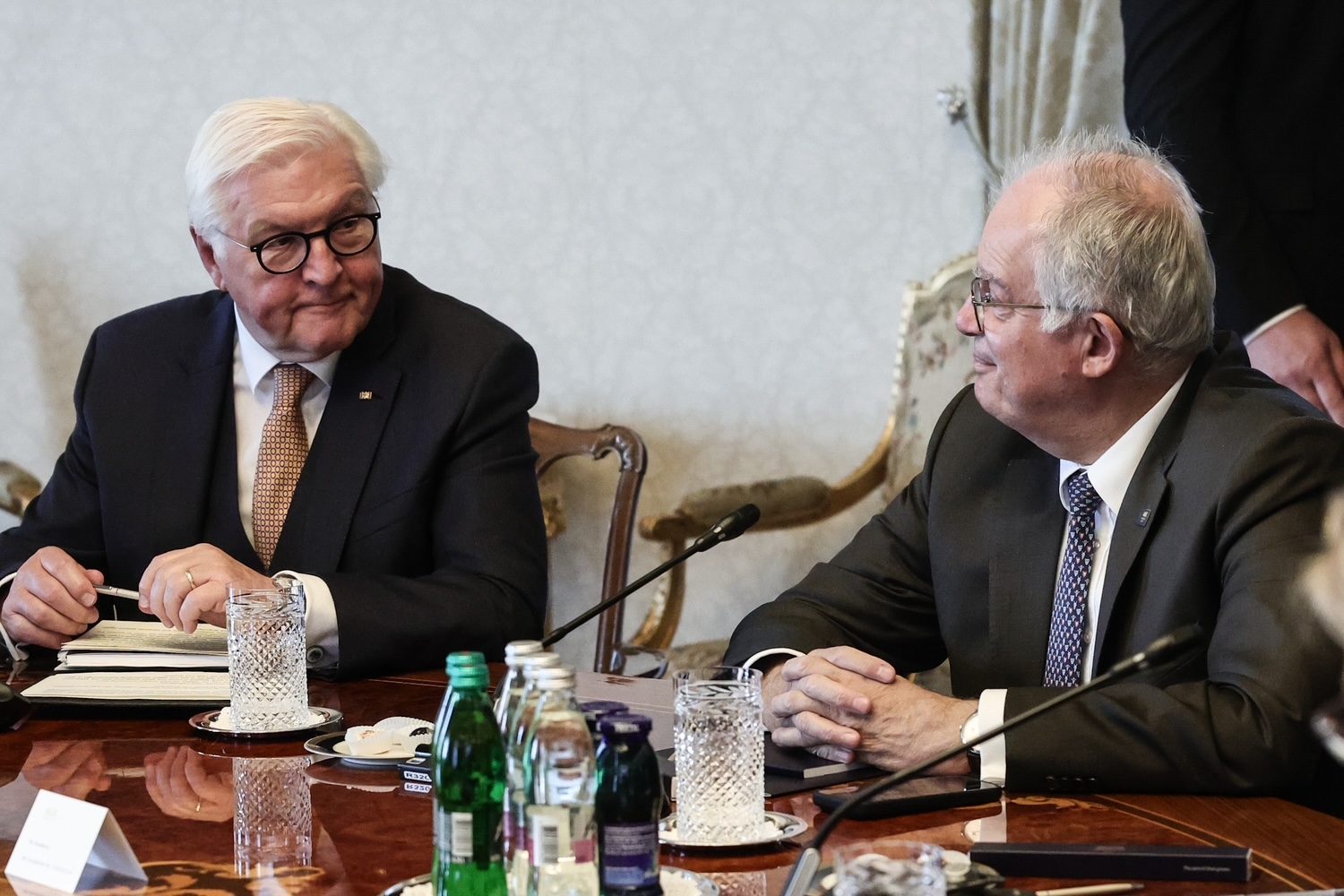
The President of the Hellenic Republic Constantine An. Tassoulas, following an invitation from the President of Slovenia, Natasa Pirc Musar, participated in the proceedings of the Informal Meeting of Heads of State of the Arraiolos Group, which took place in Brdo and included three working sessions, during which they discussed the current state of the EU and its role in a period of increasing geopolitical uncertainty and multiple crises, multilateralism and international institutions, with a focus on UN reform, including the veto power in the Security Council and, finally, the human dimension in international politics.
The President of the Hellenic Republic stated at the Plenary Session that, in an environment of growing geopolitical challenges, it is essential for the European Union to maintain its commitment to its fundamental values and principles, while strengthening its strategic autonomy, its defense capabilities, its economic and energy security and its international role. He made particular reference to Greece’s contribution to regional energy security through key infrastructure projects, such as the Vertical Gas Corridor, as well as to the need to maintain unity among member states, cohesion and credibility. In view of Greece’s assumption of the Presidency of the Council of the EU in the second half of 2027, he underlined the commitment to a Europe that is more competitive, prosperous, secure and capable of defending itself. Finally, he stressed the need to take very seriously the growing economic problems and difficulties faced by citizens in Europe due to the rising cost of living and high fuel prices, concluding that Europe must take bold initiatives to safeguard and strengthen social cohesion, an issue on which all governments in Europe are currently focusing.
At the second session, he expressed Greece’s commitment to strengthening an effective multilateral system based on International Law and the UN Charter, as well as our country’s support for efforts to revitalize the General Assembly and reform the UN. With regard to the reform of the Security Council, he expressed Greece’s support for a balanced expansion, with fair geographical representation, as well as the improvement of working methods, transparency and accountability. At the same time, he stressed that the use of the veto should remain an exceptional procedure, reaffirming our country’s support for initiatives to strengthen transparency and the role of the General Assembly. In conclusion, he stressed the importance, for the EU’s credibility, of maintaining a consistent and unified EU stance in the face of blatant violations of International Law and the fundamental principles of the United Nations Charter, such as the Russian invasion of Ukraine, noting that this same commitment to the fundamental principles of the United Nations Charter must also be reflected in its stance toward the ongoing Turkish occupation of more than 37% of the territory of the Republic of Cyprus, an EU Member State.
Finally, in the framework of the third session, he emphasized the need to protect human dignity and fundamental rights in an environment of growing geopolitical instability, social insecurity and the spread of new technological threats, which intensify fear and undermine social cohesion and democratic dialogue.